India-Norway sign 5 green tech deals: offshore wind to ocean science
Synopsis
India and Norway moved beyond diplomatic pleasantries to sign five funded, project-specific science agreements during PM Modi's Oslo visit — covering floating offshore wind, ocean energy, carbon capture, and circular economy. With CSIR committing ₹341 lakh and SINTEF institutions directly involved, this is one of India's most technically grounded bilateral green-tech partnerships in years.
Key Takeaways
Five strategic agreements signed between India and Norway on 19 May during PM Narendra Modi's visit to Oslo .
DSIR/CSIR and the Research Council of Norway (RCN) signed an MoU on research, innovation, and capacity building aligned with the SDGs .
CSIR and SINTEF renewed their partnership with a 2026–2029 Collaboration Agreement focused on circular economy, offshore wind, and carbon capture.
Multiple CSIR institutes and SINTEF institutions signed a project-specific deal on floating offshore wind and ocean energy; CSIR committed nearly ₹341 lakh in funding.
A Joint Declaration of Intent between CSIR , AcSIR , and NTNU covers sustainability, ocean science, healthcare, and academic exchanges.
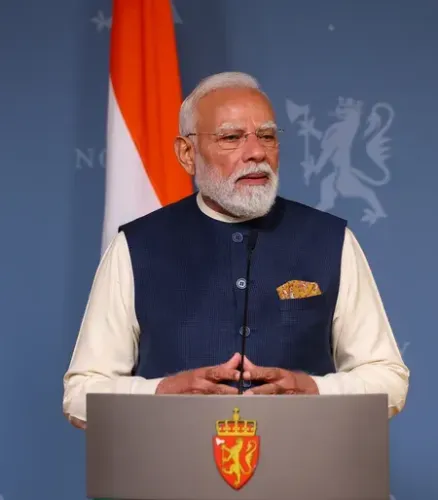
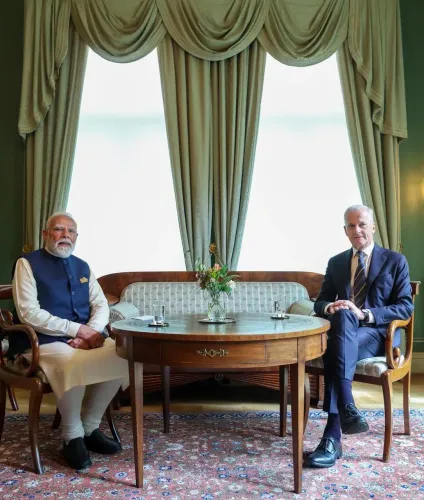
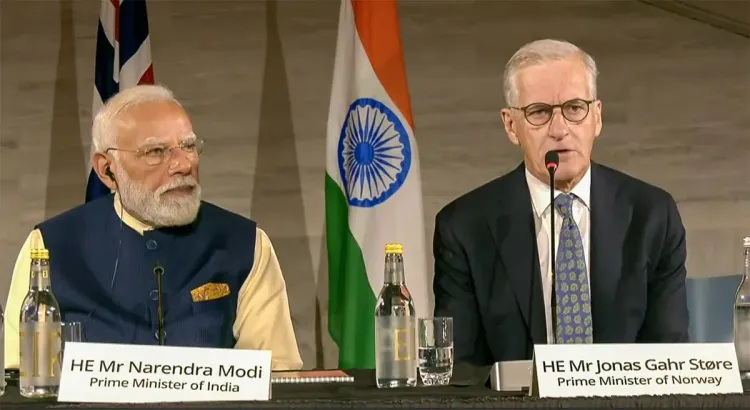
India and Norway on 19 May signed five strategic agreements spanning green energy, ocean technology, circular economy, and geoscience collaboration, as Prime Minister Narendra Modi visited Oslo to deepen the bilateral science and technology partnership. The accords mark a significant step in aligning India's renewable energy ambitions with Norway's advanced research capabilities.
Key Agreements Signed
A landmark Memorandum of Understanding was signed between DSIR/CSIR and the Research Council of Norway (RCN), establishing a framework for joint workshops, collaborative research and development projects, scientist exchange programmes, and capacity building. The MoU is oriented around global challenges including climate change, clean energy, ocean research, and healthcare, with a focus on the Sustainable Development Goals (SDGs).
Separately, CSIR formalised a Collaboration Agreement for 2026–2029 with SINTEF, Norway's leading independent research organisation, building on an existing partnership dating to 2014. The renewed agreement targets the circular economy and sustainability transition through joint innovation in bio-based materials, ocean energy, offshore wind, carbon capture, storage and utilisation, and waste valorisation.
Offshore Wind and Ocean Energy Push
In a project-specific accord, several CSIR institutes signed a collaboration agreement with SINTEF institutions to advance ocean energy and offshore wind energy technologies. The participating Indian institutions include CSIR-Structural Engineering Research Centre, CSIR-National Aerospace Laboratories, CSIR-National Institute of Oceanography, and CSIR-Fourth Paradigm Institute. Their Norwegian counterparts are SINTEF Ocean, SINTEF Digital, FME NorthWind, and SINTEF Community.
The joint programme will concentrate on floating offshore wind technologies, lowering the Levelised Cost of Energy (LCOE), sustainability standards, ESG frameworks, pilot demonstrations, skill development, and industrial growth. CSIR will provide funding support of nearly ₹341 lakh for this initiative — a signal of India's seriousness in building domestic offshore renewable energy capacity.
Academic and Innovation Cooperation
A Joint Declaration of Intent titled 'Science, Technology and Innovation Cooperation for the Green Shift' was signed among CSIR, the Academy of Scientific and Innovative Research (AcSIR), and the Norwegian University of Science and Technology (NTNU). The declaration covers sustainability, circular economy, ocean science and technology, healthcare, and civil infrastructure engineering.
It also envisages student and faculty exchanges, joint research activities, academic seminars, and collaborative educational programmes — building people-to-people linkages alongside institutional ones.
Why This Partnership Matters
This comes amid India's accelerating push to scale offshore renewable energy, particularly floating wind, as part of its broader net-zero commitments. Norway brings decades of offshore engineering expertise — honed through its oil and gas industry — now being redirected toward clean energy solutions. Notably, this is one of the most technically detailed bilateral science agreements India has signed in the green energy space in recent years, moving beyond intent to project-specific, funded collaboration. The partnership positions both nations to co-develop standards and technologies that could shape Asia's offshore wind market.
Point of View
But the architecture beneath it is what stands out — project-specific, institutionally paired, and partially funded, which is a departure from the vague 'letters of intent' that often characterise bilateral science diplomacy. India's offshore wind ambitions have long been held back by the absence of domestic floating-wind engineering know-how; the CSIR-SINTEF axis directly addresses that gap. The ₹341 lakh CSIR commitment is modest in absolute terms but significant as a signal that India is willing to co-invest rather than just co-sign. The real measure will be whether these programmes produce deployable technology or remain confined to academic papers — a pattern that has dogged India-Europe research partnerships before.
NationPress
23 Sept 2026
Frequently Asked Questions
What agreements did India and Norway sign during PM Modi's visit?
India and Norway signed five strategic agreements on 19 May covering green energy, ocean technology, circular economy, and geoscience collaboration. Key accords include an MoU between DSIR/CSIR and the Research Council of Norway, a 2026–2029 CSIR-SINTEF Collaboration Agreement, a project-specific offshore wind deal, and a Joint Declaration of Intent among CSIR, AcSIR, and NTNU.
What is the CSIR-SINTEF collaboration about?
The CSIR-SINTEF Collaboration Agreement for 2026–2029 focuses on the circular economy and sustainability transition, including bio-based materials, ocean energy, offshore wind, carbon capture, storage and utilisation, and waste valorisation. It builds on an earlier partnership established in 2014.
How much is India investing in the offshore wind research programme?
CSIR will provide funding support of nearly ₹341 lakh for the joint offshore wind and ocean energy programme with SINTEF institutions. The project targets floating offshore wind technologies, lower levelised cost of energy, ESG frameworks, and skill development.
Which Indian and Norwegian institutions are involved in the offshore wind deal?
On the Indian side: CSIR-Structural Engineering Research Centre, CSIR-National Aerospace Laboratories, CSIR-National Institute of Oceanography, and CSIR-Fourth Paradigm Institute. On the Norwegian side: SINTEF Ocean, SINTEF Digital, FME NorthWind, and SINTEF Community.
What is the Joint Declaration of Intent signed with NTNU?
The Joint Declaration of Intent titled 'Science, Technology and Innovation Cooperation for the Green Shift' was signed by CSIR, AcSIR, and the Norwegian University of Science and Technology (NTNU). It covers cooperation in sustainability, circular economy, ocean science, healthcare, and civil infrastructure engineering, and envisages student and faculty exchanges and joint research programmes.