India-Nordic ties elevated to Green Technology and Innovation Strategic Partnership
Synopsis
For the first time in eight years of India-Nordic summitry, the relationship has a formal name — and a sector-by-sector blueprint. The Green Technology and Innovation Strategic Partnership links Iceland’s geothermal know-how, Norway’s Arctic expertise, Sweden’s defence manufacturing, Finland’s telecom, and Denmark’s cyber security directly to Indian talent, backed by two landmark trade agreements and a 200% surge in Nordic investment into India over the past decade.
Key Takeaways
Prime Minister Narendra Modi and Nordic leaders elevated India-Nordic ties to a Green Technology and Innovation Strategic Partnership on 19 May 2025 in Oslo .
The partnership maps sector-specific linkages: Iceland (geothermal, fisheries), Norway (blue economy, Arctic), Sweden (advanced manufacturing, defence), Finland (telecom, digital), Denmark (cyber security, health tech).
India-Nordic bilateral trade has grown nearly four-times in a decade; Nordic investment into India has risen by 200 percent .
The Trade and Economic Partnership Agreement with EFTA countries (including Norway and Iceland) took effect from October 2025 .
The recently concluded India-EU Free Trade Agreement , covering Denmark, Finland, and Sweden, is expected to open a new phase of economic ties.
Both sides will deepen cooperation in Arctic and polar research and increase linkages between universities, labs, and startup ecosystems.
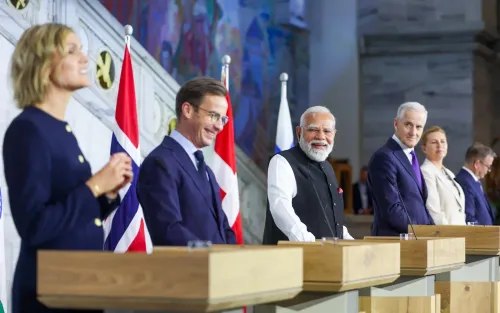
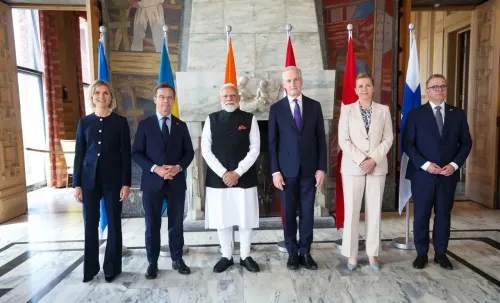
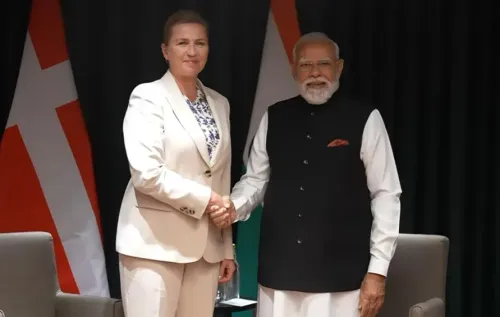
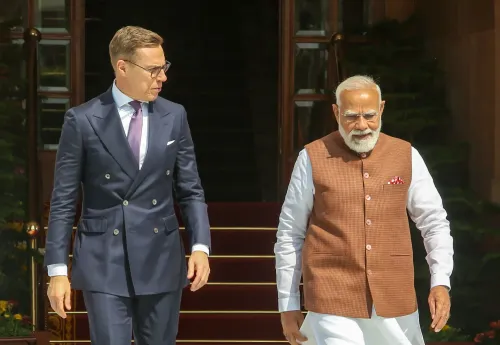
Prime Minister Narendra Modi on Tuesday, 19 May announced that India and the Nordic countries have agreed to elevate bilateral relations to a Green Technology and Innovation Strategic Partnership, a landmark upgrade formalised at the third India-Nordic Summit in Oslo. The decision signals a deepening of ties across clean energy, defence, digital infrastructure, and Arctic research.
What the Partnership Covers
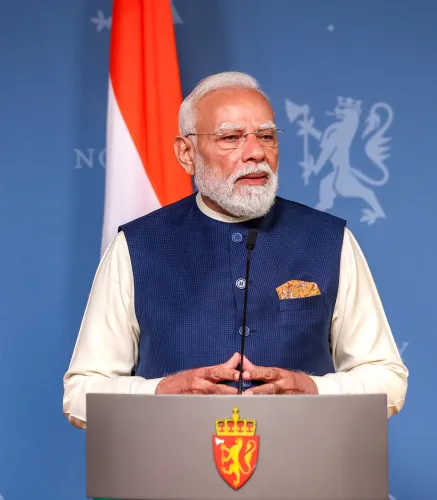
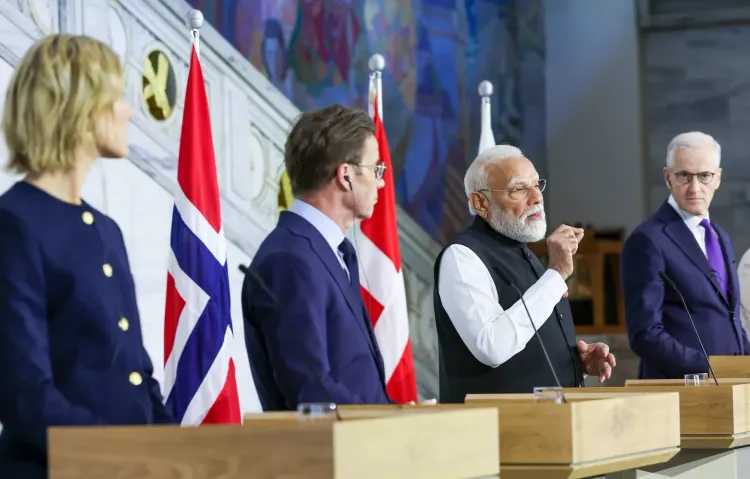
Addressing a joint press conference alongside Nordic leaders, Modi outlined a sector-specific architecture for the new partnership. “With this Green Technology Partnership, we will connect Iceland’s expertise in geothermal and fisheries, Norway’s expertise in blue economy and Arctic, and all Nordic countries’ expertise in maritime and sustainability to India’s skills to ensure a better future for the entire world,” he said.
The Prime Minister added that the partnership will also link Sweden’s advanced manufacturing and defence capabilities, Finland’s telecom and digital technology, and Denmark’s cyber security and health tech with Indian talent — with the stated aim of developing “trusted solutions for the entire world.”
Research, Innovation, and Arctic Cooperation
Modi described extensive research and innovation ties as an “important pillar” of the India-Nordic partnership. Both sides have committed to increasing linkages between universities, laboratories, and startup ecosystems. Notably, India and the Nordic nations will also deepen cooperation in Arctic and polar research — an area of growing strategic and scientific significance as climate change reshapes the region.
Trade and Investment Surge
The summit came against the backdrop of a sharp rise in economic engagement. Modi noted that bilateral trade has grown “almost four-times” over the past decade, while Nordic investment into India has risen by nearly 200 percent in the same period. “The rapidly growing trade and investment have not only contributed to India’s growth story, but have also played a very positive role in the economies of the Nordic countries and created thousands of new jobs,” he said.
Two major trade agreements are expected to accelerate this trajectory. The Trade and Economic Partnership Agreement with Norway, Iceland, and other EFTA countries came into effect from October 2025. More recently, the conclusion of the India-European Union Free Trade Agreement — in which Denmark, Finland, and Sweden are partners — is set to, in Modi’s words, “usher in a new golden era” in India-Nordic relations.
Shared Values and Strategic Alignment
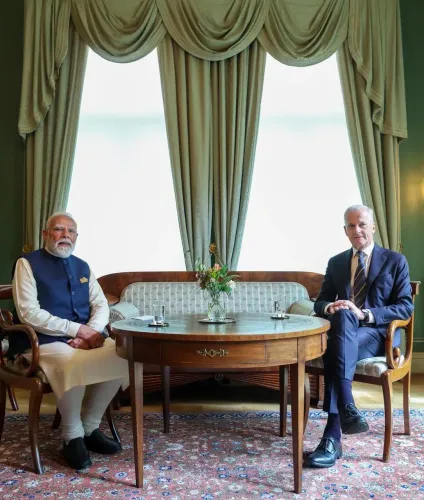
Modi framed the partnership in terms of shared democratic values, describing India and the Nordic nations as “natural partners” bound by a “shared commitment to democracy, rule of law and multilateralism.” He expressed gratitude to Norwegian Prime Minister Jonas Gahr Støre for hosting the summit, which was established eight years ago to accelerate India-Nordic engagement.
This is the third India-Nordic Summit, and the first to produce a named strategic partnership — a structural upgrade that gives the relationship a formal institutional identity. With trade agreements in place and a green technology framework now formalised, both sides appear set to move from dialogue to implementation.
Point of View
Which reduces overlap and creates accountability. What remains to be seen is whether the framework produces binding commitments or remains aspirational. The timing is significant: with both the EFTA agreement live and the EU FTA concluded, India now has trade architecture in place to back the rhetoric. The real test will be whether Arctic research cooperation and defence manufacturing linkages move beyond MoUs into actual joint programmes — an area where past India-Europe partnerships have often stalled at the announcement stage.
NationPress
5 Oct 2026
Frequently Asked Questions
What is the India-Nordic Green Technology and Innovation Strategic Partnership?
It is a newly formalised framework elevating India-Nordic relations, announced at the third India-Nordic Summit in Oslo on 19 May 2025. The partnership links each Nordic country’s sectoral strengths — from Iceland’s geothermal expertise to Denmark’s cyber security — with Indian talent and industry, with a focus on clean technology, defence, digital infrastructure, and Arctic research.
What trade agreements underpin the India-Nordic relationship?
Two agreements are in play: the Trade and Economic Partnership Agreement with EFTA countries (including Norway and Iceland), which came into force from October 2025, and the recently concluded India-EU Free Trade Agreement, in which Denmark, Finland, and Sweden are partners. Together, they provide a formal trade architecture for the upgraded partnership.
How much has Nordic investment in India grown?
According to Prime Minister Modi, Nordic investment into India has increased by nearly 200 percent over the past decade, while bilateral trade has grown almost four-times in the same period.
What does the partnership mean for Arctic and polar research?
India and the Nordic countries have committed to deepening cooperation in Arctic and polar research as part of the new strategic partnership. This includes increasing linkages between universities, laboratories, and startup ecosystems on both sides.
Which Nordic countries are part of the India-Nordic Summit?
The India-Nordic Summit format, established eight years ago, includes Norway, Sweden, Finland, Denmark, and Iceland. The third summit was hosted by Norwegian Prime Minister Jonas Gahr Støre in Oslo.