Modi-Nordic summit in Oslo: India's strategic pivot to northern Europe
Synopsis
Modi's Oslo meeting with five Nordic leaders was more than a diplomatic courtesy — it is part of a deliberate Indian push to anchor itself in the Western strategic order without formally abandoning non-alignment. With an EU free trade deal already signed and a partnership pact with Iceland, Norway and Switzerland in place, the Nordic summit is the latest move in a quiet but consequential westward pivot.
Key Takeaways
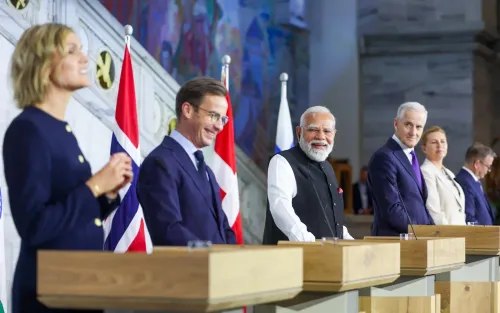
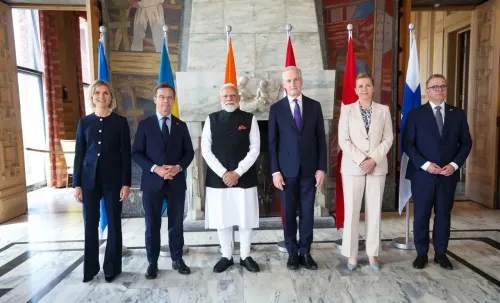
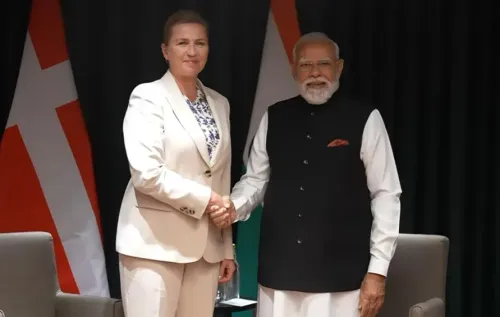
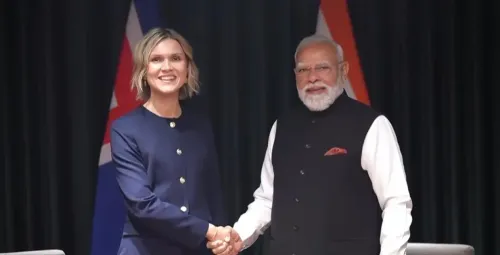
PM Narendra Modi met leaders of Norway , Sweden , Finland , Iceland , and Denmark at a summit in Oslo .
The meeting followed India's free trade agreement with the EU and a trade pact with Iceland , Liechtenstein , Norway , and Switzerland .
Leaders discussed conflicts in Europe and the Middle East , plus cooperation in AI , defence, clean energy, and digital infrastructure.
Analysts say India is preserving 'strategic autonomy' while tilting toward the West amid intensifying US-China rivalry.
Europe is reportedly seeking alternative economic partners, with India seen as attractive due to its democratic institutions and rule of law.
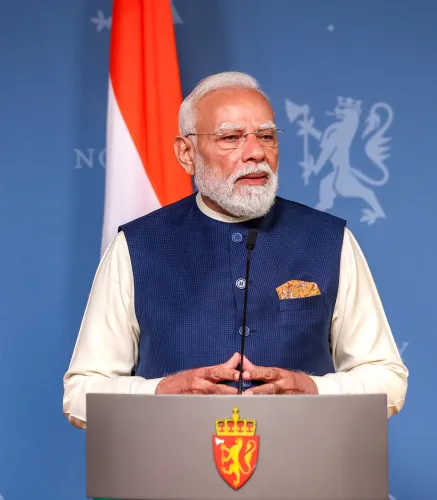
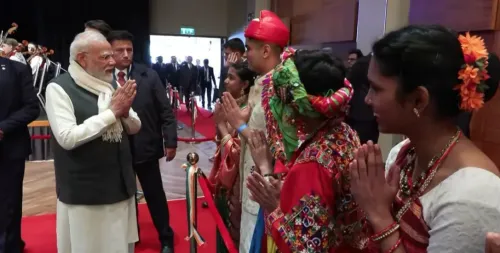
Prime Minister Narendra Modi's summit with leaders of five Nordic nations — Norway, Sweden, Finland, Iceland, and Denmark — in Oslo has emerged as a significant geopolitical moment, as India deepens its engagement with northern Europe amid accelerating global fragmentation and conflict-driven economic disruption. Analysts say the meeting signals a deliberate strategic repositioning by New Delhi.
Context and Timing
The Oslo summit followed two landmark trade milestones: India and the European Union signing a free trade agreement, and India finalising a trade and economic partnership agreement with Iceland, Liechtenstein, Norway, and Switzerland roughly a year prior. Together, these developments frame the Nordic summit not as a standalone diplomatic visit but as part of a sustained westward economic outreach by New Delhi.
What Leaders Discussed
The agenda at the summit was notably wide-ranging. Leaders covered ongoing conflicts in Europe and the Middle East, alongside cooperation frameworks spanning the blue economy, circular economy, digital infrastructure, artificial intelligence, climate action, energy security, water management, research and education, healthcare, defence, and the space and geospatial sectors. The breadth of the agenda, analysts note, reflects a relationship moving well beyond traditional trade.
What Analysts Are Saying
Ljubisa Ivanovic, a Belgrade-based journalist, told reports that New Delhi is pursuing broader strategic partnerships as it works to preserve its 'strategic autonomy.' He argued that India has effectively tilted toward the West in the intensifying rivalry between the United States and its allies on one side, and China on the other. 'With the upcoming bitter rivalry between the USA and the West on one side, and China on the other, India has chosen the West,' Ivanovic said. He added that Modi's Oslo visit could strengthen India's strategic role in northern Europe and connect New Delhi more closely to emerging geopolitical issues in the region — particularly given strained ties with China and Pakistan.
Priyajit Debsarkar, a London-based author and geopolitical analyst, said Europe is actively searching for alternative economic partners following shifts in global trade patterns and tariff disputes. He described India as an attractive alternative, citing its democratic institutions and legal framework. 'The fundamental principles driving the Indian economy are still based on democracy values and the Rule of law, in contrast to that of China,' Debsarkar said.
Why It Matters for India
This comes amid rising US-China rivalry and a recalibration of global supply chains, with European economies increasingly wary of over-dependence on Beijing. For India, the Nordic engagement offers access to advanced technology, green energy expertise, and defence cooperation — areas where the Nordic nations punch well above their weight. Notably, Finland and Sweden's recent NATO membership has also elevated the strategic weight of northern Europe in ways that directly intersect with India's own security calculus.
What Comes Next
Whether the Oslo summit translates into binding agreements or concrete investment pipelines will be closely watched. India's track record of converting high-profile diplomatic engagements into measurable economic outcomes has been uneven, and the Nordic relationship — while promising — remains at an early stage of institutionalisation. The next test will be whether sectoral cooperation frameworks agreed upon in Oslo gain operational momentum in the months ahead.
Point of View
Maritime security, and advanced manufacturing; whether New Delhi can absorb and operationalise that partnership is the real test of this pivot's seriousness.
NationPress
7 Oct 2026
Frequently Asked Questions
What was the Modi-Nordic summit in Oslo about?
Prime Minister Narendra Modi met leaders of Norway, Sweden, Finland, Iceland, and Denmark in Oslo to discuss strategic and economic cooperation. The agenda covered defence, AI, clean energy, digital infrastructure, climate action, and ongoing conflicts in Europe and the Middle East.
Why is the Modi-Nordic summit considered geopolitically significant?
The summit reflects India's effort to strengthen ties with northern Europe as US-China rivalry intensifies and global trade patterns shift. Analysts say India is positioning itself as an alternative partner for European nations seeking to reduce dependence on China.
What trade agreements preceded the Oslo summit?
India and the EU signed a free trade agreement in the period before the summit, and India finalised a trade and economic partnership agreement with Iceland, Liechtenstein, Norway, and Switzerland roughly a year earlier. The Nordic summit builds on this foundation of economic engagement.
What did analysts say about India's strategic direction?
Belgrade-based journalist Ljubisa Ivanovic said India has effectively chosen the West in the intensifying US-China rivalry, while working to preserve its strategic autonomy. London-based analyst Priyajit Debsarkar said India's democratic institutions and rule of law make it an attractive alternative partner for Europe.
What sectors were covered in the Nordic summit discussions?
Leaders discussed cooperation across the blue economy, circular economy, digital infrastructure, artificial intelligence, climate action, energy security, water management, research and education, healthcare, defence, and the space and geospatial sectors.