India-Nordic Summit: PM Modi backs rules-based order, eyes 4x trade growth
Synopsis
At the third India-Nordic Summit in Oslo, Modi didn't just talk partnership — he put numbers on it: bilateral trade up four times in a decade, Nordic investment into India up 200 per cent. Against a backdrop of war in Ukraine and West Asia, the summit also produced a rare unified stand: no compromise, no double standards on terrorism, and a joint call for urgent multilateral reform.
Key Takeaways
PM Narendra Modi attended the third India-Nordic Summit in Oslo on 19 May 2025 .
India and Nordic nations called for reform of multilateral institutions, describing it as 'both necessary and urgent.' Leaders adopted a unified stance on terrorism — 'no compromise, no double standards.' Bilateral trade between India and Nordic countries has grown nearly four times in 10 years .
Nordic investment into India has risen by almost 200 per cent over the past decade.
Summit discussions covered sustainability , clean energy , innovation , and emerging technologies .
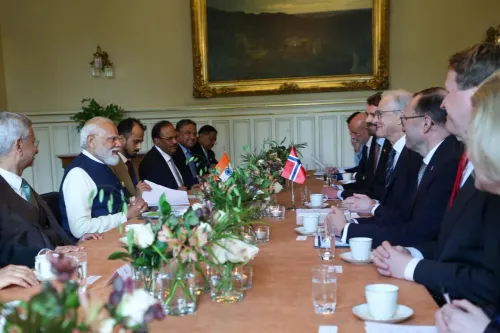
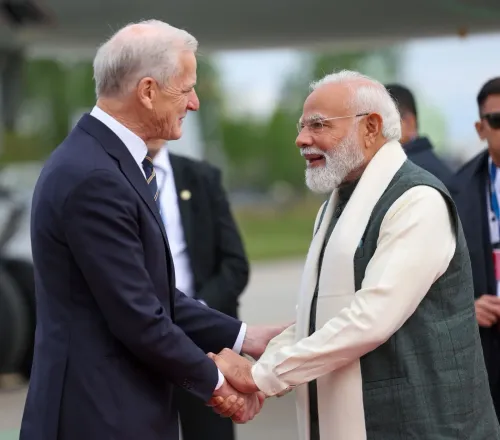
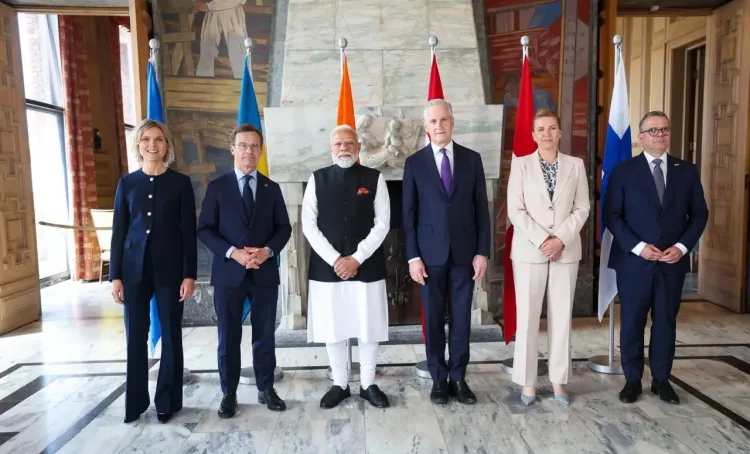
Prime Minister Narendra Modi on Tuesday, 19 May called for a stronger rules-based global order alongside Nordic leaders at the third India-Nordic Summit in Oslo, stressing that shared democratic values and multilateralism make India and the Nordic nations natural partners. The summit, hosted by Norway, brought together leaders of the five Nordic countries for wide-ranging talks on clean energy, emerging technologies, and global peace.
Key Developments at the Oslo Summit
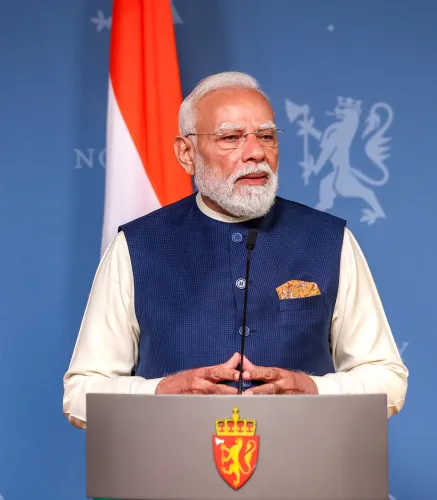
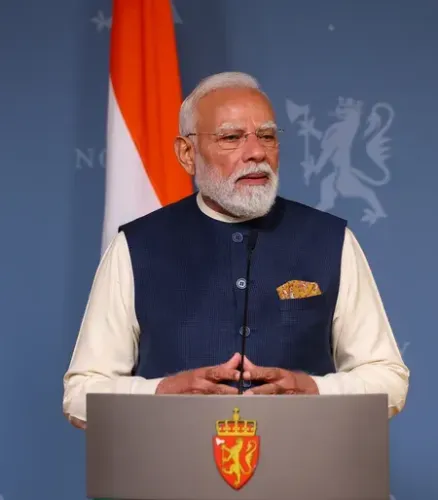
Addressing a joint press conference after the summit, Modi underscored a unified stance on terrorism, stating: 'We have clear and united stand on terrorism — no compromise, no double standards.' He also affirmed support for peaceful resolution of ongoing conflicts, adding: 'Whether it is Ukraine or West Asia, we will continue to support the earliest resolution of conflicts and efforts towards peace.'
The leaders agreed that reform of multilateral institutions is 'both necessary and urgent,' signalling coordinated pressure on bodies such as the United Nations to adapt to contemporary geopolitical realities.
Trade and Investment: A Decade of Growth
Modi highlighted a dramatic deepening of economic ties over the past decade. Bilateral trade between India and the Nordic bloc has grown nearly four times in 10 years, while Nordic investment into India has surged by almost 200 per cent over the same period. Investment funds from Nordic countries are increasingly becoming key partners in India's growth story, he said, adding that the expanding economic relationship has also generated thousands of jobs in Nordic economies.
'The rapidly growing trade and investment have not only contributed to India's growth story, but have also played a very positive role in the economies of the Nordic countries and created thousands of new jobs,' Modi said.
Democracy, Sustainability, and Technology at the Core
Modi noted that the India-Nordic format was established eight years ago precisely to accelerate bilateral relations. Discussions at this edition focused on sustainability, innovation, clean energy, and emerging technologies. He described the shared commitment to democracy, rule of law, and human-centric development as the bedrock of the partnership.
Notably, this is the third such summit since the format's inception, reflecting the growing institutionalisation of India's engagement with the Nordic region — a grouping that collectively punches above its weight in green technology, maritime expertise, and sovereign wealth.
What PM Modi Posted on X
After the summit, Modi shared his assessment directly on social media platform X, writing: 'Participated in the 3rd India-Nordic Summit in Oslo, which reflected the growing depth and dynamism of India's partnership with the Nordic region. Our discussions focused on several aspects, including sustainability, innovation, clean energy, emerging technologies and strengthening cooperation for a peaceful and prosperous future.' He added: 'India and the Nordic countries are united by shared democratic values, trust and a common commitment towards human-centric development.'
What Comes Next
With the summit concluding in Oslo, attention will shift to whether the broad commitments on multilateral reform and clean-energy cooperation translate into concrete bilateral agreements. The 200 per cent rise in Nordic investment into India over a decade suggests institutional momentum is building, but analysts note that geopolitical headwinds — from supply-chain fragmentation to shifting US trade policy — could test the durability of these partnerships.
Point of View
But the numbers quietly tell a significant story: a four-fold trade jump and a 200 per cent investment surge in a decade are not diplomatic boilerplate. What deserves closer scrutiny is the call for multilateral reform — easy to agree on in a joint statement, far harder to operationalise when India and Nordic nations sometimes diverge on the pace and shape of UN Security Council expansion. The terrorism declaration is the sharpest signal from Oslo: 'no double standards' is pointed language that goes beyond the usual summit communiqué, and it will be read carefully in both Islamabad and Brussels.
NationPress
26 Sept 2026
Frequently Asked Questions
What was decided at the third India-Nordic Summit in Oslo?
Leaders agreed to jointly strengthen a rules-based global order, support peaceful resolution of conflicts in Ukraine and West Asia, and push for urgent reform of multilateral institutions. They also adopted a unified zero-tolerance position on terrorism.
How much has Nordic investment into India grown?
Nordic investment into India has increased by almost 200 per cent over the past decade, according to Prime Minister Modi's statement at the Oslo summit. Bilateral trade has also grown nearly four times in the same period.
Which countries are part of the India-Nordic Summit format?
The India-Nordic Summit format includes India alongside the five Nordic nations — Norway, Sweden, Denmark, Finland, and Iceland. The format was established eight years ago to deepen India's engagement with the Nordic region.
What did PM Modi post on X after the summit?
Modi posted that the summit 'reflected the growing depth and dynamism of India's partnership with the Nordic region,' with discussions covering sustainability, innovation, clean energy, and emerging technologies. He added that India and Nordic countries are united by 'shared democratic values, trust and a common commitment towards human-centric development.'
Why does the India-Nordic partnership matter geopolitically?
The Nordic bloc is a significant player in green technology, maritime expertise, and global finance through sovereign wealth funds. A joint call for multilateral reform and a unified stance on terrorism from this grouping carries diplomatic weight at a time of heightened global tensions over Ukraine and West Asia.