India-NZ FTA targets $5 bn trade by 2031, opens gateway to Oceania

Synopsis
India's FTA with New Zealand isn't just a bilateral deal — it's a calculated push into Oceania. With $5 billion in trade targeted by 2031 at a 30% CAGR and $20 billion in FDI over 15 years, the agreement hands Indian pharma, leather, and textiles a structural cost edge, while positioning India as the Pacific region's primary economic partner.
Key Takeaways
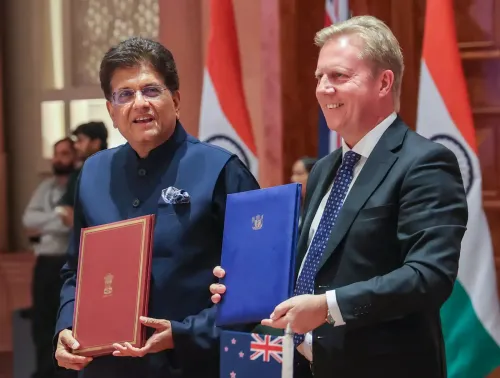
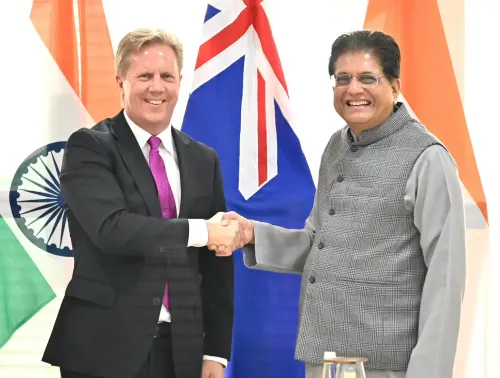
India-New Zealand FTA signed 27 April 2026 , targeting $5 billion bilateral trade by 2031 at 30% CAGR .
Pact envisages $20 billion FDI into India over 15 years ; near-term focus on pharma , agri-tech , education .
India gets 100% duty-free export access to NZ; 70% of India's tariff lines open to NZ goods.
Agra leather exporters target $50 billion in exports by 2030 .
NZ accepts US FDA/EMA/UK MHRA GMP reports, removing duplicate checks for Indian pharma.
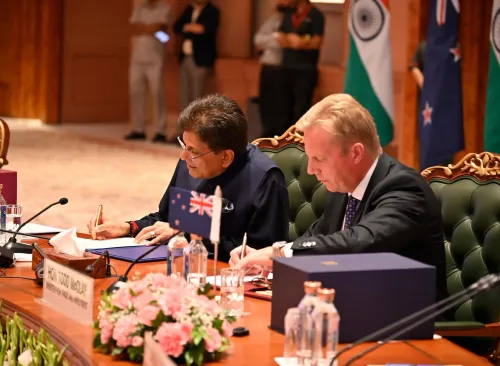
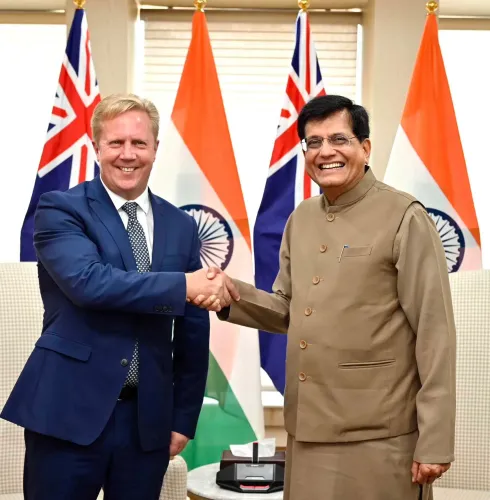
The India-New Zealand Free Trade Agreement, signed on 27 April 2026, sets a bilateral trade target of $5 billion over five years and positions India as a primary partner in the Pacific region, according to a report released on Monday, 4 May 2026 by Brickwork Ratings. The deal is being described as a structural gateway to Oceania, with implications for Indian pharmaceuticals, textiles, leather, and engineering goods sectors.
Key Terms of the Agreement
The FTA secures 100 per cent duty-free access for Indian exports to New Zealand, while opening 70 per cent of India's tariff lines to New Zealand goods. The bilateral trade target for calendar year 2031 implies growth at a 30 per cent compound annual growth rate (CAGR) from current levels. The pact also envisages $20 billion in foreign direct investment (FDI) into India over 15 years, with near-term FDI reportedly targeting pharmaceuticals, agri-tech, and education. Emerging technologies and green energy are identified as longer-horizon investment plays within the framework.
Sectoral Gains for Indian Industry
The Brickwork Ratings report identifies several Indian sectors positioned for immediate and medium-term gains. Leather exporters in Agra are described as best placed for immediate scale, targeting an estimated $50 billion in exports by 2030. Indian textiles gain the lowest effective tariff rate among major apparel exporters to New Zealand, giving them a price advantage over rivals from Vietnam and Bangladesh. Engineering goods — including auto ancillaries, machinery, and chemicals — will also benefit from a cost advantage in the New Zealand market.
Access to New Zealand's technology and raw material inputs such as timber, coal, and metal scrap could, according to the report, accelerate India's next phase of manufacturing and industrial scale-up.
Pharma Sector: Regulatory Simplification
A notable provision in the agreement allows New Zealand to accept Good Manufacturing Practice (GMP) inspection reports from the United States Food and Drug Administration (US FDA), the European Medicines Agency (EMA), and the Medicines and Healthcare products Regulatory Agency (UK MHRA). This eliminates duplicate regulatory checks, enabling faster market entry for Indian drug manufacturers — a significant operational benefit for an industry already well-established in regulated export markets.
Macroeconomic and Currency Implications
The Brickwork Ratings report also flagged broader macroeconomic benefits. Higher capital inflows and increased institutional investor participation could support the Indian rupee over the medium term, potentially reducing foreign exchange volatility. This is particularly relevant given the rupee's sensitivity to FII flows and global risk sentiment in recent quarters.
What the Analysts Said
Vikrant Chaturvedi, Associate Director at Brickwork Ratings, said:
Point of View
For instance, widened the trade deficit rather than boosting Indian exports. The pharma regulatory shortcut is the deal's most concrete near-term win. The Agra leather cluster's $50 billion aspiration deserves scrutiny: it is a sectoral projection, not an FTA guarantee, and depends on logistics, labour compliance, and NZ market depth. Geopolitically, this is as much about Pacific positioning as commerce — and that dimension may ultimately matter more than the tariff schedules.
NationPress
21 Sept 2026
Frequently Asked Questions
What is the India-New Zealand Free Trade Agreement?
The India-NZ FTA, signed on 27 April 2026, grants 100% duty-free access for Indian exports to New Zealand and opens 70% of India's tariff lines to NZ goods. It targets $5 billion in bilateral trade by 2031 and $20 billion in FDI into India over 15 years.
What is the bilateral trade target and growth rate?
The FTA targets $5 billion in bilateral trade by 2031, implying a 30% CAGR from current levels between the two countries.
Which Indian sectors gain the most from the FTA?
Pharmaceuticals, textiles, leather, engineering goods, auto ancillaries, and chemicals are the primary beneficiaries. Agra leather exporters are identified as best placed for immediate scale, targeting $50 billion in exports by 2030.
How does the deal benefit Indian pharmaceutical companies?
New Zealand will accept GMP inspection reports from the US FDA, EMA, and UK MHRA, eliminating duplicate regulatory checks and enabling faster market entry for Indian drug manufacturers.
What FDI is expected under the India-NZ FTA?
The pact envisages $20 billion in FDI into India over 15 years, with near-term investment reportedly targeting pharmaceuticals, agri-tech, and education, and longer-term plays in emerging technologies and green energy.