Centre halts sugar-based ethanol procurement as weak monsoon squeezes output

Synopsis
India has paused sugarcane-based ethanol procurement — a cornerstone of its 20% blending success story — because El Niño-driven crop losses are threatening sugar prices. The move reveals a tension at the heart of India's clean-fuel strategy: when harvests falter, food security beats blending targets.
Key Takeaways
The Centre has directed PSU fuel retailers to stop procuring ethanol from sugarcane juice, sugar, sugar syrup and B-Heavy molasses from 1 November 2026 .
IOCL, BPCL, HPCL, Numaligarh Refinery and Mangalore Refinery have issued a joint tender for nearly 11 billion litres of ethanol under the new guidelines.
El Niño contributed to the weakest monsoon in over a decade, squeezing India's sugarcane crop and pushing up sugar prices.
Permitted feedstocks include C-heavy molasses , damaged food grains, surplus rice from FCI , and corn.
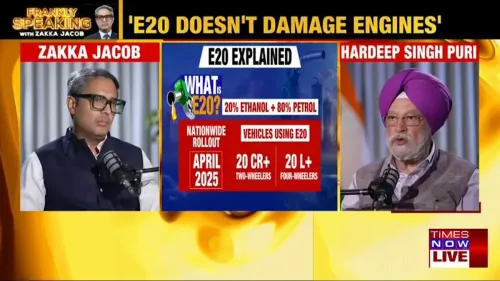
India achieved its 20% ethanol blending target in 2025 , five years ahead of the original schedule.
Sugar mills may sell October 2026 production volumes over and above regular release quotas during October–November 2026 .
The Centre has directed state-owned fuel retailers to suspend procurement of ethanol derived from sugar and key sugarcane-based feedstocks, effective 1 November 2026, in a bid to stabilise domestic sugar prices after a weak monsoon season hurt sugarcane output across the country.
What the New Direction Says
According to a joint tender document, public sector oil refiners — Indian Oil Corporation Ltd (IOCL), Bharat Petroleum Corporation Ltd (BPCL), Hindustan Petroleum Corporation Ltd (HPCL), Numaligarh Refinery Ltd, and Mangalore Refinery and Petrochemicals Ltd — have collectively sought nearly 11 billion litres of ethanol for the new supply year beginning 1 November 2026. The tender explicitly states: 'No offers have been sought for ethanol produced from sugarcane juice, sugar, sugar syrup and B-Heavy molasses in this quantity bid tender.'
Why the Monsoon Is the Trigger
India, the world's second-biggest sugar producer, is contending with a smaller cane crop compared to the previous year. El Niño conditions contributed to what is reportedly the weakest monsoon in more than a decade, tightening sugarcane availability and putting upward pressure on sugar prices. By redirecting sugarcane away from ethanol blending and back toward food supply chains, the Centre aims to ease that pressure before the festive and wedding season raises demand further.
Permitted Feedstocks Under the New Tender
Ethanol suppliers can still participate in the tender by offering product derived from C-heavy molasses, damaged food grains, surplus rice procured from the Food Corporation of India (FCI), corn, and other feedstocks permitted under the National Policy on Biofuels. This keeps the broader ethanol blending programme operational while removing the most sugar-intensive pathways from the current procurement cycle.
India's Ethanol Blending Push
The suspension is a notable recalibration given how central sugarcane-based ethanol has been to India's clean-fuel ambitions. The government had advanced its target of blending 20 per cent ethanol into petrol by five years and reportedly achieved that milestone in 2025 — one of the most aggressive biofuel transitions globally. The nation has progressively leaned on sugarcane and food grains to cut dependence on imported crude oil. This move signals that food security and price stability can, at times, take precedence over blending targets.
Sugar Mill Sales Relief
In a parallel measure, the government has permitted sugar mills to sell sugar produced in October 2026 during October and November 2026 over and above regular monthly release quotas. Under this arrangement, a mill producing 1,000 MT of sugar in October is allowed to sell that quantity across October and November, in addition to its standard allocated quota — a step designed to improve near-term market liquidity and keep retail prices in check.
With sugarcane availability expected to remain constrained through the current season, the Centre's policy stance will be closely watched by both the sugar industry and the biofuel sector as the supply year unfolds.
Point of View
Yet the policy architecture offers no automatic stabiliser — it relies on ad hoc suspensions after prices have already risen. The 20% blending achievement in 2025 was a genuine milestone, but building it so heavily on sugarcane made the programme hostage to monsoon variability. A more resilient approach would accelerate the shift to second-generation ethanol from agricultural waste, reducing dependence on food crops entirely — something the National Policy on Biofuels permits but has not yet prioritised at scale.
NationPress
17 Oct 2026
Frequently Asked Questions
Why has the Centre stopped sugar-based ethanol procurement?
The Centre suspended procurement of ethanol from sugarcane juice, sugar, sugar syrup, and B-Heavy molasses to prevent sugar prices from rising further after a weak monsoon — linked to El Niño — curtailed sugarcane output. The directive takes effect from 1 November 2026, the start of the new supply year.
Which oil companies are affected by this ethanol tender change?
The joint tender was issued by five PSU refiners: Indian Oil Corporation Ltd, Bharat Petroleum Corporation Ltd, Hindustan Petroleum Corporation Ltd, Numaligarh Refinery Ltd, and Mangalore Refinery and Petrochemicals Ltd. Together they seek nearly 11 billion litres of ethanol under the revised guidelines.
What feedstocks can still be used to supply ethanol under the new tender?
Suppliers can offer ethanol produced from C-heavy molasses, damaged food grains, surplus rice procured from the Food Corporation of India, corn, and any other feedstock permitted under the National Policy on Biofuels. Sugar-intensive feedstocks are the only category excluded.
Has India's ethanol blending programme been derailed by this move?
Not entirely. India achieved its 20% ethanol blending target in 2025, ahead of schedule, and the broader programme continues with non-sugar feedstocks. The suspension is a seasonal course-correction to protect food supply, not an abandonment of the blending goal.
What relief has the government given sugar mills alongside this directive?
The government has allowed sugar mills to sell sugar produced in October 2026 during October and November 2026 over and above their regular monthly release quotas. A mill producing 1,000 MT in October, for instance, can sell that volume across two months in addition to its standard allocation, improving market liquidity.