Joshi hits out at Opposition's 'Regime Change' project
Synopsis
Union Consumer Affairs Minister Pralhad Joshi on October 17, 2026, accused the Opposition of orchestrating a 'Regime Change' project to destroy 12 years of BJP-led governance, framing the political contest as a referendum on national progress since 2014.
Key Takeaways
Pralhad Joshi , Union Consumer Affairs and New and Renewable Energy Minister, posted a sharp attack on the Opposition on October 17, 2026 .
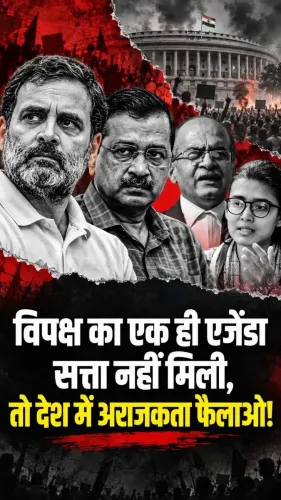
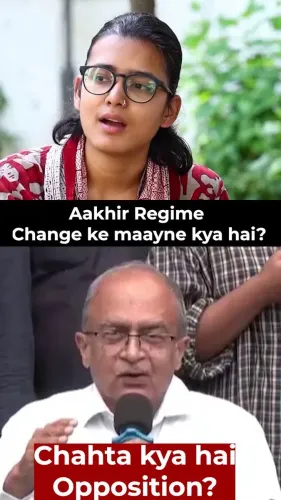
He accused the Opposition of running a coordinated 'Regime Change' project with an agenda to destabilise the country.
The BJP has governed India since 2014 , making 2026 the 12th consecutive year of Modi government at the Centre — the milestone Joshi cited.
The 'regime change' framing escalates the political charge beyond routine electoral rivalry, invoking destabilisation rather than just policy disagreement.
This fits a broader BJP communication pattern of casting opposition activity as a threat to national stability, especially ahead of electoral cycles.
Joshi's seniority and dual ministerial role signal this is a coordinated party position , not an isolated individual remark.
The ruling Bharatiya Janata Party turned up the political heat on Saturday, October 17, 2026, as Union Consumer Affairs Minister Pralhad Joshi fired a sharp broadside at the Opposition, accusing it of running a coordinated 'Regime Change' project aimed at undoing what he called 12 years of national progress.
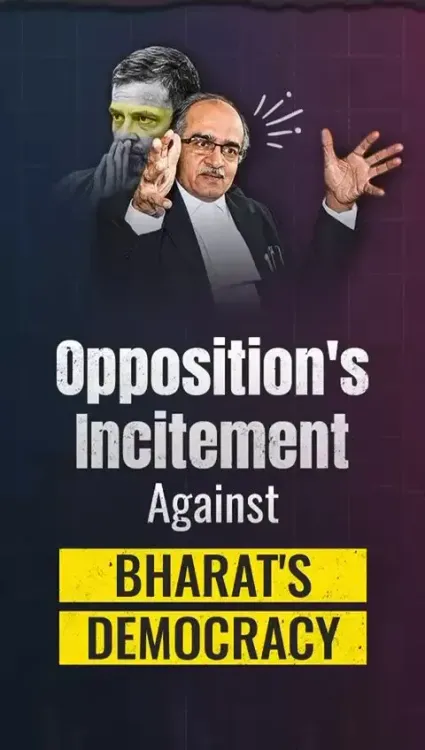
Posting on X, Joshi was blunt: 'The Opposition cannot fool the people of India! They can see through your Regime Change project and your agenda to set the country on fire and destroy 12 years of progress.' The language was combative, deliberate, and aimed squarely at a public audience — not just the political class.
The '12 years of progress' claim and what it signals
The BJP first came to power at the Centre in 2014 under Prime Minister Narendra Modi, making 2026 the party's twelfth consecutive year in government. Invoking that number is no accident — it frames the political contest not as a routine election cycle but as a referendum on more than a decade of policy and governance. For the BJP, that framing shuts down incremental criticism and forces a larger, harder question: do you want to tear down what has been built?
References to 'regime change' — a phrase with loaded geopolitical overtones — and 'setting the country on fire' push the charge beyond ordinary electoral rivalry. The framing casts the Opposition not merely as a political rival but as a destabilising force, a rhetorical move the party has deployed repeatedly when responding to large-scale protests, criticism of economic policies, or cross-party coalition-building by the Opposition bloc.
A pattern both sides know well
This is not the first time such language has surfaced from the ruling dispensation — and it will not be the last. The BJP and its opponents have spent years trading accusations of deshdroh (anti-nationalism) and democratic subversion, each side insisting the other is the true threat to India's stability. The Opposition, predictably, rejects the 'regime change' label as deflection from governance failures; the ruling party uses it to consolidate its voter base around a narrative of continuity and achievement.
Joshi, a senior Karnataka BJP figure who also holds the New and Renewable Energy portfolio, carries weight in this messaging operation — his voice signals that this is a coordinated party position, not an off-the-cuff remark.
The voters Joshi is speaking to have heard this argument before. The question India's political watchers will track is whether the Opposition finds a sharp enough counter-narrative — or whether the BJP's '12 years of progress' frame lands before the next electoral test.
Point of View
The BJP forces voters to evaluate continuity against the risk of dismantling it, rather than judging individual policy failures. The 'regime change' phrase borrows geopolitical weight to imply external or illegitimate interference, an escalation beyond standard poll-season rhetoric. This kind of messaging typically intensifies ahead of state elections or a general election cycle, and its repetition by senior ministers suggests the party is sharpening a national communication strategy. Whether the Opposition can dismantle the continuity frame with a credible alternative narrative is now the central political question.
NationPress
17 Oct 2026
Frequently Asked Questions
What did Pralhad Joshi say about the Opposition on October 17 2026?
Joshi accused the Opposition of running a 'Regime Change' project aimed at destroying 12 years of BJP-led national progress, warning that Indian voters could see through the agenda.
What does '12 years of progress' refer to in Joshi's post?
It refers to the BJP's uninterrupted tenure at the Centre since winning the general elections in 2014 , which completes 12 years by 2026 .
What is the 'Regime Change' project Joshi mentioned?
Joshi used the term to characterise what he described as a coordinated Opposition effort to unseat the BJP government — a framing the Opposition is expected to reject as political deflection.
Who is Pralhad Joshi?
Pralhad Joshi is a senior BJP leader from Karnataka and currently serves as Union Minister of Consumer Affairs, Food and Public Distribution, and also holds the New and Renewable Energy portfolio.
Is 'regime change' rhetoric new in Indian politics?
No. References to regime change and destabilisation have appeared in government responses to large-scale protests and cross-party Opposition alliances for several years, and both sides regularly accuse the other of threatening national stability.