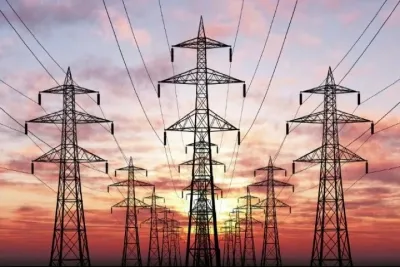
India power demand to grow up to 7% in FY27, Crisil report
Synopsis
India's power demand is on track for its strongest growth in years — up to 7% in FY27 — as El Niño-driven heat pushes cooling loads to record highs, coal stocks thin to 16-day cover, and peak demand already hit 271 GW in May. The numbers signal a grid under mounting pressure heading into a potentially harsh monsoon season.
Key Takeaways
India's power demand is forecast to grow up to 7 per cent year-on-year in FY27 , reaching 1,810–1,830 BU , per Crisil .
May demand surged 11.2 per cent year-on-year to 165 BU ; peak demand hit 271 GW , nearly 10 per cent above FY26's peak.
Day Ahead Market clearing price rose 18.3 per cent to ₹4.8 per unit ; RTM price up 21 per cent to ₹4.16 per unit .
Coal stocks at thermal plants fell to 49 million tonnes (16 days' cover) from 60 million tonnes (21 days) a year ago.
Renewable energy generation grew approximately 20 per cent ; India added 7.4 GW of renewable capacity in April–May.
Manufacturing PMI rose to 55 in May, with industrial and commercial users accounting for roughly half of total electricity demand.
India's power demand is projected to expand by up to 7 per cent year-on-year in FY27, reaching approximately 1,810–1,830 billion units (BU), driven by above-normal temperatures and reduced rainfall associated with the anticipated El Niño effect, according to a Crisil report released on 18 June. The findings underscore how deeply weather-sensitive India's electricity consumption has become as cooling demand surges across households, businesses, and industry.
Weather as the Primary Driver
Crisil's report highlights that electricity demand is likely to remain closely tied to meteorological conditions through the current fiscal year. Rising temperatures are expected to sustain elevated cooling requirements, while a below-normal monsoon linked to El Niño could limit hydro generation and keep thermal plants under pressure.
In May, power demand surged 11.2 per cent year-on-year to 165 BU, as large swathes of north, northwest, west, and central India recorded temperatures 1–4 degrees Celsius above normal. Uttar Pradesh's Banda district registered a peak of 48.3 degrees Celsius on 12 May, illustrating the severity of the heat event. For the combined April–May period, demand grew 7.6 per cent year-on-year — a sharp reversal from the 1.2 per cent contraction recorded in the same period of FY26.
Peak Demand and Market Prices Climb
Peak power demand touched 271 GW in May, nearly 10 per cent higher than the 245 GW peak recorded in FY26. The tighter supply-demand balance pushed up market prices: the average clearing price in the Real-Time Market (RTM) rose 21 per cent year-on-year to ₹4.16 per unit, while RTM volumes climbed approximately 16 per cent to 5,529 million units (MU). In the Day Ahead Market (DAM), the clearing price increased 18.3 per cent year-on-year to ₹4.8 per unit.
Industrial Activity Adds to Demand Momentum
Beyond weather, industrial recovery is contributing to the demand uptick. The Manufacturing Purchasing Managers' Index (PMI) edged up to 55 in May from 54.7 in April, signalling continued expansion. Industrial and commercial consumers collectively account for roughly half of India's total electricity consumption, making their activity levels a critical variable in the annual demand outlook.
Generation Rises, but Coal Stocks Tighten
Total power generation rose approximately 12 per cent year-on-year to 178 BU in May. Renewable energy generation led the growth at around 20 per cent, while coal-based generation grew 12 per cent and continued to account for over 68 per cent of total electricity output. India added 7.4 GW of renewable energy capacity — including small hydro projects — in just the first two months of the fiscal year.
However, coal inventories at thermal power plants tightened considerably, falling to 49 million tonnes at the end of May from 60 million tonnes a year earlier. Coal stock cover dropped to 16 days from 21 days over the same period, as daily coal requirements climbed in step with rising electricity demand. This narrowing buffer raises questions about supply resilience if the heat wave extends deeper into the monsoon season.
Point of View
Layered over a coal buffer that is already at its thinnest in years. With stock cover down to 16 days from 21, any prolonged heat wave or monsoon disruption could stress the grid in ways that capacity additions alone cannot quickly fix. Renewable additions are accelerating, but coal still runs 68 per cent of the country's power — meaning the transition is not yet fast enough to absorb weather shocks. The real policy question is whether India's grid management and coal logistics can keep pace with demand that is now structurally higher, not just cyclically elevated.
NationPress
23 Sept 2026
Frequently Asked Questions
How much is India's power demand expected to grow in FY27?
India's power demand is projected to grow up to 7 per cent year-on-year in FY27, reaching approximately 1,810–1,830 billion units, according to a Crisil report released on 18 June. The growth is primarily attributed to above-normal temperatures and the anticipated El Niño effect reducing rainfall.
What drove the spike in power demand in May?
Power demand in May rose 11.2 per cent year-on-year to 165 BU as temperatures across north, northwest, west, and central India ran 1–4 degrees Celsius above normal. Peak demand hit 271 GW, nearly 10 per cent higher than the FY26 peak of 245 GW.
Why are coal inventories at Indian power plants falling?
Coal stocks at thermal power plants dropped to 49 million tonnes at end-May from 60 million tonnes a year earlier, cutting cover from 21 days to 16 days. Daily coal requirements have risen sharply in line with surging electricity demand driven by the heat wave.
How are electricity market prices being affected?
Tighter supply conditions pushed the Day Ahead Market clearing price up 18.3 per cent year-on-year to ₹4.8 per unit, while the Real-Time Market price rose 21 per cent to ₹4.16 per unit in May. Higher prices reflect the strain on available generation capacity.
What is India's renewable energy progress in FY27 so far?
India added 7.4 GW of renewable energy capacity, including small hydro projects, in the first two months of FY27. Renewable generation grew approximately 20 per cent year-on-year in May, though coal-based generation still accounts for over 68 per cent of total output.