India poised for seamless cross-border paperless trade, experts say at Bangkok forum

Synopsis
India has achieved full domestic paperless trade implementation and is now eyeing cross-border integration — a strategic leap backed by platforms like BharatTradeNet and a pending Trade Facilitation Bill that would give legal teeth to electronic documents. Experts at Bangkok's APTFF x PTW 2026 say CPTA accession could be the next frontier, cutting trade costs across the Asia-Pacific.
Key Takeaways
India has achieved full implementation of domestic paperless trade measures , with cross-border performance improving significantly over the past decade.
Platforms including ICEGATE , SWIFT , faceless customs assessment, and the proposed BharatTradeNet underpin India's digital trade readiness.
A joint policy brief by ICRIER , RIS , and the Centre for WTO Studies concluded India is ready for accession to the CPTA framework.
The proposed Trade Facilitation Bill, 2026 would grant legal recognition to electronic trade documents and align India with international standards.
Experts flagged MSME integration, cross-border interoperability, and pilot projects as priority areas for the next phase.
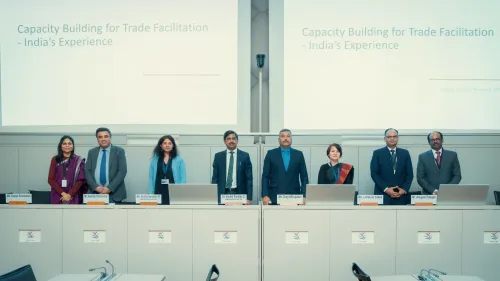
India has emerged as one of the leading nations in trade digitalisation and is well positioned to advance towards seamless cross-border paperless trade, according to policymakers, industry leaders, and trade experts who convened at a high-level international forum in Bangkok on 13 June 2026. The consensus view, expressed at the Asia-Pacific Trade Facilitation Forum x Paperless Trade Week (APTFF x PTW) 2026, signals a significant shift in how India's digital trade readiness is perceived regionally.
Key Developments at the Bangkok Forum
The high-level session, titled India's Trade Digitalisation: From Domestic to Cross-Border Integration, was organised by the Indian Council for Research on International Economic Relations (ICRIER) and the Research and Information System for Developing Countries (RIS), in partnership with the Asian Development Bank (ADB) and UN-ESCAP. The forum focused on leveraging India's existing digital trade infrastructure to deepen regional integration and enable cross-border paperless trade flows.
Participants noted a critical evolution in the policy landscape: paperless trade has moved beyond its origins as a trade facilitation tool and is now considered a strategic necessity, driven by geopolitical uncertainties, rising logistics costs, and increasingly complex compliance requirements.
India's Digital Trade Infrastructure
Experts highlighted that India has already achieved full implementation of domestic paperless trade measures, with cross-border performance improving markedly over the past decade. Platforms such as ICEGATE, SWIFT, faceless customs assessment, and the proposed BharatTradeNet were cited as concrete examples of India's growing digital capabilities and readiness for deeper regional interoperability.
During the event, ICRIER, RIS, and the Centre for WTO Studies jointly released a policy brief titled 'India's Drive Towards Paperless Trade: Recent Developments and the Way Forward'. The study concluded that India possesses much of the digital infrastructure and institutional framework required for accession to the Framework Agreement on Facilitation of Cross-Border Paperless Trade in Asia and the Pacific (CPTA) — a move that could reduce trade costs and strengthen regional integration.
Trade Facilitation Bill 2026 in Focus
A key legislative development flagged at the forum was the proposed Trade Facilitation Bill, 2026, which is expected to provide legal recognition to electronic trade documents and align India's regulatory framework with international standards. Experts described the bill as a critical enabler for India's transition from domestic digital trade maturity to full cross-border paperless integration.
What Needs to Happen Next
Despite the progress, experts stressed that significant work remains. Priorities identified include improving interoperability with partner countries, launching pilot projects on cross-border paperless trade, expanding capacity-building initiatives, and strengthening support for MSMEs through simplified digital compliance procedures. Notably, MSME integration was flagged as a particular gap — small businesses stand to gain the most from reduced paperwork but currently face the steepest barriers to adoption.
With the CPTA accession framework on the table and the Trade Facilitation Bill advancing, India's next moves in trade digitalisation will be closely watched across the Asia-Pacific region.
Point of View
But the harder test — cross-border interoperability with partner countries — remains largely aspirational. The CPTA accession discussion has been circulating in policy circles for years; what is new is the institutional consensus and the legislative vehicle in the Trade Facilitation Bill, 2026. The real bottleneck is not infrastructure but legal harmonisation and MSME uptake, two areas where India has historically moved slowly. If the bill stalls or the BharatTradeNet rollout mirrors past e-governance delays, the Bangkok consensus will remain a talking point rather than a trade reality.
NationPress
13 Sept 2026
Frequently Asked Questions
What is cross-border paperless trade and why does it matter for India?
Cross-border paperless trade refers to the digital exchange of trade documents — such as invoices, certificates of origin, and customs declarations — eliminating paper-based processes across borders. For India, it matters because it can significantly reduce trade costs, speed up customs clearance, and improve competitiveness for exporters, particularly MSMEs.
What is the Trade Facilitation Bill, 2026?
The Trade Facilitation Bill, 2026 is a proposed Indian legislation that would grant legal recognition to electronic trade documents and align the country's regulatory framework with international standards. Experts at the Bangkok forum described it as a critical enabler for India's shift from domestic digital trade maturity to full cross-border paperless integration.
What is BharatTradeNet and how does it support paperless trade?
BharatTradeNet is a proposed digital trade infrastructure platform in India designed to integrate trade-related data and document flows. It was cited at the APTFF x PTW 2026 forum alongside ICEGATE and faceless customs assessment as evidence of India's growing readiness for regional digital trade interoperability.
What is the CPTA and is India joining it?
The CPTA, or Framework Agreement on Facilitation of Cross-Border Paperless Trade in Asia and the Pacific, is a UN-ESCAP treaty aimed at enabling paperless trade across the region. A joint policy brief by ICRIER, RIS, and the Centre for WTO Studies concluded that India already possesses much of the infrastructure needed for accession, though a formal decision has not yet been announced.
What are the next steps for India on cross-border paperless trade?
Experts at the Bangkok forum identified several priorities: improving interoperability with partner countries, launching pilot projects on cross-border paperless trade, expanding capacity-building programmes, and simplifying digital compliance for MSMEs. The passage of the Trade Facilitation Bill, 2026 is considered the most immediate legislative milestone.