India Showcases Innovative Customs Reforms at WTO Meeting in Geneva
Synopsis
India's recent presentation at the WTO in Geneva showcased its commitment to enhancing trade facilitation through innovative customs reforms. Learn how these initiatives reflect India's proactive role in global trade practices and capacity building efforts for developing nations.
Key Takeaways
India's commitment to WTO TFA: Meeting all commitments on time.
Focus on digitalization: Establishing a paperless customs ecosystem.
Capacity building: Training programs for developing countries.
Participation from global delegates: Interest from 40 countries in India's reforms.
Enhanced trade facilitation: Streamlined processes benefiting global trade.
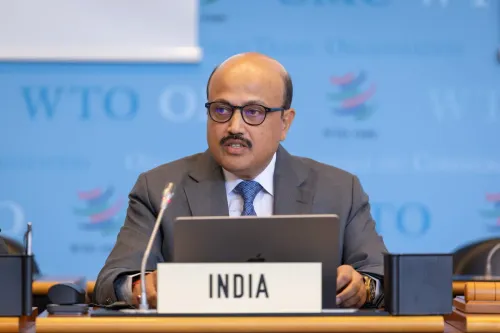
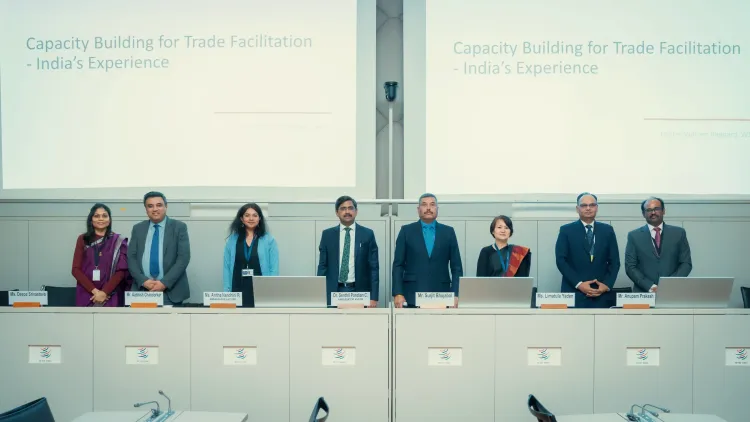
New Delhi, Feb 26 (NationPress) The Central Board of Indirect Taxes and Customs (CBIC), in collaboration with India’s Permanent Mission to the WTO in Geneva, conducted specialized sessions focused on trade during the Committee on Trade Facilitation meeting at the World Trade Organisation (WTO) in Geneva, as per an official release on Thursday.
The event, held on Tuesday, featured two targeted sessions on trade facilitation and capacity building, showcasing India’s significant reforms under the WTO Trade Facilitation Agreement (TFA). This program was strategically planned ahead of India’s 8th Trade Policy Review scheduled for July 2026. The gathering saw active participation from WTO members and the Secretariat, with representatives from about 40 nations, indicating a robust interest in India’s insights and successful practices, according to the statement.
With a successful track record of meeting WTO TFA obligations, India is now advancing towards “TFA Plus” initiatives via the National Trade Facilitation Action Plan (NTFAP 3.0), intended to exceed essential requirements and align with rising global best practices. During the trade facilitation session, the Indian Customs delegation emphasized its comprehensive approach to Customs reforms, pioneering the development of a faceless, contactless, and paperless Customs framework through extensive digitalization and process optimization.
India has successfully notified all of its TFA commitments within the required timelines, demonstrating its ongoing dedication to bolstering transparency, improving inter-agency collaboration, and streamlining cross-border trade processes.
The CBIC highlighted its advanced, domestically developed systems, including a comprehensive customs automation system with a single window interface, a strong risk management system (RMS), and the authorized economic operator (AEO) program.
The capacity-building session emphasized India’s proactive role in sharing its expertise with developing and least-developed countries, particularly from the Global South. The National Academy of Customs, Indirect Taxes & Narcotics (NACIN) provides structured training programs for officers of both Indian and foreign customs administrations.
Training initiatives conducted by the Central Revenue Control Laboratory (CRCL) of India for international participants were also showcased. Both institutions are recognized by the WCO as the Regional Training Centre for Asia-Pacific and the Regional Customs Laboratory, respectively. Since 2022, NACIN has successfully conducted 65 training programs, benefiting over 1,800 international participants from roughly 30 countries, many in collaboration with various international entities like WCO, ADB, and others.
Additionally, CRCL has trained over 300 international participants. India expressed its readiness to collaborate with nations, especially developing ones, to enhance their capabilities in fulfilling trade facilitation Agreement commitments. Participants expressed appreciation for the state-of-the-art facilities of these institutions and the training provided by India’s leading institutions.
Surjit Bhujabal, Special Secretary and Member (Customs), noted that India’s digitization and modernization of customs procedures over the past decade have significantly contributed to trade growth and deeper integration into global value chains. The Indian Customs digital ecosystem connects traders, customs authorities, banks, and logistics operators, enabling electronic processing of customs documentation, resulting in decreased transaction costs and quicker clearance times.
Point of View
India’s active participation in the WTO reflects its commitment to modernizing trade practices and fostering collaboration with developing nations. By sharing its advancements and expertise, India is not only enhancing its own trade ecosystem but also contributing to global economic growth.
NationPress
10 Oct 2026
Frequently Asked Questions
What are the key reforms India is promoting at the WTO?
India is promoting transformative reforms under the WTO Trade Facilitation Agreement, focusing on digitalization, transparency, and inter-agency collaboration in customs procedures.
How many countries participated in the sessions held in Geneva?
Delegates from around 40 countries participated, indicating a strong interest in India's customs reforms and trade facilitation practices.
What is the National Trade Facilitation Action Plan?
The National Trade Facilitation Action Plan (NTFAP 3.0) aims to implement 'TFA Plus' measures, exceeding minimum requirements and aligning with global best practices.
How does India's customs digital ecosystem benefit trade?
India's customs digital ecosystem facilitates electronic processing, reducing transaction costs and speeding up clearance times for traders.