India-UK FTA historic for trade and competitiveness: NABARD Chairman

Synopsis
NABARD Chairman Dr. Shaji Krishnan V called the India-UK FTA a historic deal that goes beyond tariffs — covering trade, investment, services and technology. His caveat is the real story: the gains depend entirely on whether India builds the enabling domestic environment to back it up, and whether small farmers are genuinely shielded from competitive pressures.
Key Takeaways
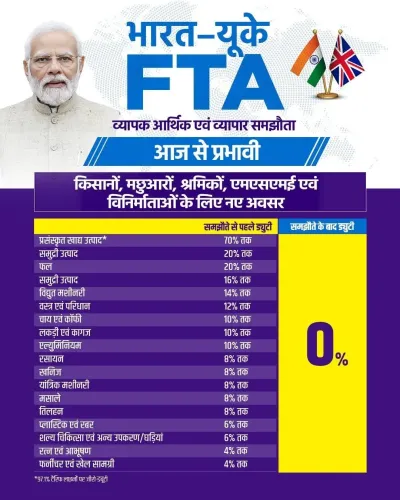
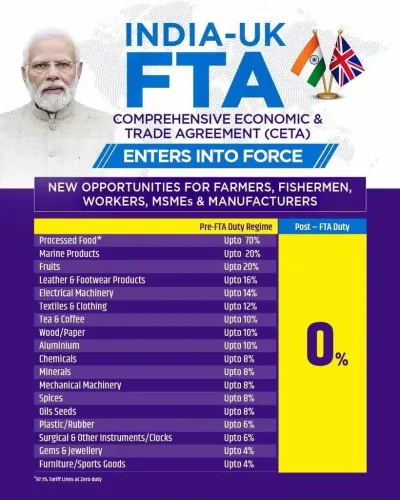
Shaji Krishnan V called the India-UK FTA a historic pact on 16 July , citing zero-duty access for several Indian products.
The agreement covers trade, investment, services and technology , making it one of India's most comprehensive bilateral deals.
NABARD is repositioning from a credit institution to a rural infrastructure financier , mapping agricultural value chains across the country.
Nearly 70,000 primary cooperative societies have been computerised to improve transparency and operational efficiency.
PM Modi has prioritised protecting small and marginal farmers during trade negotiations, according to Dr.
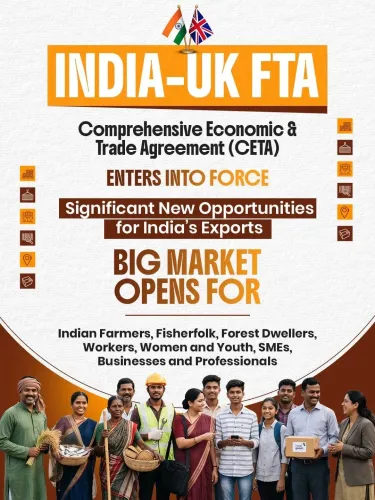
The India-UK Free Trade Agreement (FTA) is a landmark pact that will significantly boost Indian exports, sharpen the competitiveness of domestic industries, and deepen economic ties between the two democracies, NABARD Chairman Dr. Shaji Krishnan V said on Thursday, 16 July. Speaking in Mumbai, the head of the National Bank for Agriculture and Rural Development described the deal as a milestone that delivers zero-duty access for several Indian products while reducing tariffs on others.
What the FTA Means for Indian Industry
'From an economic perspective, the agreement will help boost India's exports by providing zero-duty access on many products and reducing tariffs on others. More importantly, it is a comprehensive agreement that covers trade, investment, services and technology,' Dr. Krishnan said.
He noted that greater market access and increased economic openness will allow Indian industries to expand their global footprint, improve competitiveness and enhance business turnover. He stressed, however, that realising these gains requires a strong enabling environment at home. 'The key task ahead is to complement this agreement with a strong enabling environment at home so that India can fully realise the benefits of this landmark deal,' he added.
NABARD's Expanding Role in Rural Infrastructure
Dr. Krishnan used the occasion to outline NABARD's strategic repositioning. The institution, he said, has moved well beyond its traditional mandate of credit supply and rural liquidity management to become a major financier of rural infrastructure and an investment enabler across the rural economy.
'NABARD is repositioning itself as a rural infrastructure financier while helping identify investment gaps across the rural sector,' he said. The bank is also mapping agricultural value chains to ensure sustainable livelihood creation through investments spanning production, processing, marketing and distribution.
Strengthening Cooperatives and FPOs
NABARD is working closely with Farmer Producer Organisations (FPOs) and cooperative institutions to build their capacity and deepen their participation in the rural economy. As part of these efforts, nearly 70,000 primary cooperative societies have already been computerised — a move Dr. Krishnan said will improve transparency, traceability and operational efficiency across the sector.
Institutional reforms and capacity-building initiatives are also transforming NABARD into what he described as an 'institution builder' and a catalyst for sustainable rural development.
Protecting Farmers in Trade Negotiations
On the intersection of trade policy and agriculture, Dr. Krishnan underscored that Prime Minister Narendra Modi has consistently emphasised protecting the interests of small and marginal farmers, artisans and other rural producers during trade negotiations. 'These agreements are not driven solely by market economics; they are also about protecting livelihoods. The government has remained sensitive to this reality,' he said.
The India-UK FTA, years in the making, is widely seen as one of the most consequential bilateral trade deals India has concluded in recent years. With implementation details still being worked out, the focus now shifts to whether domestic policy can keep pace with the market opportunities the agreement unlocks.
Point of View
His institution will be among the first to feel it. His caveat about a 'strong enabling environment at home' is the understated crux: India has signed ambitious trade deals before and struggled to capture their full upside due to logistics gaps, standards compliance costs and weak FPO capacity. The computerisation of 70,000 cooperatives is a meaningful data point, but the distance between digitisation and genuine market integration remains large. The real test of this FTA will not be in the tariff schedules but in whether Indian agri-exporters can meet UK sanitary and phytosanitary standards at scale — something no trade deal can mandate on its own.
NationPress
15 Oct 2026
Frequently Asked Questions
What is the India-UK Free Trade Agreement?
The India-UK Free Trade Agreement is a comprehensive bilateral deal covering trade, investment, services and technology. It provides zero-duty access for several Indian products in the UK market while reducing tariffs on others, and is considered one of India's most significant trade agreements in recent years.
What did NABARD Chairman Dr. Shaji Krishnan V say about the FTA?
Dr. Krishnan described the India-UK FTA as a historic pact that will boost Indian exports, improve industry competitiveness and deepen economic ties between the two democracies. He stressed that India must build a strong domestic enabling environment to fully realise the deal's benefits.
How does the India-UK FTA affect Indian farmers and rural producers?
According to Dr. Krishnan, Prime Minister Narendra Modi has prioritised protecting small and marginal farmers, artisans and rural producers throughout the negotiations. He said the agreements are not driven solely by market economics but also by the need to protect livelihoods.
What is NABARD's new role in the rural economy?
NABARD is repositioning itself from a traditional credit and rural liquidity institution to a major rural infrastructure financier. It is mapping agricultural value chains, working with Farmer Producer Organisations and cooperative institutions, and has computerised nearly 70,000 primary cooperative societies to improve transparency and efficiency.
Which sectors does the India-UK FTA cover?
The India-UK FTA is a comprehensive agreement covering trade, investment, services and technology. It provides zero-duty or reduced-tariff access for a range of Indian products in the UK market, with the specific sectoral schedules being implemented following the deal's conclusion.