India-US hydrocarbon trade to anchor $500 billion bilateral goal by 2030

Synopsis
A new USIBC and Grant Thornton Bharat report positions hydrocarbons — LNG, crude oil, LPG, ethane, propane — as the cornerstone of the India-US push toward $500 billion in bilateral trade by 2030. The report goes further than commodity trade, recommending an AI-Powered Energy Task Force and a two-way investment corridor that could reshape both countries' energy supply chains.
Key Takeaways
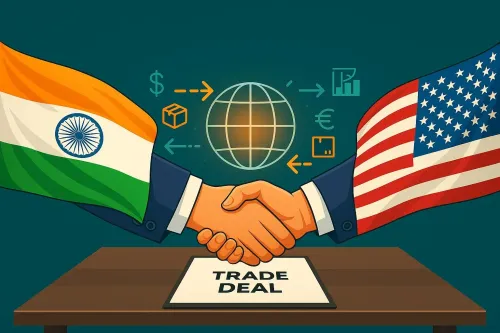
A joint USIBC and Grant Thornton Bharat report released on 10 June identifies hydrocarbon trade as the primary driver of the India-US $500 billion trade goal by 2030 .
Key commodities include LNG, crude oil, LPG, ethane, and propane .
The report recommends three priorities: expand hydrocarbon trade, improve the investment environment, and diversify supply chains.
US investment opportunities identified in India span upstream E&P, LNG infrastructure, city gas distribution , and petrochemicals .
Indian firms are encouraged to invest in US LNG export facilities, shale assets , and petrochemical feedstock chains .
The report proposes an India-US AI-Powered Energy Task Force covering forecasting, seismic interpretation, and digital twin technologies.
India and the United States are poised to leverage deep hydrocarbon trade ties as a primary engine to achieve their shared $500 billion bilateral trade target by 2030, according to a joint report released on Wednesday, 10 June by the US-India Business Council (USIBC) and Grant Thornton Bharat. The report identifies energy commodities — including LNG, crude oil, LPG, ethane, and propane — as central to unlocking new investment flows and reinforcing supply chain resilience for both nations.
From Buyer-Seller to Strategic Partners
The report frames the India-US energy relationship as undergoing a fundamental structural shift — moving well beyond a conventional commodity trade arrangement into a multi-dimensional strategic partnership spanning trade, investment, technology, infrastructure, and energy security.
Rahul Sharma, Managing Director of USIBC India, described the transformation in direct terms. 'The evolution of the India-US energy relationship reflects the broader trajectory of our bilateral partnership — moving from transactional engagement to deeper strategic integration,' he said. He added that both nations are 'uniquely positioned to collaborate across energy, technology and investment to strengthen energy security, support economic growth, and create new pathways for expanding bilateral trade in the years ahead.'
Three Priority Actions Outlined
The report prescribes three immediate priorities for both governments and industry: expand the scale and value of hydrocarbon trade; build a more attractive and predictable investment environment; and diversify supply chains to secure long-term energy resilience. These recommendations signal a shift in policy framing — from opportunistic trade to deliberate strategic alignment.
Amit Kumar, Partner and Energy and Renewables Industry Leader at Grant Thornton Bharat, noted that the India-US energy partnership is entering 'a new phase that extends beyond commodity trade to deeper collaboration across investment, technology, infrastructure and supply chains.'
Investment Opportunities on Both Sides
The report maps out substantial US investment opportunities within India's energy sector, including upstream exploration and production, LNG infrastructure, city gas distribution, gas-based power generation, and downstream petrochemical development. Notably, the report also identifies a reverse investment corridor — Indian companies are encouraged to strengthen their presence in the US through stakes in LNG export facilities, upstream oil and gas assets, shale resources, and petrochemical feedstock chains.
AI-Powered Energy Task Force Proposed
Among its more forward-looking recommendations, the report calls for the establishment of an India-US AI-Powered Energy Task Force to accelerate technology adoption across the hydrocarbon sector. Priority areas include AI-driven energy forecasting, seismic interpretation, exploration optimisation, predictive maintenance, and digital twin technologies for real-time asset monitoring and operational efficiency.
This comes amid a broader push by both governments to deepen technology cooperation, and positions the energy sector as a potential proving ground for joint AI deployment at scale. Whether these recommendations translate into formal policy commitments will be closely watched as bilateral trade negotiations continue.
Point of View
But this report is the first to map hydrocarbons explicitly as its structural backbone — which is a significant framing shift. India's growing appetite for US LNG gives Washington a durable export market; for New Delhi, it is supply diversification away from the Gulf. The proposed AI-Powered Energy Task Force is the more interesting signal: it suggests both sides see the hydrocarbon sector not just as a trade balancer but as a technology collaboration frontier. The real test will be whether the 'predictable investment environment' recommendation translates into concrete regulatory reform in India's upstream sector, which has historically deterred foreign capital despite attractive geology.
NationPress
26 Sept 2026
Frequently Asked Questions
What is the India-US $500 billion trade target and when is it due?
India and the United States have set a shared goal of reaching $500 billion in bilateral trade by 2030. A joint report by USIBC and Grant Thornton Bharat released on 10 June identifies hydrocarbon trade as the single most important driver toward that target.
Which energy commodities are central to the India-US trade push?
The report highlights LNG, crude oil, LPG, ethane, and propane as the key hydrocarbons that will drive expanded bilateral trade. These commodities are expected to unlock new investment flows and strengthen energy security for both nations.
What investment opportunities does the report identify?
On the India side, the report points to upstream exploration and production, LNG infrastructure, city gas distribution, gas-based power, and petrochemicals as priority areas for US investment. It also encourages Indian companies to invest in US LNG export facilities, shale assets, and petrochemical feedstock chains.
What is the proposed India-US AI-Powered Energy Task Force?
The task force, recommended in the report, would accelerate AI adoption across the hydrocarbon sector. Its focus areas include AI-driven energy forecasting, seismic interpretation, exploration optimisation, predictive maintenance, and digital twin technologies for real-time asset monitoring.
How is the India-US energy relationship changing?
According to the report, the relationship is shifting from a traditional buyer-seller model to a strategic partnership covering trade, investment, technology, infrastructure, and energy security. USIBC India's Managing Director Rahul Sharma described it as moving 'from transactional engagement to deeper strategic integration.'