Will South Gujarat Farmers and Traders Benefit from the India-US Trade Deal?
Synopsis
The recent India-US trade agreement has sparked optimism among South Gujarat's farmers and traders. With zero tariffs on key agricultural products, stakeholders anticipate significant benefits. Discover how this deal aligns with Prime Minister Modi's vision for agricultural growth and how it safeguards Indian farmers' interests.
Key Takeaways
Zero tariffs on key agricultural exports like mango and banana.
Protection for domestic farmers through strict import regulations .
Enhanced market access for local produce in the US.
Positive sentiment among farmers and traders in South Gujarat .
Alignment with Prime Minister Modi's vision for agricultural prosperity.
Surat, Feb 8 (NationPress) The newly forged trade agreement between India and the United States has sparked a wave of optimism within the agriculture industry.
In light of this announcement, participants from South Gujarat expressed that it is anticipated to yield considerable advantages for both farmers and traders while safeguarding domestic interests.
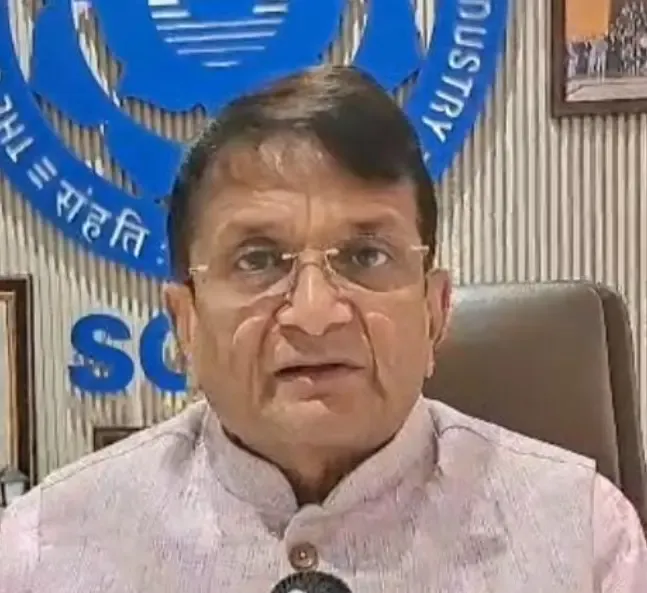
Babubhai Shaikh, who serves as the Director and Trader at the Agricultural Produce Market Committee (APMC) in Surat, praised the deal as a reflection of Prime Minister Narendra Modi’s commitment to the nation’s comprehensive development.
He highlighted the decision to exclude agriculture and dairy from the deal as “extremely commendable,” asserting that it protects the interests of Indian farmers.
Shaikh noted that the deal is set to greatly benefit farmers in Gujarat, especially those in South Gujarat.
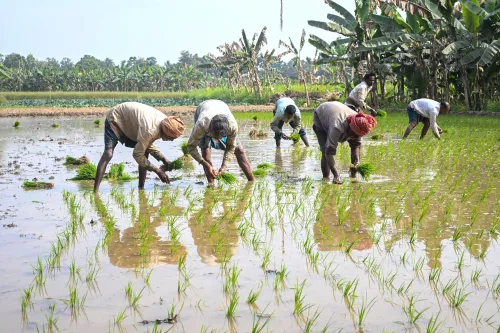
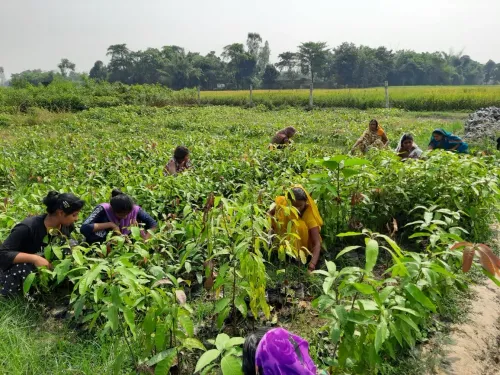
“Fruits like mango, sapota, papaya, and banana will now face zero per cent tariff. This will give significant relief and open up enhanced prospects for farmers in this area,” he stated, emphasizing that this move will facilitate better access to the US market for local produce.
According to him, the advantages extend beyond just farmers. He mentioned that traders are also pleased with the deal as it paves the way for direct trade with the United States under advantageous terms.
Shaikh underscored that stringent regulations have been established regarding imports to shield domestic producers. “Citrus fruits, potatoes, peas, beans, and frozen vegetables are prohibited from entering India. This ensures that our farmers are safeguarded while exports are allowed at zero per cent tariff,” he added.
He further stated that this strategy will be extremely beneficial for the country’s growth and resonates with the Prime Minister’s vision of doubling farmers’ income.
Talking about vegetable exports, Shaikh remarked, “Products like Indian beans, brinjal, and other vegetables are exported to the US, and we expect an increase in these exports following the removal of tariffs.
Reflecting on previous tariff hikes, Shaikh recounted that trade had sharply declined. “Our trade dropped by nearly 70 per cent, and imports of fruits and vegetables were significantly affected. With this new announcement, both traders and farmers will benefit, motivating farmers to advance in agriculture,” he explained.
Experts have also pointed out that India stands to gain from the updated tariff structure outlined in the deal.
They remarked that the US previously imposed a 25 per cent tariff on Indian goods, which was later increased by an additional 25 per cent, but has now been reduced from 50 per cent to 18 per cent—an outcome viewed as favorable for India.
Nikhil Madrasi, President of the South Gujarat Chamber of Commerce and Trade, remarked that India’s strategy of exploring alternative global markets after tariff increases by the US has proven successful.
“We have not relied on just one country. Now that tariffs have been lowered, the new markets we have cultivated will continue to benefit us,” he stated.
Madrasi emphasized that the agreement fortifies India’s determination to avoid over-reliance on any single nation.
He pointed out that India’s exports to the US are valued at $86.5 billion, while imports total $45.3 billion, indicating that significant changes are unlikely.
“We made it clear that we would not yield, but we would persist in dialogue. I believe this deal is the result of that dialogue,” he concluded.
Point of View
It is evident that the recently concluded trade deal between India and the United States is significant for our agricultural sector. By safeguarding domestic interests while enhancing export opportunities, this agreement reflects a balanced approach. It is crucial that we support our farmers and traders while fostering international relations that promote growth.
NationPress
25 Sept 2026
Frequently Asked Questions
What are the key benefits of the India-US trade deal for farmers?
The trade deal allows for zero tariffs on certain fruits and vegetables, enhancing market access for Indian farmers and providing them with better export opportunities.
How does this deal protect domestic farmers?
The agreement excludes agriculture and dairy from its scope and imposes strict import regulations, ensuring that domestic producers are safeguarded from foreign competition.
What has been the response from traders regarding the deal?
Traders have welcomed the deal as it facilitates direct trade with the US under favorable conditions, boosting their operations.
How will the tariff reductions impact trade?
The reduction of tariffs from 50% to 18% is expected to significantly increase exports from India to the US, benefiting various sectors.
What is the projected impact on India's economy?
Experts believe the revised tariff structure will promote agricultural growth and contribute positively to India's overall economic development.