How Will the India–US Trade Agreement Alleviate Economic Uncertainties?
Synopsis
The recent India–US trade deal is set to reshape the economic landscape by mitigating trade uncertainties. SEBI Chairman Tuhin Kanta Pandey emphasizes the importance of this agreement in fostering foreign investment and enhancing market stability. Discover how these changes can impact India's economic growth.
Key Takeaways
The India–US trade deal is expected to remove trade uncertainties.
It aims to enhance economic stability and attract foreign investments.
SEBI is focused on creating a frictionless environment for investors.
There are no immediate plans for new regulations in the derivatives market.
The corporate bond market faces transparency and liquidity challenges.
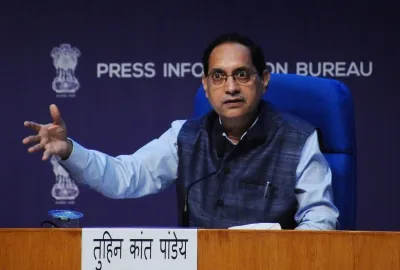
Mumbai, Feb 4 (NationPress) The Chairman of the Securities and Exchange Board of India (SEBI), Tuhin Kanta Pandey, stated on Wednesday that the India–US trade agreement is poised to eliminate trade uncertainties, enhance economic stability, and attract increased foreign investments into India.
During the launch of an outreach initiative concerning corporate bonds, Pandey emphasized that the resolution of trade tensions and regulatory challenges enhances capital formation, thereby accelerating investment decisions.
He noted that increased predictability would also positively influence the exchange rate. His comments were made in response to inquiries regarding the potential for the deal to stimulate foreign investment inflows.
Following the announcement of the trade agreement, which included a reduction in tariffs on Indian goods, foreign portfolio investors became net buyers in the stock market, acquiring Indian equities worth Rs 7,561 crore on Tuesday.
The SEBI chief remarked that the market regulator's mission is to create a simple, predictable, and frictionless environment for foreign investors to facilitate capital movement.
"SEBI has been consistently enhancing its processes to simplify investing in India," he noted.
He highlighted initiatives such as a standardized contract note, streamlined registration processes, digital signatures, and proposed netting of margins for foreign investors, all aimed at fostering a better business climate.
Pandey also addressed concerns raised by traders regarding potential tightening of regulations in the derivatives market, particularly after the Union Budget increased the securities transaction tax on futures and options to curb speculation.
He reassured that SEBI is not considering any new regulatory measures in the derivatives market at this time. The regulator remains vigilant in monitoring the market using data and other inputs, and the current framework will be maintained.
Regarding the corporate bond market, Pandey mentioned that SEBI is collaborating closely with industry stakeholders and investors to enhance the sector.
He acknowledged that the corporate bond market encounters numerous challenges, such as a heavy reliance on highly rated issuers, fundraising predominantly by financial institutions, extensive private placements that limit transparency, and low liquidity in the secondary market.
Point of View
The India–US trade agreement represents a pivotal moment for India's economic future. By addressing trade uncertainties, this deal not only enhances investor confidence but also positions India as a favorable destination for foreign capital. It is crucial for national growth and stability.
NationPress
26 Sept 2026
Frequently Asked Questions
What is the significance of the India–US trade deal?
The India–US trade deal is significant as it aims to eliminate trade uncertainties, enhance economic stability, and attract more foreign investments into India.
How does the SEBI Chairman view foreign investments post-deal?
SEBI Chairman Tuhin Kanta Pandey believes that the trade deal will lead to greater predictability in the market, positively impacting foreign investment inflows.
What measures is SEBI taking to facilitate foreign investment?
SEBI is implementing various measures such as a common contract note, simplified registration processes, and the use of digital signatures to enhance the ease of doing business for foreign investors.
Are there any new regulations expected in the derivatives market?
Currently, SEBI is not planning any new regulatory actions in the derivatives segment, maintaining a close watch on the market's dynamics.
What challenges does the corporate bond market face?
The corporate bond market faces challenges such as over-reliance on highly rated issuers, limited transparency due to private placements, and low liquidity in the secondary market.