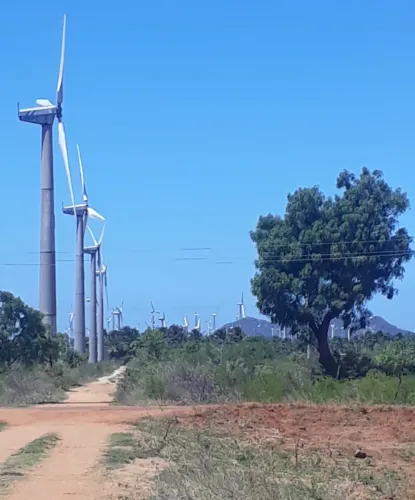
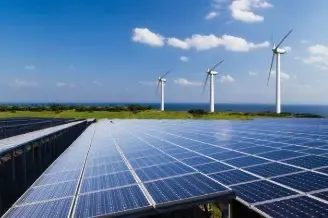
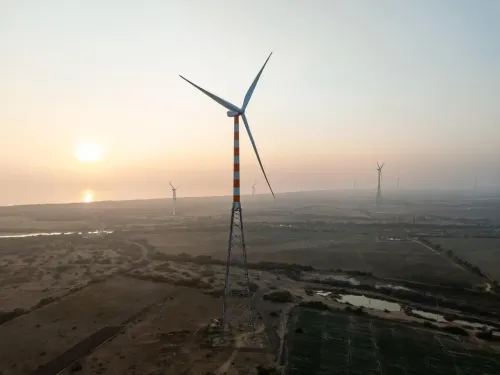
India's onshore wind potential hits 2,933 GW at 200 m, far above earlier estimates: TERI
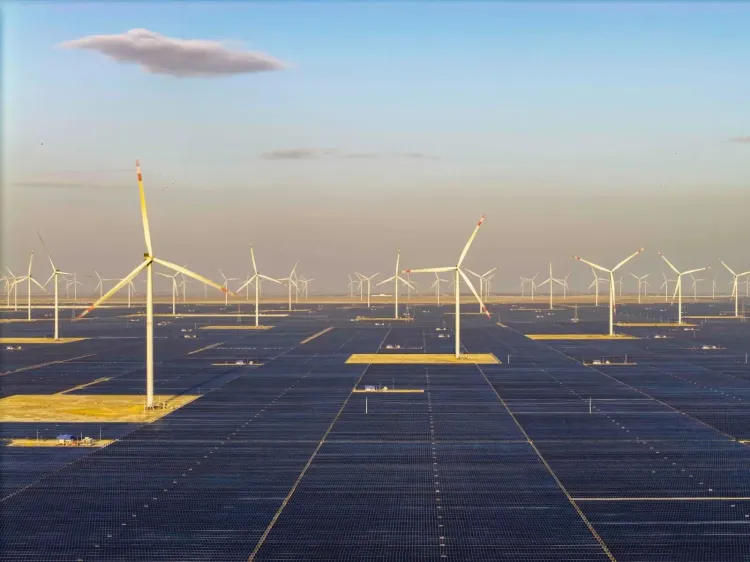
Synopsis
A TERI study has quietly rewritten India's wind energy ceiling: the country's onshore potential is now pegged at a staggering 2,933.9 GW at 200 m hub height — against an installed base of just 59.20 GW. With electricity demand projected to grow 11-fold by 2070 and a net-zero scenario requiring 891 GW of wind alone, the gap between ambition and infrastructure has never looked wider — or more actionable.
Key Takeaways
TERI estimates India's onshore wind potential at 1,209.7 GW at 150 m and 2,933.9 GW at 200 m hub height.
Offshore potential is put at approximately 220 GW and 277 GW respectively, at a minimum wind speed of 7.0 m/s .
India's installed wind capacity stood at 59.20 GW as of 30 September 2026 , after record additions of 6.05 GW in FY26 .
Rajasthan , Gujarat , Karnataka , Maharashtra , and Tamil Nadu together hold nearly 79% of estimated potential at 150 m.
India's on-grid electricity demand is projected to rise roughly 11-fold by 2070 ; the net-zero scenario requires 891 GW of wind capacity.
The report identifies six industry pathways including repowering, higher-hub-height development, and floating offshore wind.
India's onshore wind energy potential is dramatically higher than previously thought, with new assessments placing it at 1,209.7 GW at a hub height of 150 metres and 2,933.9 GW at 200 metres, according to a study by The Energy and Resources Institute (TERI) released on 2 November 2026. The findings significantly revise earlier benchmarks and open fresh pathways for India's clean energy transition.
Key Findings on Wind Potential
The TERI study estimates India's offshore wind potential at approximately 220 GW and 277 GW respectively, at a minimum wind speed of 7.0 m/s. The report identified priority areas for further resource validation and outlined concrete pathways to strengthen wind development, supporting infrastructure, and domestic industry capabilities.
Geographically, Rajasthan, Gujarat, and Karnataka account for about 61% of the estimated potential at 150 m. When Maharashtra and Tamil Nadu are included, the combined share rises to nearly 79% — underscoring how a handful of states will bear the bulk of any large-scale wind buildout.
Where India Stands Today
India's installed wind capacity stood at 59.20 GW as of 30 September 2026, following record additions of approximately 6.05 GW in FY26. While this marks genuine momentum, the gap between installed capacity and the newly estimated potential is vast — highlighting both the opportunity and the scale of investment still required.
'As India's electricity demand grows and renewable energy deployment expands, a better understanding of wind resources can help inform generation planning, renewable energy procurement, and transmission investment,' the report noted.
The Net-Zero Pathway
The electricity-transition study projected a roughly 11-fold increase in India's on-grid electricity demand by 2070. Under its net-zero scenario, the country would need 891 GW of wind capacity by 2070 — a figure that illustrates the scale of possible expansion under one set of technology-cost and system assumptions.
The report stressed that more spatially resolved wind assessments are needed to test where renewable capacity can realistically be developed, and to identify which investments in transmission, flexibility, and manufacturing are required to support that growth.
Six Pathways for Industry
The TERI study laid out six pathways for industry utilisation: greenfield onshore development; repowering of existing wind farms; higher-hub-height wind development; wind-solar-storage integration and industrial procurement; fixed-bottom offshore wind; and floating offshore wind. Together, these pathways reflect both near-term opportunities and longer-horizon bets that will require significant policy and capital support.
As India accelerates toward its net-zero objective, the study's findings are expected to inform transmission planning, renewable procurement strategies, and manufacturing investment decisions in the years ahead.
Point of View
933 GW — it's 59.20 GW, India's current installed base. The chasm between potential and reality exposes a decade of underinvestment in transmission, grid flexibility, and manufacturing depth. Five states holding nearly 79% of the resource also means the rest of India risks being left behind unless national procurement frameworks incentivise geographic diversification. And the 891 GW net-zero target by 2070 is less a plan than a stress test — without binding milestones, independent capacity tracking, and a serious floating offshore programme, the number will age like previous headline targets that went unmet.
NationPress
2 Nov 2026
Frequently Asked Questions
What is India's onshore wind energy potential according to the TERI report?
According to the TERI study released on 2 November 2026, India's theoretical onshore wind potential is 1,209.7 GW at a hub height of 150 metres and 2,933.9 GW at 200 metres — significantly higher than earlier estimates. The report also puts offshore potential at approximately 220 GW and 277 GW respectively at a minimum wind speed of 7.0 m/s.
How much wind capacity has India installed so far?
India's installed wind capacity stood at 59.20 GW as of 30 September 2026, following record additions of about 6.05 GW in FY26. This remains a small fraction of the newly estimated 2,933.9 GW potential at 200 m hub height.
Which states have the highest wind energy potential in India?
Rajasthan, Gujarat, and Karnataka together account for about 61% of estimated onshore wind potential at 150 m. Adding Maharashtra and Tamil Nadu raises the combined share to nearly 79%, making these five states the most critical geography for any large-scale wind expansion.
What does the TERI report say about India's net-zero wind target?
The report's net-zero scenario projects 891 GW of wind capacity by 2070, based on one set of technology-cost and system assumptions. It also projects roughly an 11-fold increase in India's on-grid electricity demand by 2070, underscoring the scale of investment required.
What are the six pathways identified in the TERI wind report?
The TERI study outlines six pathways: greenfield onshore development, repowering of existing wind farms, higher-hub-height wind development, wind-solar-storage integration and industrial procurement, fixed-bottom offshore wind, and floating offshore wind. These cover both near-term and longer-term opportunities for industry and policymakers.