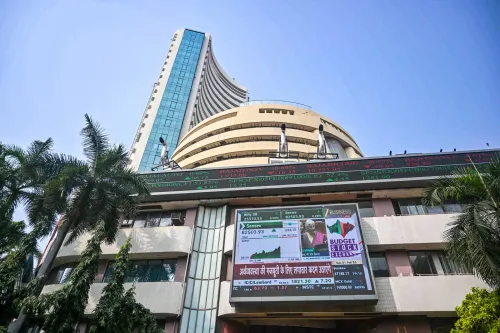
Sensex drops 473 points as US-Iran strikes send crude oil surging

Synopsis
A single overnight escalation between the US and Iran sent crude oil surging more than $4 a barrel and wiped nearly 473 points off the Sensex at the open — a reminder that India's equity markets, despite solid domestic fundamentals, remain acutely exposed to Middle East supply-shock risk. With US Treasury yields also threatening the 5% mark, the double-headed threat of oil and bond pressure could test India's resilience in the sessions ahead.
Key Takeaways
BSE Sensex opened 472.96 points lower at 76,471.32 on 2 September .
Nifty50 slid nearly 200 points to open at 23,858 .
Nifty Realty fell ~ 2% ; Nifty IT declined 1.82% ; Nifty Auto shed 1.78% .
Crude oil surged more than $4 per barrel , hitting a five-week high after US-Iran overnight strikes.
Analysts flagged US 10-year Treasury yield approaching 5% as a secondary risk for global equities.
Key Nifty support at 23,800 ; resistance at 24,150–24,215 .
Indian equity benchmarks opened sharply lower on Wednesday, 2 September, as a surge in crude oil prices rattled investor sentiment after the United States and Iran exchanged strikes overnight, escalating tensions across the Middle East. The BSE Sensex opened 472.96 points or 0.61% lower at 76,471.32, while the Nifty50 slid nearly 200 points or 0.82% to open at 23,858.
Sectors Under Pressure
Selling pressure was broad-based, with realty, IT, and auto stocks bearing the sharpest losses. The Nifty Realty index fell nearly 2%, while Nifty IT declined 1.82% and Nifty Auto shed 1.78%. Financial services, cement, media, FMCG, and metal indices also slipped into the red.
What Analysts Said
Market analysts noted that domestic fundamentals remain supportive, with robust economic activity and improving earnings prospects offering a cushion against global headwinds. However, the sharp rise in crude prices following the US-Iran escalation has emerged as a key near-term risk for Indian equities.
Analysts added that India's relatively comfortable current account position and ample foreign exchange reserves should help absorb the impact of elevated oil prices. The more significant risk, they cautioned, could come from rising US bond yields — a move in the US 10-year Treasury yield towards 5% could trigger a sharper correction in global equities.
Technical Outlook
Technically, the market remains vulnerable after repeated failed attempts to reclaim the 24,060–24,000 zone. A recent doji formation points to residual buying interest, but a decisive break below this support band could open the way to 23,800 initially, with 23,575 as the next downside target. On the upside, the 24,150–24,215 region remains a key resistance hurdle; a sustained move above it could signal a recovery of momentum.
Crude Oil and Global Markets
Crude oil surged more than $4 per barrel on Tuesday, reaching a five-week high, as heightened US-Iran tensions stoked fears of supply disruptions from the region. Asian shares also traded lower, weighed by a global bond market sell-off that dampened risk appetite across major indices. This is the latest in a series of geopolitically driven risk-off sessions that have kept emerging market investors on edge through the second half of 2025.
Point of View
A stable current account — offer a genuine buffer, but they cannot neutralise a sustained oil shock. The more underreported risk here is the US Treasury yield trajectory: if the 10-year pushes past 5%, FII outflows could compound the crude hit, turning a geopolitical wobble into a prolonged correction. The Nifty's failure to hold the 24,000 zone despite multiple attempts is a technical signal that bullish conviction is thinning — and thin conviction breaks fastest when external shocks arrive.
NationPress
2 Sept 2026
Frequently Asked Questions
Why did the Sensex fall sharply on 2 September?
The Sensex opened 472.96 points lower on 2 September after the United States and Iran exchanged strikes overnight, sending crude oil surging more than $4 per barrel to a five-week high. The spike in oil prices rattled investor sentiment and triggered broad-based selling across Indian equities.
Which sectors were hit hardest in today's market fall?
Realty, IT, and auto sectors bore the sharpest losses. The Nifty Realty index fell nearly 2%, Nifty IT declined 1.82%, and Nifty Auto shed 1.78%. Financial services, cement, media, FMCG, and metal indices also ended in the red.
What is the technical outlook for the Nifty after today's drop?
Analysts see the Nifty as technically vulnerable after repeated failures to reclaim the 24,060–24,000 zone. A break below this support could push the index towards 23,800 and then 23,575. A sustained move above 24,150–24,215 would be needed to signal a recovery.
How exposed is India to higher crude oil prices?
India is a major crude oil importer, making its current account and inflation outlook sensitive to global oil price swings. Analysts noted that India's comfortable current account position and foreign exchange reserves provide some buffer, but a prolonged surge in crude prices remains a meaningful macro risk.
What is the risk from rising US bond yields for Indian markets?
Analysts warned that a move in the US 10-year Treasury yield towards 5% could trigger a sharper correction in global equities, including India. Higher US yields typically prompt foreign institutional investors to shift capital away from emerging markets, adding downward pressure on Indian stocks.