Sensex, Nifty open flat as crude oil surges to $92 amid Middle East tensions
Synopsis
Indian equities opened virtually unchanged on 19 August as crude oil hit $92 on Iran's Strait of Hormuz closure and US 30-year yields touched a 17-year high. IT stocks defied the gloom with a 0.82% gain, but metals, auto, and pharma slipped — a split verdict that captures exactly how divided the market is between domestic strength and global risk.
Key Takeaways
Sensex opened at 77,218.05 , down 17.41 points ( 0.02% ), on 19 August .
Nifty50 started the session at 24,152.05 , declining 2.85 points ( 0.01% ).
Brent crude traded near $92 per barrel — its highest in over three weeks — after Iran kept the Strait of Hormuz closed and the US ruled out a ceasefire extension.
US 30-year bond yields hit their highest level since 2007 , dampening global risk appetite.
Nifty IT rose 0.82% , leading sectoral gainers; Nifty Metal was the top loser, down 0.35% .
Analysts see strong domestic fundamentals and FY27 earnings growth as buffers against external headwinds.
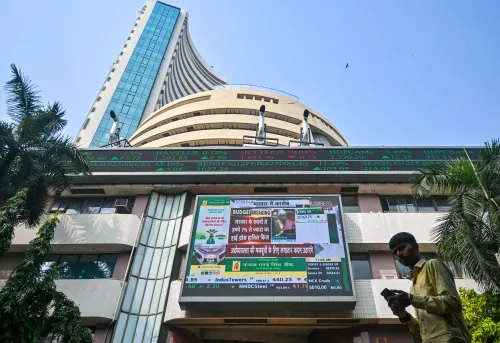
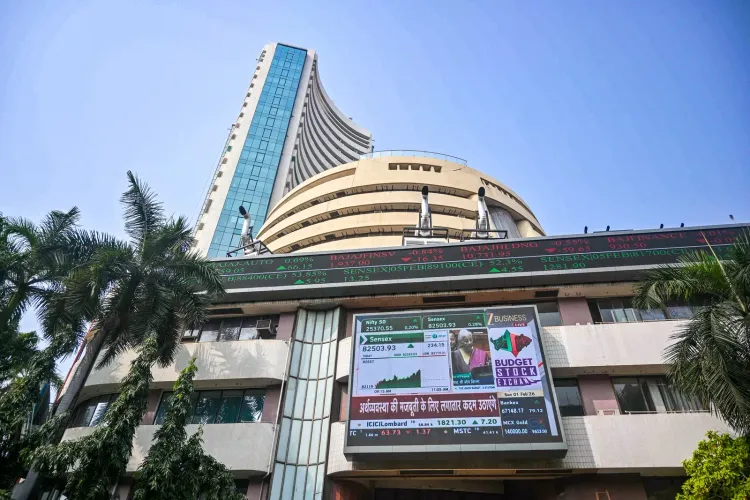
Sensex opened at 77,218.05, down 17.41 points or 0.02%, while the Nifty50 started Wednesday's session at 24,152.05, slipping 2.85 points or 0.01%, as crude oil prices surged to nearly $92 per barrel and rising global bond yields weighed on risk appetite. The muted open on 19 August reflects a tug-of-war between external headwinds and resilient domestic fundamentals.
What Is Driving the Pressure
The primary drag, according to analysts, is a sharp rise in crude oil prices driven by escalating Middle East tensions. Iran hardened its stance by declaring the Strait of Hormuz would remain closed, while the United States ruled out extending the ceasefire — a combination that pushed international benchmark Brent crude to its highest level in over three weeks, trading around $92 per barrel.
Compounding the pressure, US 30-year bond yields have climbed to their highest levels since 2007, raising the cost of capital globally and dampening appetite for equities. Elevated yields typically redirect institutional flows away from emerging markets, including India.
Sectoral Snapshot
IT stocks bucked the broader trend, with Nifty IT rising 0.82% in early trade — the top sectoral gainer. Nifty MidSmall IT and Telecom added 0.59%, while Nifty Realty and Nifty REITs and InvITs each edged up as much as 0.2%.
On the losing side, Nifty Metal fell 0.35%, Nifty Auto declined 0.14%, and Nifty MidSmall Healthcare dropped 0.10%. Nifty Pharma, Nifty Chemicals, and Nifty500 Healthcare each shed 0.09%.
Asian Markets and Global Context
The weakness in Indian indices mirrors a broader Asian market decline, driven in part by continued softness in semiconductor stocks. This is the third consecutive session in which crude-linked anxiety has unsettled regional equities, underscoring how tightly Indian markets remain coupled to geopolitical developments in the Middle East.
Why India Is Holding Up
Despite the external turbulence, market experts note that strong domestic fundamentals — including improving GDP growth prospects and robust earnings expectations for FY27 — are providing a cushion. Domestic institutional liquidity remains healthy, limiting sharp downside moves. Analysts suggest long-term investors could use the current softness to accumulate quality growth stocks, particularly given stronger momentum in the mid-cap and small-cap segments.
With crude prices and bond yields likely to remain volatile in the near term, the trajectory of the Middle East conflict and any shift in US Federal Reserve tone will be the key variables to watch in the sessions ahead.
Point of View
Which has direct implications for FII flows into Indian equities. The IT sector's outperformance is a tell — investors are rotating into export earners that benefit from a stronger dollar, even as rate-sensitive and commodity-linked sectors come under pressure. If crude holds above $90 through September, the RBI's inflation calculus and the government's fiscal math both get harder.
NationPress
3 Oct 2026
Frequently Asked Questions
Why did Sensex and Nifty open flat on 19 August?
Sensex and Nifty opened nearly unchanged on 19 August as rising crude oil prices near $92 per barrel and surging US bond yields dampened risk appetite. Iran's decision to keep the Strait of Hormuz closed and the US ruling out a ceasefire extension were the key triggers.
How high have US bond yields risen?
US 30-year bond yields have climbed to their highest level since 2007, according to analysts. This has raised the global cost of capital and is diverting institutional flows away from risk assets, including emerging market equities.
Which sectors gained and which fell in early trade?
Nifty IT led gains with a rise of 0.82%, followed by Nifty MidSmall IT and Telecom at 0.59% and Nifty Realty up 0.2%. On the downside, Nifty Metal fell 0.35%, Nifty Auto declined 0.14%, and Nifty Pharma and Nifty Chemicals each shed 0.09%.
Why is the Indian market relatively resilient despite global headwinds?
Analysts point to strong domestic fundamentals, improving GDP growth prospects, and robust earnings expectations for FY27 as key buffers. Healthy domestic institutional liquidity is also limiting sharp downside moves in Indian indices.
What should investors watch going forward?
The trajectory of the Middle East conflict — particularly any change in Iran's stance on the Strait of Hormuz — and US Federal Reserve commentary on interest rates are the primary variables. Continued crude price elevation above $90 could pressure inflation and India's current account, while any easing could provide relief to rate-sensitive sectors.