Sensex surges 874 points, Nifty tops 23,983 as crude oil falls below $100
Synopsis
Indian equities surged over 1 per cent on Monday after crude oil crashed below $100 a barrel for the first time in weeks, fuelled by reports of a near-finalised US-Iran memorandum of understanding. With Brent down over 6 per cent and the Strait of Hormuz potentially set to reopen, this could be the most consequential geopolitical trade for Indian markets in months.
Key Takeaways
Sensex jumped 874 points to an intraday high of 76,289 on 25 May ; Nifty50 rose 264 points to 23,983 .
Brent crude fell 6.16 per cent to $97.16 a barrel ; WTI dropped 6.5 per cent to $90.33 .
US President Donald Trump said a US-Iran memorandum of understanding had been largely negotiated, raising hopes of the Strait of Hormuz reopening.
Nifty Auto led sectoral gains at over 2 per cent ; Hindalco Industries was the top Nifty loser, down nearly 2 per cent .
Nifty Smallcap 50 and Nifty Smallcap 100 each rose over 1 per cent , with all broader indices in positive territory.
Analysts cited better-than-expected March-quarter earnings and rupee stability as additional tailwinds for the rally.
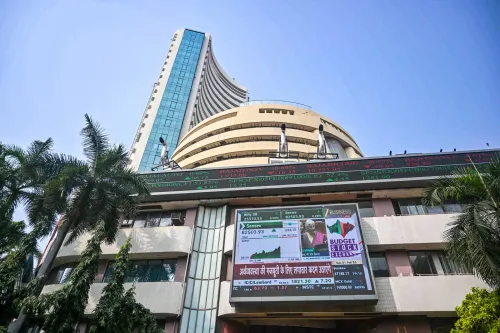
The BSE Sensex jumped as much as 874 points or 1.15 per cent to touch an intraday high of 76,289 in early trade on Monday, 25 May, while the Nifty50 climbed 264 points or 1.11 per cent to 23,983, as crude oil prices slipped below the $100-per-barrel mark for the first time in over two weeks. The rally was driven by hopes of a possible US-Iran peace deal that could reopen the Strait of Hormuz, easing global energy supply concerns.
What Drove the Rally
International benchmark Brent crude dropped 6.16 per cent to $97.16 a barrel, while US West Texas Intermediate (WTI) crude fell 6.5 per cent to $90.33 per barrel. The sharp decline in oil prices came after US President Donald Trump said that Washington and Tehran had largely negotiated a memorandum of understanding for a peace deal that could lead to the reopening of the Strait of Hormuz — a critical route that previously handled nearly one-fifth of global oil and LNG shipments before the conflict began.
Analysts noted that equities started the week on a positive note amid the easing crude prices, better-than-expected March-quarter earnings, and improving currency stability. According to market experts, the crude price slide below the $100 mark, if sustained, could emerge as a turning point for domestic markets.
Sectoral Performance
Nifty Auto led sectoral gains, rising over 2 per cent, followed by Nifty PSU Bank and Nifty Private Bank, which advanced up to 1 per cent. Nifty Oil & Gas, Nifty Realty, Nifty Consumer Durables, Nifty Cement, and Nifty Chemicals also traded in positive territory, with all sectoral indices remaining in the green.
In the broader market, smallcap indices led the charge — Nifty Smallcap 50 and Nifty Smallcap 100 each rose over 1 per cent. Broader benchmarks including Nifty 100, Nifty 200, and Nifty 500 also gained around 1 per cent each.
Top Losers
Hindalco Industries emerged as the top loser among Nifty stocks, falling nearly 2 per cent in early trade. ONGC, Max Healthcare, NTPC, and Infosys also traded lower, shedding up to 1 per cent. The divergence in ONGC's performance — despite crude falling — reflects investor concern about downstream pricing adjustments.
Global Cues and Rupee Stability
Asian equities witnessed a broad rally, with Japan's Nikkei and Taiwan's benchmark index each surging nearly 3 per cent, while Hong Kong's Hang Seng gained about 1 per cent. The positive momentum followed a firm session on Wall Street, where the S&P 500 and Nasdaq ended higher by 0.37 per cent and 0.19 per cent, respectively.
Experts also highlighted the recent appreciation of the rupee from its lows as an encouraging development, noting that currency stability could help revive foreign portfolio investor inflows. The strong performance of digital platform companies during the fourth-quarter earnings season was cited as another tailwind, with markets reportedly rewarding companies delivering healthy growth. With the US-Iran deal still being finalised, the trajectory of crude prices will remain the key variable for markets in the sessions ahead.
Point of View
But it rests on a fragile foundation — a US-Iran deal that has not yet been signed. Indian markets, structurally sensitive to oil prices given the country's import dependence, are right to price in the relief, but the speed of the move also embeds significant reversal risk if negotiations stall. Notably, ONGC's decline even as crude fell signals that investors are already gaming out the downstream pricing consequences for state-run energy firms. The rupee's stabilisation is the more durable positive here — sustained currency strength would do more for FII flows than a single session of oil relief.
NationPress
19 Sept 2026
Frequently Asked Questions
Why did the Sensex and Nifty rally on 25 May?
The Sensex and Nifty rose over 1 per cent on 25 May after crude oil prices fell below $100 a barrel for the first time in over two weeks, driven by hopes of a US-Iran peace deal. Better-than-expected March-quarter earnings and rupee stability also supported the rally.
How much did crude oil fall and why?
Brent crude dropped 6.16 per cent to $97.16 a barrel and WTI fell 6.5 per cent to $90.33 per barrel on 25 May. The decline followed reports that the US and Iran had largely negotiated a memorandum of understanding, raising expectations that the Strait of Hormuz could reopen.
Which sectors gained the most in Monday's rally?
Nifty Auto was the top sectoral gainer, rising over 2 per cent. Nifty PSU Bank and Nifty Private Bank advanced up to 1 per cent, while Nifty Oil & Gas, Nifty Realty, Nifty Consumer Durables, Nifty Cement, and Nifty Chemicals all traded in positive territory.
Which stocks fell despite the broader market rally?
Hindalco Industries was the top Nifty loser, falling nearly 2 per cent. ONGC, Max Healthcare, NTPC, and Infosys also shed up to 1 per cent in early trade on Monday.
What is the significance of the Strait of Hormuz for global oil markets?
The Strait of Hormuz is a critical global energy chokepoint that previously handled nearly one-fifth of the world's oil and LNG shipments before the US-Iran conflict disrupted traffic. A potential reopening, if the peace deal is finalised, could significantly ease global energy supply pressures.