Crop Residue Management scheme gets ₹544 crore for 2026-27, first tranche released
Synopsis
India has earmarked ₹544.15 crore for stubble management in 2026-27 — nearly half already released — as Agriculture Minister Shivraj Singh Chouhan and Environment Minister Bhupender Yadav push for a permanent commercial market for crop residue. With 2.762 crore tonnes of paddy stubble to manage this season, the stakes for Delhi's winter air quality could not be higher.
Key Takeaways
The Centre has allocated ₹544.15 crore under the CRM scheme for 2026-27 ; the first tranche of ₹272.07 crore has been released.
Since 2018-19 , cumulative CRM outlay has reached ₹4,266.47 crore across Punjab, Haryana, UP, MP, and ICAR.
More than 3.54 lakh CRM machines and 43,500+ Custom Hiring Centres have been set up to date.
States plan to distribute 46,000+ machines and establish 910 new CHCs in 2026-27 , alongside 141 stubble supply chain projects.
An estimated 2.762 crore tonnes of paddy stubble is projected for the 2026 harvesting season.
Both ministers stressed ex-situ use via biomass plants, CBG units, ethanol facilities, and pellet units to create a permanent stubble market.
The Centre has allocated ₹544.15 crore under the Crop Residue Management (CRM) scheme for 2026-27, with the first instalment of ₹272.07 crore already disbursed to states, the Agriculture Ministry confirmed on 17 June 2026. The allocation signals a continued federal push to eliminate stubble burning ahead of the upcoming paddy harvesting season.
Scheme Background and Cumulative Outlay
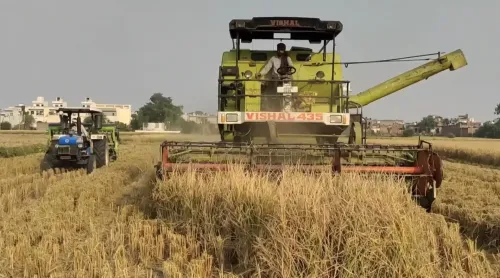
Launched in 2018-19 specifically to address the stubble-burning crisis, the CRM scheme has so far channelled a total of ₹4,266.47 crore to Punjab, Haryana, Uttar Pradesh, Madhya Pradesh, and the Indian Council of Agricultural Research (ICAR). Over that period, more than 3.54 lakh crop residue management machines have been distributed and more than 43,500 Custom Hiring Centres (CHCs) established across the beneficiary states.
What the Ministers Said
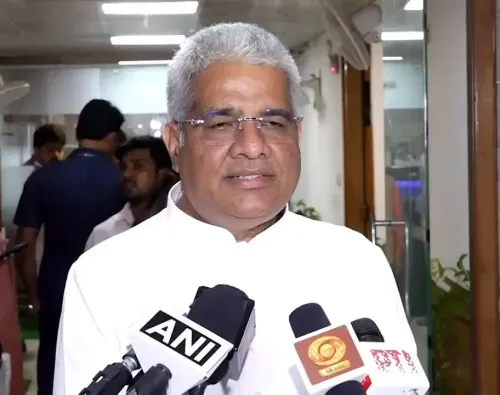
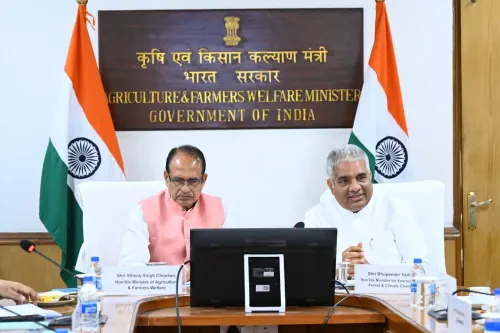
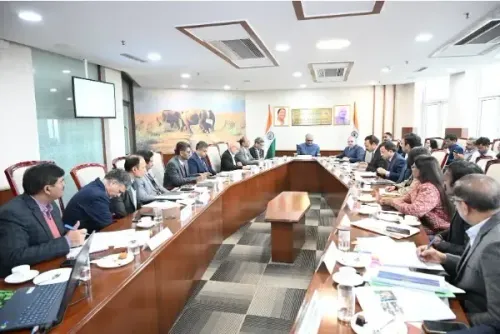
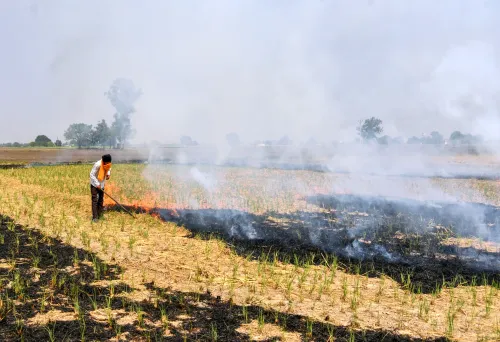
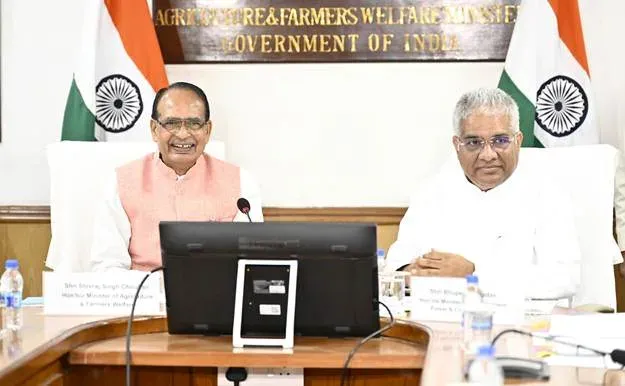
Agriculture Minister Shivraj Singh Chouhan and Environment, Forest and Climate Change Minister Bhupender Yadav jointly chaired a high-level inter-ministerial meeting to review CRM progress and assess state preparedness for the 2026 paddy harvesting season. Chouhan said stubble burning 'not only pollutes the environment but also affects the health of Mother Earth,' adding that it destroys beneficial insects, reduces soil fertility, and harms public health. Both ministers underscored that halting the practice is 'extremely necessary.'
Targets Set for 2026-27
States have submitted action plans for managing an estimated 2.762 crore tonnes of paddy stubble during the 2026 harvest. The targets for the current year include distribution of more than 46,000 CRM machines, establishment of 910 new Custom Hiring Centres, and development of 141 stubble supply chain projects — each figure exceeding prior-year benchmarks, according to the ministry.
Ex-Situ Use: Turning Stubble into Revenue
The inter-ministerial meeting also emphasised scaling up ex-situ utilisation of crop residue through biomass power plants, compressed biogas (CBG) units, ethanol production facilities, and pellet manufacturing units. Both ministers argued that building a permanent commercial market for stubble is the only durable solution — one that converts agricultural waste into an economic resource for farmers rather than a disposal problem. This comes amid persistent air quality emergencies in the Indo-Gangetic Plain every October-November, when stubble fires routinely push Delhi's AQI into the 'severe' category.
Reduction in Burning Incidents
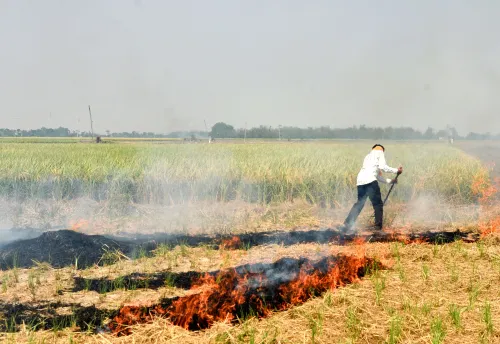
Chouhan credited the combined efforts of the Centre, state governments, ICAR institutions, Agricultural Science Centres, local bodies, and farmers for a significant reduction in stubble burning incidents in recent years. Independent satellite data from agencies monitoring farm fires in Punjab and Haryana has broadly corroborated a downward trend, though advocacy groups argue the absolute numbers remain unacceptably high. The 2026-27 season will be a critical test of whether the expanded machine distribution and CHC network translate into measurable fire-count reductions.
Point of View
266 crore into the CRM scheme, stubble fires still define Delhi's autumn air quality crisis — which raises an uncomfortable question about whether machine distribution alone can change farmer behaviour at scale. The pivot toward ex-situ commercial markets (biogas, ethanol, pellets) is conceptually sound, but those supply chains remain thin and geographically patchy. Without guaranteed offtake prices for residue, farmers face a rational economic choice: burning is still cheaper and faster than hauling stubble to a CBG unit that may or may not be nearby. The real test of the 2026-27 allocation is not how many machines are distributed, but whether fire counts in Punjab and Haryana fall in a statistically meaningful way this November.
NationPress
25 Sept 2026
Frequently Asked Questions
What is the Crop Residue Management scheme and how much has been allocated for 2026-27?
The Crop Residue Management (CRM) scheme, launched in 2018-19, provides financial and technical support to farmers in Punjab, Haryana, Uttar Pradesh, and Madhya Pradesh to manage paddy stubble without burning it. For 2026-27, the Centre has allocated ₹544.15 crore, of which the first instalment of ₹272.07 crore has already been released.
How much has the government spent on stubble management since the scheme began?
Since its launch in 2018-19, the CRM scheme has disbursed a cumulative ₹4,266.47 crore to the four beneficiary states and ICAR. This funding has supported distribution of over 3.54 lakh CRM machines and establishment of more than 43,500 Custom Hiring Centres.
What are the targets for the CRM scheme in 2026-27?
States have set targets to distribute more than 46,000 CRM machines, establish 910 new Custom Hiring Centres, and develop 141 stubble supply chain projects during 2026-27. The season involves managing an estimated 2.762 crore tonnes of paddy stubble.
Why is stubble burning harmful and why does the government want to stop it?
Stubble burning releases particulate matter and toxic gases that severely degrade air quality, particularly in the Indo-Gangetic Plain and Delhi each winter. Agriculture Minister Shivraj Singh Chouhan noted it also destroys beneficial soil insects, reduces soil fertility, and poses direct public health risks.
What alternative uses of crop residue are being promoted?
The government is pushing ex-situ utilisation through biomass power plants, compressed biogas units, ethanol production facilities, and pellet manufacturing units. The aim is to create a permanent commercial market for stubble, converting agricultural residue into an economic resource for farmers rather than a disposal burden.