Rajasthan's ₹79,459 crore Pachpadra refinery: India's most advanced greenfield complex
Synopsis
India's first standalone greenfield refinery-cum-petrochemical complex, built at ₹79,459 crore in Pachpadra, Rajasthan, is not just another infrastructure unveiling — it carries the world's largest polypropylene unit, Asia's largest coker unit, and a Nelson Complexity Index of 17, placing it among the most advanced refineries on the planet. The question now is whether its petrochemical depth can meaningfully shift India's import dependency.
Key Takeaways
PM Narendra Modi inaugurated India's first standalone greenfield refinery-cum-petrochemical complex at Pachpadra, Rajasthan .
Total project investment: ₹79,459 crore , developed by HPCL Rajasthan Refinery Limited (HRRL) — a joint venture of HPCL (74%) and the Rajasthan government (26%) .
Refining capacity: 9 MMTPA ; petrochemical capacity: 2.4 MMTPA ; Nelson Complexity Index of 17 .
Houses the world's largest polypropylene unit and Asia's largest coker unit ; produces more than 30 grades of polymers .
PM Modi also dedicated projects worth over ₹1.06 lakh crore in Rajasthan on the same day.
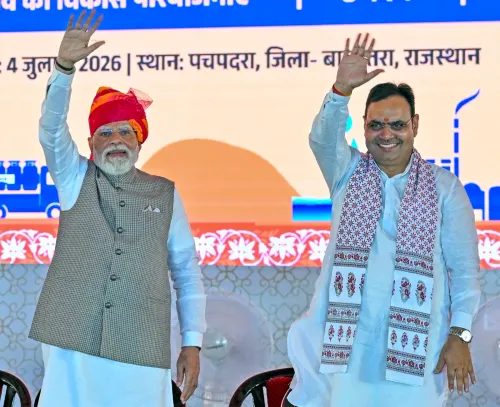
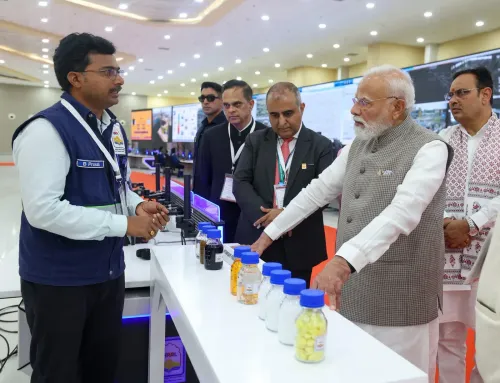
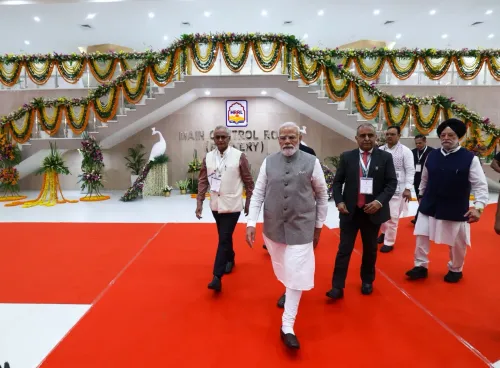
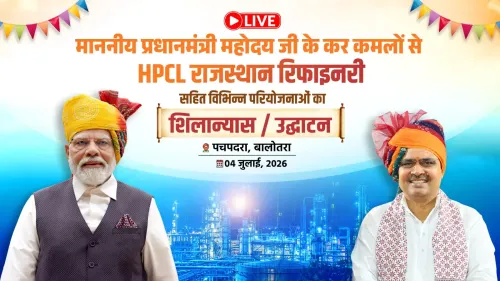
Prime Minister Narendra Modi on 5 July 2025 inaugurated India's first standalone greenfield refinery-cum-petrochemical complex at Pachpadra in Rajasthan's Barmer district, marking what Union Petroleum and Natural Gas Minister Hardeep Singh Puri called a defining milestone in the country's push for energy self-reliance. The integrated facility, developed at an investment of ₹79,459 crore, is the largest single outlay in India's oil sector in recent memory.
Key Specifications and Scale
The complex — developed by HPCL Rajasthan Refinery Limited (HRRL), a joint venture between Hindustan Petroleum Corporation Limited (HPCL) with a 74% stake and the Rajasthan government holding the remaining 26% — carries a refining capacity of 9 million metric tonnes per annum (MMTPA) and a petrochemical capacity of 2.4 MMTPA.
With a Nelson Complexity Index of 17, the facility ranks among the most technologically advanced and energy-efficient refineries in the country. It is designed to produce nearly 26% petrochemical products from the outset — a significantly higher downstream conversion ratio than most existing Indian refineries.
World and Asia Firsts Within the Complex
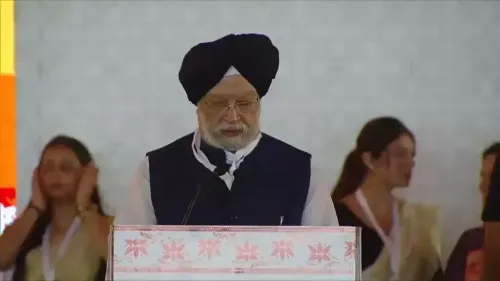
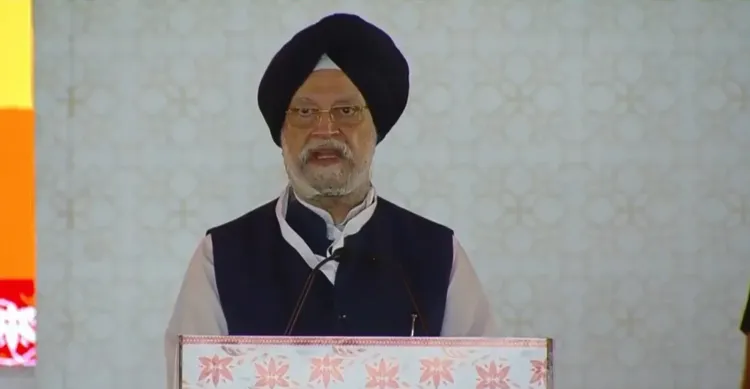
Minister Puri, in a post on X, highlighted that the Pachpadra complex will house the world's largest polypropylene unit and a polyethylene swing unit capable of manufacturing more than 30 grades of polymers. It will also feature Asia's largest coker unit — underlining the facility's ambition to serve not just domestic fuel demand but also high-value industrial chemicals.
The sheer construction scale reflects the project's complexity: over 150 lakh cubic metres of earth were moved, 16 lakh cubic metres of concrete were used, and approximately 6 lakh tonnes of structural steel were deployed during the build.
Economic and Industrial Impact on Rajasthan
Puri said the project is expected to generate significant employment and drive industrial development across Barmer and the wider Rajasthan region. The complex aligns with the Centre's 'Make in India' framework, with officials positioning it as a catalyst for downstream petrochemical industries and ancillary manufacturing in the region.
Notably, the inauguration was part of a broader development push: PM Modi also laid the foundation stone and dedicated multiple projects worth more than ₹1.06 lakh crore in Rajasthan on the same day, signalling the political and economic weight the Centre is placing on the state.
Energy Security Context
India currently imports a substantial share of its petrochemical feedstocks and refined products. The Pachpadra facility, with its high complexity index and integrated petrochemical output, is designed to reduce that import dependence. This comes amid a broader national energy strategy that includes expanding refining capacity, scaling up renewables, and deepening domestic polymer production — areas where India has historically lagged behind its consumption growth.
With operations set to ramp up, industry observers will watch whether the complex's employment and output projections translate into measurable gains for Rajasthan's economy and India's overall energy self-sufficiency balance.
Point of View
Simpler refineries — on paper, it is a genuine technological leap. The harder question is utilisation: India's existing refining capacity already runs at comfortable levels, and the real value here lies in the petrochemical downstream, where import substitution in polymers and specialty chemicals is still largely aspirational. With ₹79,459 crore committed and Barmer's logistics still maturing, execution risk is real. The world's largest polypropylene unit is only as valuable as the industrial ecosystem that absorbs its output — and building that ecosystem in interior Rajasthan will require sustained policy follow-through well beyond the inauguration.
NationPress
3 Oct 2026
Frequently Asked Questions
What is the Pachpadra refinery in Rajasthan?
The Pachpadra refinery is India's first standalone greenfield refinery-cum-petrochemical complex, inaugurated by PM Narendra Modi in Barmer district, Rajasthan. Built at a cost of ₹79,459 crore, it has a refining capacity of 9 MMTPA and a petrochemical capacity of 2.4 MMTPA.
Who developed the HPCL Rajasthan Refinery?
The complex was developed by HPCL Rajasthan Refinery Limited (HRRL), a joint venture between Hindustan Petroleum Corporation Limited (HPCL), which holds a 74% stake, and the Rajasthan government, which holds the remaining 26%.
What makes the Pachpadra refinery technically significant?
It carries a Nelson Complexity Index of 17 — among the highest in India — and is designed to produce nearly 26% petrochemical products from the outset. It also houses the world's largest polypropylene unit and Asia's largest coker unit, with a polyethylene swing unit capable of making more than 30 grades of polymers.
What is the economic impact expected from the refinery?
According to Union Minister Hardeep Singh Puri, the complex is expected to generate employment and drive industrial development in Barmer and across Rajasthan. It is positioned as a pillar of India's energy self-reliance strategy under the Make in India initiative.
What other projects did PM Modi inaugurate alongside the refinery?
On the same day, PM Modi laid the foundation stone and dedicated multiple development projects worth more than ₹1.06 lakh crore across Rajasthan, making it one of the largest single-day infrastructure commitments to the state.