HPCL Rajasthan Refinery ready for launch after 15 years of delays, disputes
Synopsis
Fifteen years of political feuds, land disputes, cost overruns, and a fire that cancelled one inauguration at the last minute — and yet HRRL at Pachpadra is finally about to open. India's first BS-VI greenfield integrated refinery is a project both the Congress and BJP are fighting to claim credit for, even as PM Modi prepares to cut the ribbon on Saturday.
Key Takeaways
PM Narendra Modi is set to inaugurate HPCL Rajasthan Refinery Limited (HRRL) at Pachpadra, Balotra district on Saturday, 5 July 2025 .
HRRL is India's first greenfield BS-VI-compliant integrated refinery-cum-petrochemical complex , with a capacity of 9 MMTPA .
The project is a joint venture: HPCL holds 74% and the Government of Rajasthan holds 26% .
A fire in the CDU-VDU unit on 20 April 2026 forced postponement of an earlier inauguration scheduled for 21 April 2026 .
The refinery's 15-year journey included two foundation-stone laying ceremonies, land acquisition disputes, political resignations, and significant cost escalation.
A heated crude oil pipeline from Mundra, Gujarat to Pachpadra was built to handle Rajasthan's high-wax crude.
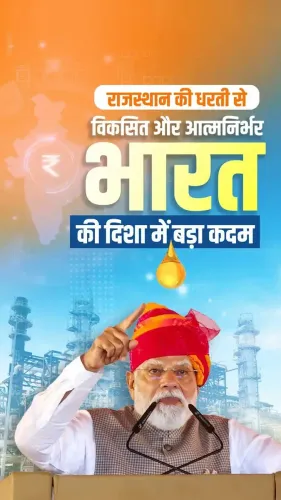
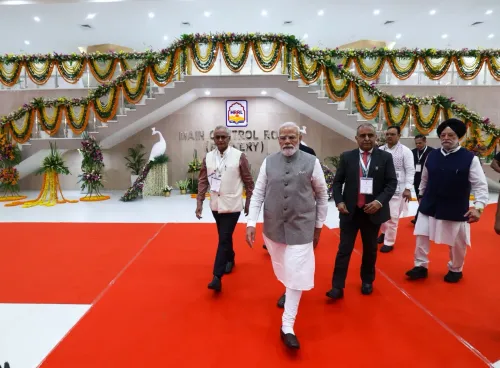
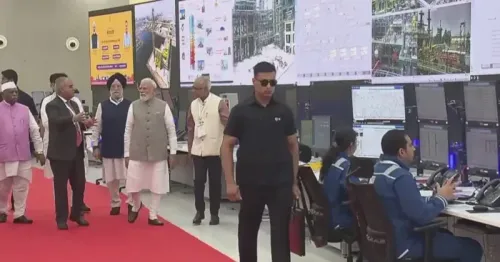
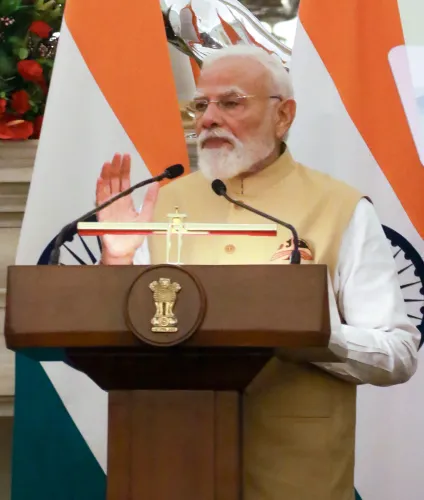
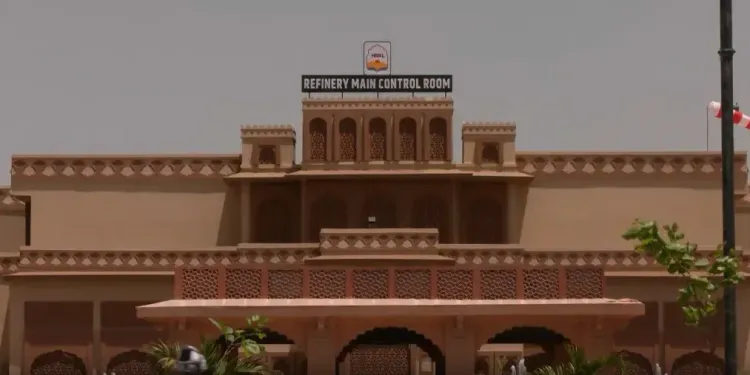
HPCL Rajasthan Refinery Limited (HRRL) at Pachpadra in Balotra district, Rajasthan is finally set for inauguration after a 15-year journey defined by political controversy, land acquisition battles, cost escalation, repeated postponements, and even a last-minute fire that derailed an earlier launch date. Prime Minister Narendra Modi is scheduled to inaugurate the facility on Saturday, 5 July 2025, marking the culmination of one of India's most turbulent infrastructure projects.
The refinery is India's first greenfield BS-VI-compliant integrated refinery-cum-petrochemical complex, with a refining capacity of 9 million metric tonnes per annum (MMTPA) and one of the highest Nelson Complexity Index (NCI) ratings among Indian refineries. It is a joint venture between Hindustan Petroleum Corporation Limited (HPCL), which holds a 74 per cent stake, and the Government of Rajasthan, which owns the remaining 26 per cent.
A Timeline Defined by Setbacks
The refinery's troubled history stretches back to its original proposal at Lilala village in the Baytu region of present-day Balotra district. Anticipating a surge in land prices following the announcement, influential businessmen, politicians, and land speculators reportedly purchased thousands of bighas in the area. When the government initiated land acquisition, however, many farmers refused to cooperate — some reportedly demanding as much as ₹1 crore per bigha.
Faced with mounting resistance, the then Ashok Gehlot-led Congress government relocated the refinery to Pachpadra, where adequate government land was available. The shift triggered fierce political opposition, including from within the ruling party itself. Then Baytu MLA Colonel Sonaram Choudhary openly revolted, alleging that the move was designed to benefit the Jodhpur region by placing the downstream petrochemical complex at Kakani. 'I will sacrifice my life, but I will not allow the refinery to leave this place,' he declared publicly at the time.
The controversy deepened when then Revenue Minister Hemaram Choudhary resigned over the issue, cementing the refinery's status as one of Rajasthan's most politically charged infrastructure projects. The project also witnessed two separate foundation-stone laying ceremonies and multiple announced inauguration dates — none of which held.
Most recently, Prime Minister Modi was originally scheduled to inaugurate the refinery on 21 April 2026. A fire caused by a leak in the CDU-VDU unit on 20 April forced the postponement at the eleventh hour, adding yet another chapter to the project's fraught history.
The Political Battle Over Credit
Political contestation over the refinery has not abated even at the threshold of its launch. Former Chief Minister Ashok Gehlot recently alleged that work on the project remained stalled for five years during the previous Bharatiya Janata Party (BJP) government in Rajasthan, resulting in sharp cost escalation. Gehlot credited the project's origins to sustained efforts by the then Congress government following the discovery of oil in Barmer, adding that former Prime Minister Manmohan Singh and former Congress President Sonia Gandhi facilitated the formation of the refinery company through coordination between HPCL and the Rajasthan government.
Gehlot also took issue with the format of the inauguration. 'I read in the newspapers today that the Prime Minister will hold a meeting inside the refinery complex instead of addressing a large public gathering. This project is a major milestone for Rajasthan, and it deserves a proper public inauguration,' he said.
BJP Rajya Sabha MP Rajendra Gehlot pushed back sharply, alleging that during Ashok Gehlot's tenure neither the refinery site was properly finalised nor was a concrete implementation or financial plan prepared. 'The foundation stone was laid in haste merely for political mileage,' he alleged. Rajendra Gehlot further claimed that it was in 2016, under the then BJP government, that the project site was finalised and a structured financial plan put in place, and that between 2018 and 2023, the project saw little meaningful progress under the Congress administration.
What Makes HRRL Technically Significant
Beyond its political history, HRRL is regarded as one of India's most technologically advanced refining complexes. Its high Nelson Complexity Index enables it to process heavy and lower-grade crude oils from global sources into premium products including petrol, diesel, polypropylene, and other petrochemicals. Most heavy equipment — reactors, columns, and storage tanks — has been manufactured domestically under the Atmanirbhar Bharat initiative, while sophisticated control systems and high-pressure compressors have been sourced from the United States, Japan, and Europe. Specialists from the Netherlands supervised critical welding and finishing work to ensure international quality standards.
Because Rajasthan's crude oil carries a high wax content, engineers constructed a specially designed heated crude oil pipeline connecting Mundra in Gujarat to Pachpadra, complete with thermal insulation and heating stations to prevent the crude from solidifying during transportation.
Impact on Rajasthan and India's Energy Landscape
Once fully operational, HRRL is expected to transform Rajasthan from a crude oil-producing state into a significant petrochemical manufacturing hub. The integrated complex will produce high-value petrochemicals such as polypropylene and polymers, potentially catalysing downstream plastic, packaging, and chemical industries in the region. The project is also expected to generate thousands of direct and indirect jobs, attract fresh investment, reduce India's dependence on imported petrochemicals, and strengthen the country's broader energy security.
With the inauguration now imminent, the focus shifts from a decade and a half of political and logistical turbulence to whether HRRL can deliver on its considerable economic promise for Rajasthan.
Point of View
Which meant each transition in power brought fresh contestation over site, design, and finances rather than continuity of execution. The real question now is not who built it, but whether the downstream petrochemical ecosystem — the plastic, packaging, and chemical industries that are supposed to cluster around it — materialises at the pace the projections suggest. A refinery without a functioning downstream value chain is an expensive oil processor, not a development catalyst. Rajasthan's industrial infrastructure will need to move as fast as the ribbon-cutting rhetoric.
NationPress
2 Oct 2026
Frequently Asked Questions
What is HPCL Rajasthan Refinery Limited (HRRL) and where is it located?
HRRL is India's first greenfield BS-VI-compliant integrated refinery-cum-petrochemical complex, located at Pachpadra in Balotra district, Rajasthan. It is a joint venture between HPCL (74%) and the Government of Rajasthan (26%), with a refining capacity of 9 million metric tonnes per annum.
Why did the Rajasthan refinery take 15 years to complete?
The project was delayed by land acquisition disputes, political controversy over its location, two foundation-stone laying ceremonies, multiple postponed inauguration dates, significant cost escalation, and a fire in the CDU-VDU unit in April 2026 that cancelled a scheduled inauguration at the last minute.
When is PM Modi inaugurating the HRRL refinery?
PM Narendra Modi is scheduled to inaugurate the refinery on Saturday, 5 July 2025. An earlier inauguration planned for 21 April 2026 was postponed after a fire caused by a leak in the CDU-VDU unit on 20 April.
What products will the Rajasthan refinery produce?
HRRL will produce petrol, diesel, polypropylene, polymers, and other high-value petrochemicals. Its high Nelson Complexity Index allows it to process heavy and lower-grade crude oils from global sources into premium products.
Why was a special pipeline built for the Rajasthan refinery?
Rajasthan's crude oil has a high wax content, which can solidify during transportation. Engineers built a specially designed heated crude oil pipeline from Mundra in Gujarat to Pachpadra, equipped with thermal insulation and heating stations to keep the crude in liquid form during transit.