India's 7.7% GDP growth in FY26 accelerates EV infrastructure push: SIAM chief
Synopsis
India's EV market just posted its best-ever October — 3.55 lakh units sold, penetration nearly doubled to 11.5% in a year — and SIAM's president is now calling charging networks 'core national infrastructure' on par with roads and ports. With 7.7% GDP growth as tailwind, the question is whether public investment in charging can keep pace with surging demand.
Key Takeaways
SIAM President Shenu Agarwal called EV charging infrastructure 'core national infrastructure' at GRID 2026 in New Delhi on 20 November 2026 .
India's real GDP grew 7.7% in FY26 , sustaining its rank among the world's fastest-growing major economies.
EV retail sales hit a record approximately 3.55 lakh units in October 2026 , up 44.88% year-on-year.
Overall EV penetration rose to roughly 11.5% from about 6% a year ago — a near-doubling in twelve months.
October 2026 was a best-ever month for electric two-wheelers, three-wheelers, passenger vehicles, and commercial vehicles.
Total vehicle retails reached 31,72,466 units in October, up 25.05% over September.
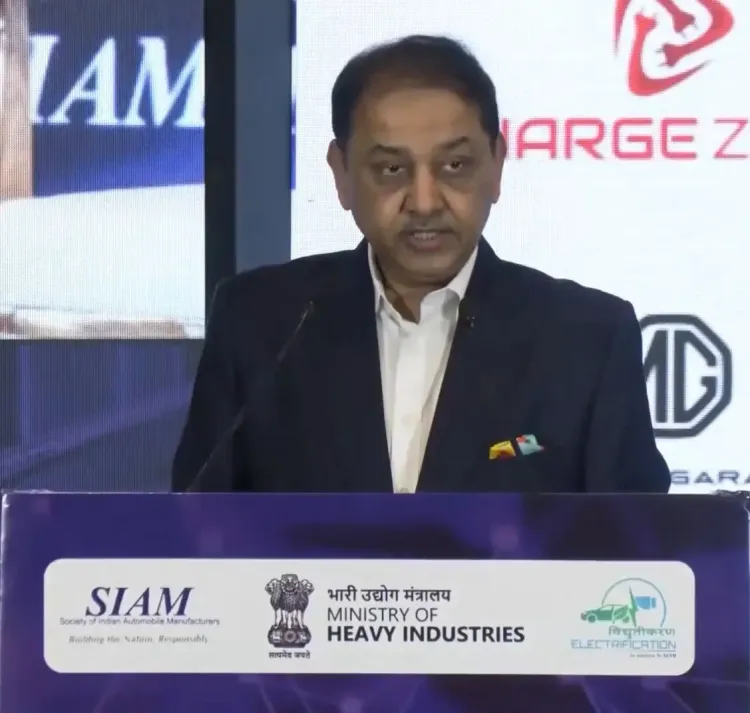
Society of Indian Automobile Manufacturers (SIAM) President Shenu Agarwal on Friday, 20 November 2026, said India's real GDP growth of 7.7% in FY26 is creating favourable conditions for a large-scale expansion of sustainable mobility, while stressing that electric vehicle (EV) charging infrastructure must be treated as core national infrastructure — on par with roads and power systems — rather than a secondary support layer.
Agarwal was addressing the Growth and Readiness for EV Infrastructure Dialogue (GRID) 2026 in New Delhi, an industry forum focused on accelerating EV adoption and readiness.
Charging Infrastructure as National Priority
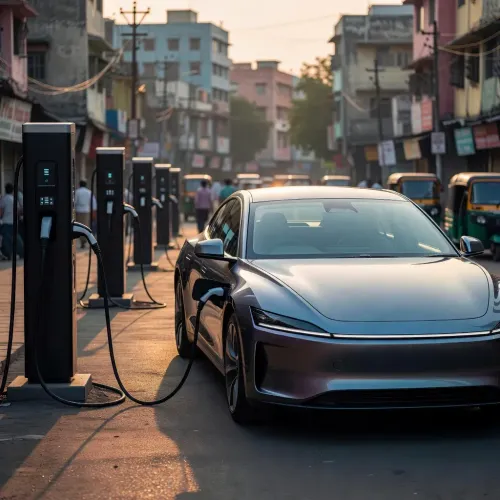
'Charging infrastructure is not an accessory to electric mobility, it is core national infrastructure,' Agarwal said, drawing explicit parallels with roads, ports, and power grids as essential enablers of economic progress.
He argued that mobility connects citizens, businesses, and communities, making reliable EV infrastructure central to India's Viksit Bharat 2047 vision of becoming a developed nation. According to Agarwal, the country's transition to electric mobility will demand significant capital deployment in charging networks to ensure uptake across both urban and rural markets — a distinction that industry observers note is often underweighted in policy design.
Why GDP Growth Matters for the EV Transition
India's strong economic expansion, rapid urbanisation, and rising household incomes are collectively accelerating demand for cleaner and more accessible transport, Agarwal noted. At 7.7%, India's FY26 growth rate sustains its position among the world's fastest-growing major economies, providing the fiscal headroom and consumer spending power that an EV scale-up requires.
This comes amid a broader global push to decarbonise transport, with India having set ambitious EV penetration targets. The SIAM chief's remarks signal that industry bodies see macroeconomic momentum — not just policy incentives — as a key driver of the transition.
Record EV Sales Underscore the Urgency
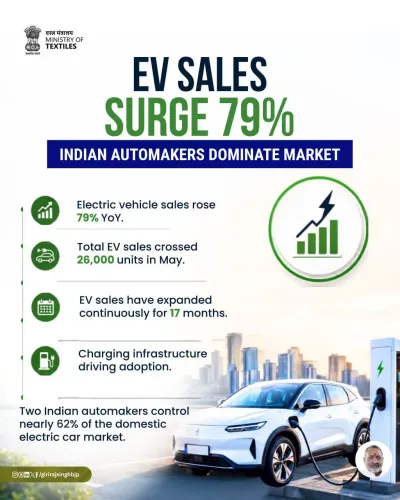
Industry data presented at the event reinforced the scale of the opportunity. EV retail sales in October touched an all-time high of approximately 3.55 lakh units, rising 44.88% year-on-year. Overall EV penetration climbed to roughly 11.5% from approximately 6% a year earlier — a near-doubling in share within twelve months.
Notably, October was a best-ever month for electric two-wheelers, three-wheelers, passenger vehicles, and commercial vehicles alike, suggesting the EV surge is broad-based rather than concentrated in a single segment. Total vehicle retails across all categories reached 31,72,466 units in October, up 25.05% over September, though the industry noted the year-on-year comparison is almost entirely optical due to base-effect distortions.
Infrastructure Gap: The Critical Bottleneck
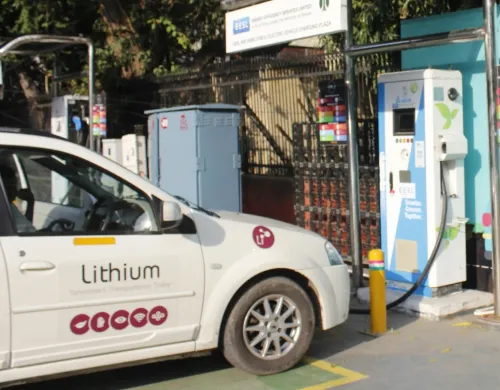
Despite the record sales, analysts and industry insiders argue that charging infrastructure remains far behind the pace of EV adoption. Without a commensurate expansion of charging networks — particularly in Tier-2 and Tier-3 cities and along national highways — range anxiety could become a structural brake on further penetration gains, critics argue.
Agarwal's framing of charging networks as national infrastructure, comparable to roads and ports, is an implicit call for public investment and regulatory prioritisation, not just private sector deployment. The government's response to that call will likely determine whether India's record EV momentum is sustained or plateaus.
What Comes Next
With SIAM formally positioning EV infrastructure as a national imperative at GRID 2026, the industry is expected to follow up with detailed investment projections and policy recommendations to the Centre. Stakeholders will closely watch the upcoming Union Budget cycle and any amendments to the FAME scheme for signals on whether the government shares the industry's infrastructure-first framing.
Point of View
SIAM is making a fiscal argument, not just an industrial one — pushing for public balance-sheet commitment rather than leaving infrastructure to market forces alone. The record October EV numbers are real, but penetration doubling from a low base is easier than sustaining it at higher levels without a dense charging grid. India has repeatedly set EV targets that outpaced infrastructure planning; the risk is that surging sales now expose that gap faster than policy can close it. The real test of GRID 2026's legacy will be whether its recommendations find their way into the next Union Budget, or remain conference-room consensus.
NationPress
20 Nov 2026
Frequently Asked Questions
What did SIAM President Shenu Agarwal say about EV infrastructure at GRID 2026?
Shenu Agarwal said EV charging infrastructure is 'core national infrastructure' — comparable to roads, ports, and power systems — and must be prioritised accordingly. He made the remarks at the Growth and Readiness for EV Infrastructure Dialogue (GRID) 2026 in New Delhi on 20 November 2026.
How fast did India's economy grow in FY26?
India's real GDP grew at 7.7% in FY26, maintaining the country's position among the world's fastest-growing major economies. SIAM's president cited this growth as a key enabler of accelerating EV demand.
What were India's EV sales figures in October 2026?
EV retail sales in October 2026 hit a record high of approximately 3.55 lakh units, up 44.88% year-on-year. It was the best-ever October for electric two-wheelers, three-wheelers, passenger vehicles, and commercial vehicles.
What is India's current EV market penetration?
Overall EV penetration reached roughly 11.5% in October 2026, up from approximately 6% a year earlier — a near-doubling in share within twelve months, according to industry data.
Why is EV charging infrastructure considered a bottleneck in India?
Despite record EV sales, charging networks — especially in smaller cities and along highways — have not kept pace with adoption. Industry experts argue that without broad charging coverage, range anxiety could slow further EV uptake, particularly outside major metros.