Odisha CMO: 3 Lakh Evacuated Ahead of Cyclone Akabana

Synopsis
Odisha's Chief Minister's Office announced on 20 November 2026 that over 3 lakh people have been evacuated ahead of Cyclone Akabana, with 418 rescue teams deployed and shelters stocked with cooked meals and essential supplies, continuing the state's post-1999 disaster-preparedness legacy.
Key Takeaways
The Chief Minister's Office of Odisha announced a pre-emptive evacuation of over 3 lakh people ahead of Cyclone Akabana on 20 November 2026 .
418 rescue teams have been deployed across the coastal belt to ensure swift response.
Relief shelters are provisioned with cooked food and essential facilities for evacuees.
Odisha built its cyclone-response framework after the 1999 Super Cyclone , which killed more than 10,000 people .
During Cyclone Fani in 2019 , over 1.2 million people were evacuated using similar protocols, limiting casualties drastically.
Further response will depend on IMD track updates and post-landfall damage assessment.
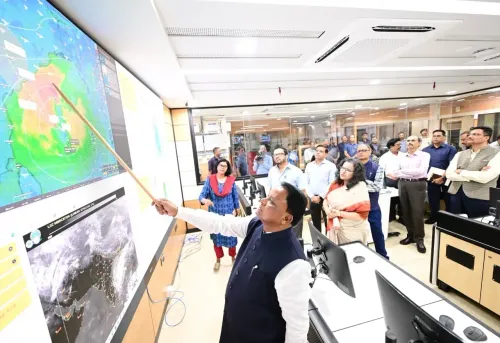
Before Cyclone Akabana can make landfall, Odisha has already moved more than 3 lakh people to safety — a mass evacuation the Chief Minister's Office of Odisha announced on Friday, 20 November 2026, signalling that the state's well-drilled disaster machine is fully in motion.
The CMO's post, written in Odia and English, states: 'ଲୋକଙ୍କ ସରକାରରେ ଜନସାଧାରଣଙ୍କ ସୁରକ୍ଷାକୁ ସର୍ବାଧିକ ଗୁରୁତ୍ୱ' — 'Public safety remains the top priority in the people's government.' Alongside the mass evacuation, 418 rescue teams have been deployed across the coastal belt, and relief shelters are being stocked with cooked meals and essential supplies.
Odisha's cyclone playbook — built in blood after 1999
The scale of this mobilisation makes sense only against the backdrop of what came before. When the 1999 Super Cyclone tore through Odisha, it killed more than 10,000 people and left the state's coastline in ruins. That catastrophe forced a reckoning: Odisha created the Odisha State Disaster Management Authority (OSDMA) and invested heavily in early-warning systems, pre-positioned rescue teams, and a network of purpose-built cyclone shelters.
The investment paid its most visible dividend in May 2019, when Cyclone Fani — one of the strongest storms to hit the Indian subcontinent in decades — made landfall near Puri. More than 1.2 million people were evacuated in under 48 hours, and fatalities were kept to a fraction of what 1999 had inflicted. The Fani evacuation became a global reference point for state-level disaster governance. The Akabana response is running from the same script.
418 rescue teams, cooked meals, and the logic of pre-emption
What distinguishes Odisha's model from reactive disaster management is the emphasis on action before the storm. Evacuating over 3 lakh residents while Akabana is still a 'possible cyclone' — not yet a confirmed landfall — reflects a doctrine of zero-wait: move people first, assess damage later. Shelters provisioned with hot food and essential facilities reduce the pressure on post-storm relief pipelines.
The deployment of 418 rescue teams across affected districts ensures that search-and-response capacity is distributed rather than centralised, cutting the response time for any community that takes a direct hit. Multi-agency coordination with national bodies such as the India Meteorological Department (IMD) and the National Disaster Response Force (NDRF) provides real-time track data to guide where those teams are positioned.
What the IMD data will determine next
The state's posture now hinges on what the IMD reports in the next 24 to 48 hours: the cyclone's exact track, intensity at landfall, and the coastal districts most exposed. Post-landfall, the government's attention will shift immediately to damage assessment, restoration of power and communications, and distribution of relief to villages that shelters could not reach. Odisha has machinery for all of that too — the question is always how much the storm tests it.
A state once synonymous with cyclone tragedy has spent a quarter-century rewriting that story. With more than 3 lakh lives already removed from harm's way, Akabana is about to meet a government that has been preparing for exactly this moment for years.
Point of View
A distinction that successive administrations have maintained regardless of political affiliation. For India's broader federalism debate, it is a pointed reminder that disaster resilience is built over decades through investment in standing infrastructure — shelters, trained teams, early-warning integration — not reactive crisis management. The true test, as always, will come in the post-landfall hours when the relief pipeline is under maximum stress.
NationPress
20 Nov 2026
Frequently Asked Questions
How many people have been evacuated ahead of Cyclone Akabana in Odisha?
Over 3 lakh (300,000) people have been evacuated to safe locations ahead of Cyclone Akabana, according to the Chief Minister's Office of Odisha on 20 November 2026.
How many rescue teams has Odisha deployed for Cyclone Akabana?
Odisha has deployed 418 rescue teams to respond to the threat of Cyclone Akabana, alongside stocking relief shelters with cooked food and essential supplies.
What is Odisha's history with cyclone evacuations?
After the 1999 Super Cyclone killed over 10,000 people, Odisha built a dedicated disaster management framework. During Cyclone Fani in 2019, more than 1.2 million people were evacuated, keeping casualties minimal and earning global recognition.
What is the Odisha State Disaster Management Authority?
The Odisha State Disaster Management Authority (OSDMA) was created after the devastating 1999 Super Cyclone to coordinate early warnings, mass evacuations, and rescue operations during major weather events in the state.
Where can I get updates on Cyclone Akabana's track and landfall?
The India Meteorological Department (IMD) issues real-time updates on cyclone track, intensity, and expected landfall timing for storms approaching the Odisha coastline.