COP31: Yadav holds talks with 9 global leaders, India's cheetah count rises to 62
Synopsis
India's Environment Minister held nine bilateral meetings at COP31 in Antalya — from the UNFCCC chief to Saudi Arabia's energy minister — even as talks deadlocked on the conference's final day. And from home, a quieter but striking headline: India's cheetah population has climbed to 62, with four new cubs born to a Botswana-origin female.
Key Takeaways
Bhupender Yadav held bilateral meetings with 9 global leaders at COP31 in Antalya, Turkey , on 20 November 2026 .
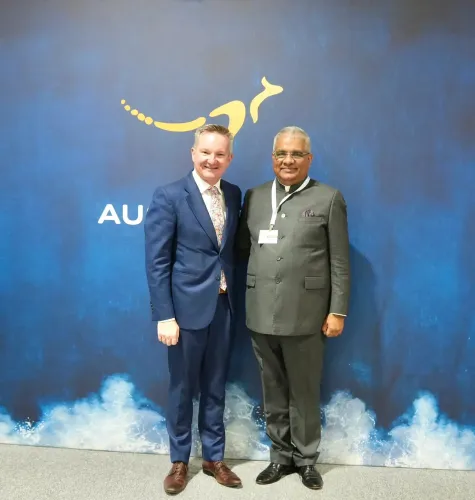
Meetings included UNFCCC chief Simon Stiell , Saudi Arabia's Energy Minister Prince Abdulaziz bin Salman , and Australia's COP31 negotiation president Chris Bowen .
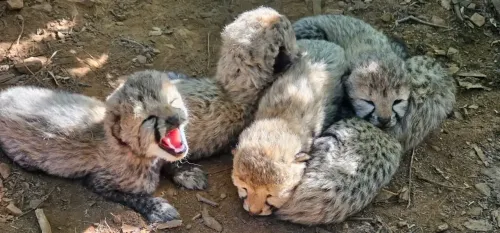
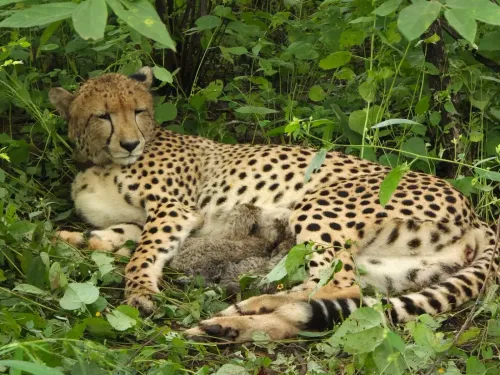
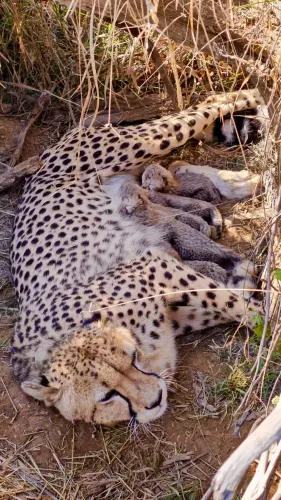
India's cheetah population has risen to 62 , after four cubs were born to a female cheetah from Botswana under Project Cheetah .
COP31 negotiations on its final scheduled day remained deadlocked over fossil fuels, climate finance, and adaptation.
India is advocating for CBDR-RC , predictable climate finance, technology transfer, and a country-driven just transition framework.
The COP31 Presidency issued a '35 by 35 pledge' to raise electricity's share of global final energy consumption to 35% by 2035 .
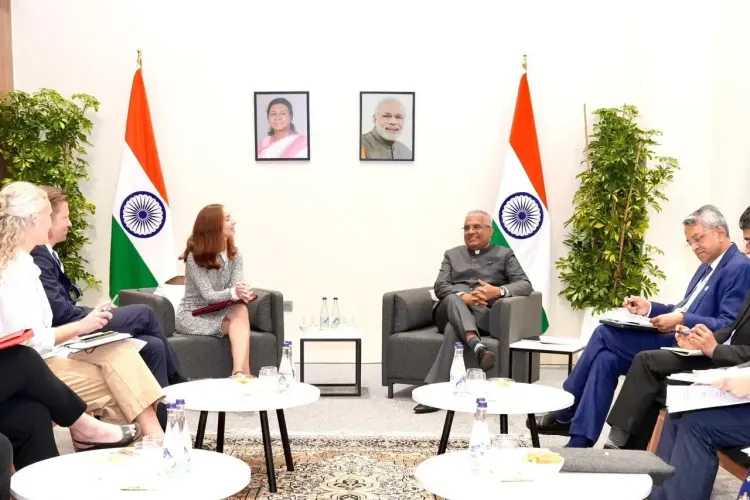
Union Environment Minister Bhupender Yadav on Friday, 20 November 2026, conducted an extensive round of high-level bilateral meetings on the sidelines of the COP31 climate summit in Antalya, Turkey, engaging counterparts from nine countries and multilateral bodies as negotiations on the conference's final scheduled day remained deadlocked over fossil fuels, climate finance, and adaptation. Separately, Yadav announced that India's cheetah population has risen to 62, following the birth of four cubs to a female cheetah relocated from Botswana under Project Cheetah.
India's Diplomatic Engagement at COP31
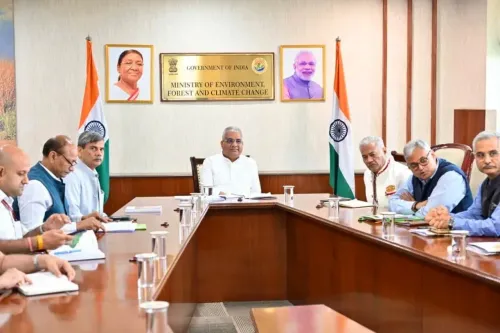
Minister Yadav arrived in Antalya on Sunday to lead India's delegation at COP31, which has been in session from 9 to 20 November. Over the course of the week, he held meetings with UNFCCC Executive Secretary Simon Stiell, Saudi Arabia's Energy Minister Prince Abdulaziz bin Salman, Australia's Climate Change and Energy Minister Chris Bowen — who is also serving as COP31 President of Negotiations — as well as his ministerial counterparts from Japan, the United Kingdom, Norway, Denmark, and China, and the European Commissioner.
India is seeking practical outcomes that move climate negotiations from commitments towards implementation, with an emphasis on equity, common but differentiated responsibilities and respective capabilities (CBDR-RC), and respect for developing nations' circumstances and development priorities.
Key Issues on India's Agenda
In his discussions with Stiell, Yadav focused on advancing means of implementation, just transition, adaptation, and climate finance. India reiterated its commitment to constructive engagement with the United Nations Framework Convention on Climate Change (UNFCCC) and pledged support for efforts to advance the global climate agenda.
During talks with Bowen, Yadav held detailed discussions on mitigation, adaptation, and climate finance, assuring India's support for the COP31 presidency. At a ministerial roundtable on just transition, Yadav called for a two-tier, party-guided mechanism that respects national sovereignty and addresses the specific needs of developing countries, noting that climate action must account for employment, livelihoods, energy access, poverty eradication, and social protection.
Regarding his meeting with Prince Abdulaziz bin Salman, Yadav wrote on X: 'We exchanged views on climate negotiations and energy security. We also emphasised delivery on climate finance for effective climate action.' With China's Vice-Minister of Ecology and Environment Li Gao, Yadav emphasised equity, CBDR-RC, and national circumstances in climate action.
Project Cheetah Milestone: Population Reaches 62
On the sidelines of the summit, Minister Yadav announced a significant conservation milestone — India's cheetah population has reached 62, up from earlier figures, after a female cheetah brought from Botswana gave birth to four cubs. Yadav has also used the COP31 platform to highlight the role of big cat conservation in climate change mitigation, ecosystem resilience, and sustainable development.
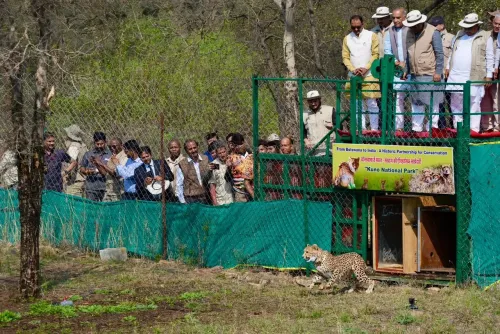
This comes as Project Cheetah, which facilitated the return of the species to India after decades of local extinction, continues to show measurable results in wildlife recovery programmes linked to broader ecosystem health goals.
Stalled Negotiations and COP31's Final Day
Even as India's bilateral diplomacy was active, the broader COP31 negotiations on its scheduled final day remained deadlocked over the interconnected issues of fossil fuel commitments, climate finance, and adaptation frameworks. The COP31 Presidency issued an ambitious '35 by 35 pledge' aimed at increasing electricity's share of global final energy consumption to 35 per cent by 2035, with electrifying transport and cutting passenger and freight energy demand central to this goal.
India has called for predictable climate finance, technology transfer, and capacity-building, stressing that developing nations must have adequate resources to implement their climate commitments. The Indian delegation has also championed a country-driven approach to the just transition agenda.
What Comes Next
With talks extended beyond the original schedule, the focus now shifts to whether a consensus text can bridge the divide between developed and developing nations on climate finance and fossil fuel transitions. India's active bilateral engagements suggest it will continue to position itself as a bridge-builder at the negotiations, while domestically, the cheetah population milestone is expected to reinforce political support for wildlife and ecosystem conservation programmes.
Point of View
Linking domestic biodiversity recovery to the climate agenda in a way that burnishes India's conservation credentials without committing to harder targets. The real question is whether bilateral goodwill translates into a finance deal that developing nations can actually use.
NationPress
20 Nov 2026
Frequently Asked Questions
What did India's Environment Minister do at COP31 in Antalya?
Union Environment Minister Bhupender Yadav led India's delegation at COP31 in Antalya, Turkey, held from 9 to 20 November 2026, conducting bilateral meetings with nine global leaders including UNFCCC chief Simon Stiell, Saudi Arabia's Energy Minister Prince Abdulaziz bin Salman, and Australia's Chris Bowen. India focused on climate finance, adaptation, just transition, and technology transfer at the summit.
How many cheetahs does India have now under Project Cheetah?
India's cheetah population has risen to 62 as of November 2026, following the birth of four cubs to a female cheetah originally brought from Botswana under Project Cheetah. The milestone was announced by Minister Yadav on the sidelines of COP31.
Why are COP31 negotiations deadlocked?
COP31 negotiations on its scheduled final day, 20 November 2026, remained deadlocked over contentious issues including fossil fuel commitments, the scale and structure of climate finance for developing nations, and adaptation frameworks. These fault lines have persisted across multiple COP summits.
What is India's position on just transition at COP31?
India is advocating a country-driven approach to just transition, arguing that climate action must account for employment, livelihoods, energy access, poverty eradication, and social protection. At a ministerial roundtable, Yadav called for a two-tier, party-guided mechanism that respects national sovereignty and the specific needs of developing countries.
What is the COP31 Presidency's '35 by 35 pledge'?
The COP31 Presidency's '35 by 35 pledge' aims to increase electricity's share of global final energy consumption to 35 per cent by 2035. Electrifying transport and reducing passenger and freight energy demand are central to achieving the target.