Odisha CM Majhi Reviews Cyclone Akabana Prep at SRC Control Room
Synopsis
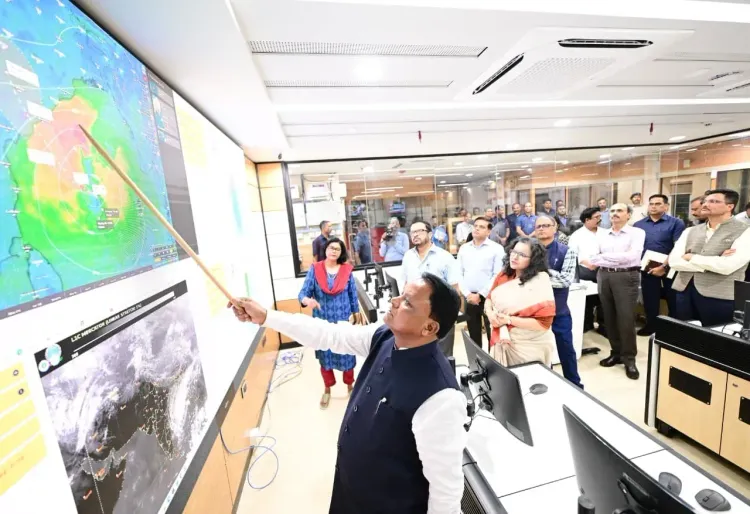
Chief Minister Mohan Charan Majhi chaired a high-level cyclone preparedness review at Odisha's SRC Control Room on 18 November 2026 as Cyclone Akabana approached, with 11 districts on red alert, 448 shelters activated, over 47,000 people evacuated, and ₹20.5 crore pre-released for relief operations.
Key Takeaways
11 districts in Odisha have been placed under a red warning ahead of Cyclone Akabana.
448 cyclone shelters have been activated and more than 47,000 people evacuated, including 1,313 pregnant women .
74 rescue teams are deployed; ₹20.5 crore has been pre-released for relief and rescue operations.
7 senior officers have been assigned personal responsibility over 7 districts for on-ground coordination.
All residents in hill-foot and low-lying areas have been ordered to evacuate immediately.
CM Mohan Charan Majhi chaired the high-level review at the SRC Control Room on 18 November 2026 .
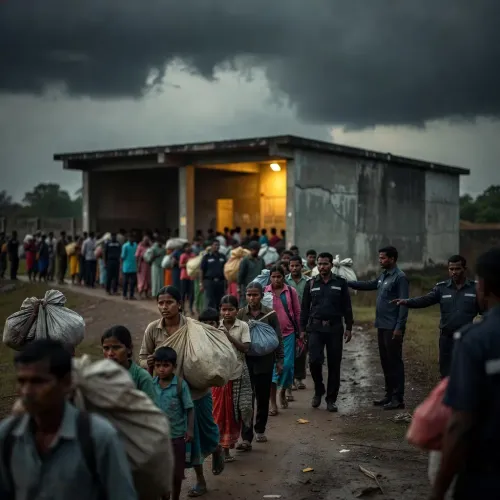
With Cyclone Akabana bearing down on the Odisha coast, Chief Minister Mohan Charan Majhi convened a high-level review at the State Relief Commissioner (SRC) Control Room on Wednesday, 18 November 2026 — placing the safety of lives and property at the top of every instruction issued to officials across the state. The numbers already moving tell the story: more than 47,000 people, including 1,313 pregnant women, have been shifted to safer ground.
Red Warnings, Shelters, and a State on High Alert
11 districts have been placed under a red warning, the highest tier of meteorological alert, signalling the threat of extremely heavy rainfall and destructive winds. In response, 448 cyclone shelters have been activated statewide — a network built painstakingly over the decades following the catastrophic 1999 Super Cyclone, which killed more than 10,000 people and forced a fundamental rethink of how Odisha manages coastal disasters.
Residents living in low-lying hill-foot zones have been ordered to evacuate immediately. The administration is not waiting for the storm to arrive before acting — the directive is to move first and assess later.
74 Rescue Teams, ₹20.5 Crore Pre-Released
74 rescue teams have been deployed across vulnerable zones, while the state government has pre-released ₹20.5 crore for relief and rescue operations — funding pushed out ahead of landfall so district machinery does not have to pause for approvals mid-crisis. Additionally, 7 senior officers have been assigned personal charge of 7 districts each, ensuring accountability flows all the way down to the field.
The structure mirrors what Odisha deployed during Cyclone Fani in 2019, when a last-minute mass evacuation of over a million people drew national and international recognition. That playbook — early warnings, pre-positioned shelters, ring-fenced funds, senior officer oversight — is now standard operating procedure each time a Bay of Bengal system approaches.
1,313 Pregnant Women and the Human Precision of This Evacuation
The specific count of 1,313 pregnant women evacuated is not a bureaucratic footnote — it signals the granular, person-level tracking that separates a modern disaster response from a reactive one. Odisha's SRC coordinates with health departments to flag and prioritise the most medically vulnerable before a storm makes the roads impassable. This detail, buried in the official communication, is perhaps the clearest indicator of institutional maturity at work.
CM Majhi's review meeting covered departmental readiness across multiple line agencies, with administrative urgency visibly accelerated as the system approaches. The directive is unambiguous: 'ନାଗରିକଙ୍କ ଧନଜୀବନ ସୁରକ୍ଷା' — the protection of citizens' lives and property — is the singular priority.
Odisha has turned cyclone survival into a science. The only variable now is the storm itself.
Point of View
000-death catastrophe of 1999 to the benchmark Fani evacuation of 2019. The granular detail in the CM's review — tracking 1,313 pregnant women, pre-releasing funds before landfall — signals institutional memory hardwired into procedure, not improvised response. For the BJP-led Majhi government, handling a major cyclone competently carries significant political weight, reinforcing administrative credibility in a state where disaster performance has historically determined public trust. The broader lesson is structural: early investment in shelter infrastructure and empowered field officers consistently translates into lower fatalities, a pattern Odisha continues to demonstrate to the rest of coastal India.
NationPress
18 Nov 2026
Frequently Asked Questions
Which districts are on red alert for Cyclone Akabana in Odisha?
The Odisha government has issued red warnings for 11 districts as Cyclone Akabana approaches, though the specific district names were not listed in the official communication reviewed.
How many people have been evacuated in Odisha for Cyclone Akabana?
More than 47,000 people have been evacuated so far, including 1,313 pregnant women , as part of the state's cyclone preparedness response.
How many cyclone shelters are open in Odisha for Cyclone Akabana?
448 cyclone shelters have been activated across Odisha to house evacuees ahead of the approaching cyclone.
How much money has Odisha released for Cyclone Akabana relief?
The Odisha government has pre-released ₹20.5 crore for relief and rescue operations ahead of the cyclone's expected landfall.
What is Odisha's history with cyclone preparedness?
After the devastating 1999 Super Cyclone that killed over 10,000 people, Odisha built a comprehensive cyclone shelter network and strengthened early-warning systems. Large-scale evacuations during Cyclone Phailin (2013) and Cyclone Fani (2019) became national benchmarks for disaster management.