Piyush Goyal Hails Skyroot Aerospace's Latest Success
Synopsis
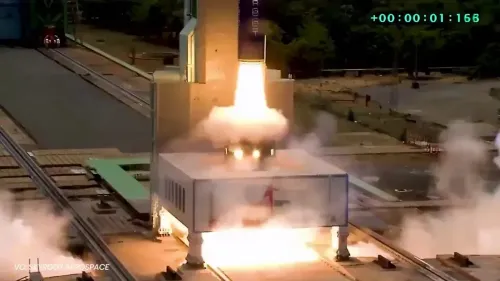
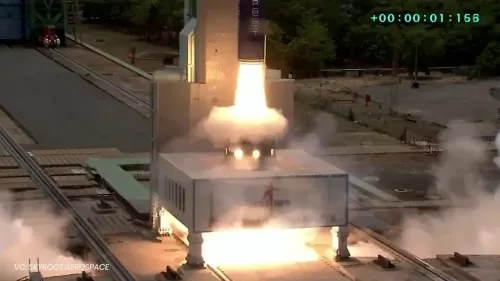
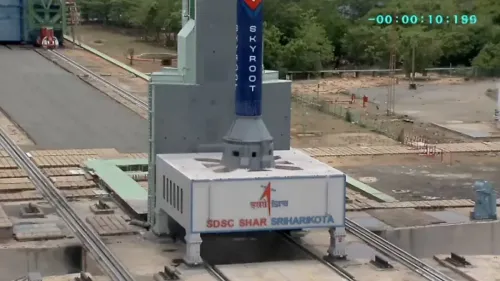
Commerce Minister Piyush Goyal celebrated Hyderabad-based Skyroot Aerospace's latest achievement on 18 November 2026, framing it as a showcase of Indian talent and a milestone for the country's liberalised private space sector.
Key Takeaways
Union Commerce Minister Piyush Goyal publicly lauded Skyroot Aerospace on 18 November 2026 , sharing a video of the company's achievement on X.
Skyroot Aerospace is a Hyderabad-based private startup founded in 2018 that builds the Vikram series of small satellite launch vehicles.
India's 2020 space-sector reforms opened end-to-end space activities to private companies and created IN-SPACe as the authorising body.
Goyal's post explicitly links the company's success to the broader capabilities of Indian STEM talent and the Atmanirbhar Bharat agenda.
Private space firms like Skyroot are positioned to complement ISRO and compete for a share of the growing global space economy .
India's private space sector earned fresh recognition on Wednesday, 18 November 2026, when Union Commerce and Industry Minister Piyush Goyal pointed to Skyroot Aerospace's latest achievement as proof of what Indian engineering talent is truly capable of — posting a video on X that let the milestone speak for itself.
Skyroot: From Hyderabad Garage to National Emblem
Founded in 2018 in Hyderabad, Skyroot Aerospace is one of the most closely watched names in India's new generation of private launch-vehicle builders. The company develops the Vikram series of small satellite launch vehicles — named after the father of India's space programme — targeting the rapidly growing global market for affordable, responsive access to low-Earth orbit. For a startup that is barely eight years old, being cited by a senior Cabinet minister as evidence of national capability is a significant moment.
The 2020 Reforms That Made This Possible
Skyroot's rise did not happen in a vacuum. In 2020, the Government of India opened the space sector to private players for end-to-end activities — from design and manufacturing to launch — and established IN-SPACe (Indian National Space Promotion and Authorisation Centre) as the nodal agency to license and support non-government entities. That single policy shift transformed what had been an ISRO monopoly into a broader national ecosystem. Skyroot was among the first private firms to test a rocket engine, and later a full launch vehicle, under that new framework.
Goyal's Signal: Talent Is the Real Asset
The minister's framing is deliberate. By asking 'what Skyroot's success says about the capabilities of Indian talent,' Goyal links a corporate milestone directly to the country's human capital — engineers, scientists, and technologists who built a launch vehicle outside a government lab. It is a message that sits squarely within the Atmanirbhar Bharat agenda: self-reliance not just in hardware, but in the confidence to build frontier technology from scratch. India's large STEM workforce has long been its most exported resource; posts like this argue the country is now keeping more of that talent — and its output — at home.
With IN-SPACe continuing to expand its licensing pipeline and the Department of Space eyeing a larger share of the $440 billion global space economy, Skyroot's next orbital milestone will be watched not just as a business event, but as a national one.
Point of View
The minister signals that the 2020 reforms have matured enough to produce showcase moments. The 'Indian talent' framing also serves the Atmanirbhar Bharat narrative at a time when the government is keen to retain high-skill workers and attract global capital into domestic deep-tech. If Skyroot sustains its momentum, it could become the centrepiece of a broader pitch to position India as a low-cost, high-reliability launch destination for the global small-satellite market.
NationPress
18 Nov 2026
Frequently Asked Questions
What is Skyroot Aerospace and what does it do?
Skyroot Aerospace is a Hyderabad-based private Indian space startup founded in 2018. It develops the Vikram series of small satellite launch vehicles designed to offer affordable access to low-Earth orbit for commercial and government satellite operators.
Why is Piyush Goyal talking about a private space company?
As Union Commerce and Industry Minister, Piyush Goyal has oversight of industrial and technology policy. His post highlights Skyroot's achievement as evidence of Indian engineering talent and aligns with the government's Atmanirbhar Bharat push for domestic technological self-reliance.
What are India's 2020 space-sector reforms?
In 2020, the Indian government allowed private companies to conduct end-to-end space activities — including design, manufacturing, and launch — and created IN-SPACe (Indian National Space Promotion and Authorisation Centre) to license and support non-government space entities.
What is IN-SPACe and what role does it play?
IN-SPACe is the nodal government agency established in 2020 to promote, authorise, and regulate private-sector participation in India's space activities. It provides approvals, infrastructure access, and policy support to companies like Skyroot Aerospace.
What comes next for Skyroot Aerospace?
Observers are watching for Skyroot's next sub-orbital or orbital flight test and any follow-on regulatory approvals or funding announcements from IN-SPACe or the Department of Space that could accelerate its commercial launch schedule.