How is India Planning to Challenge China's Rare Earth Mineral Monopoly?
Synopsis
Discover how India's Finance Minister, Nirmala Sitharaman, has unveiled a groundbreaking initiative aimed at establishing rare earth mineral corridors, designed to reduce dependence on China. This strategic move not only aims to bolster local production but also enhances India's role in the global transition towards green energy and technology.
Key Takeaways
Initiative aims to establish rare earth corridors.
Focus on reducing dependence on China.
States involved include Odisha, Kerala, Andhra Pradesh, and Tamil Nadu.
Expected to enhance local production and economic value.
Aligns with National Critical Minerals Mission.
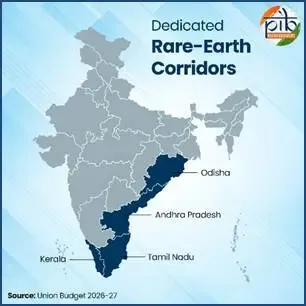
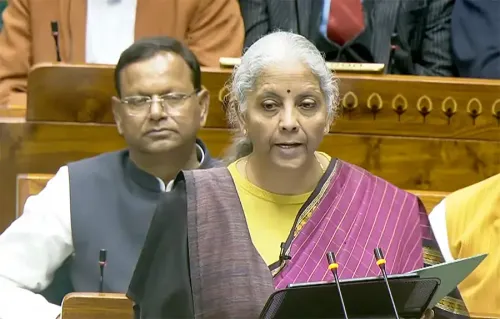
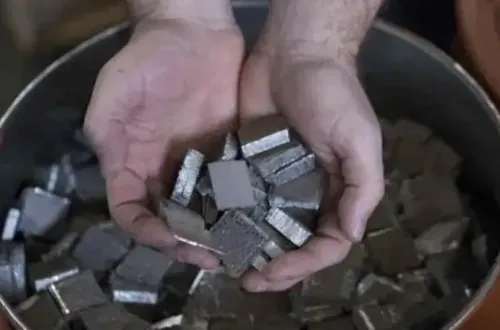
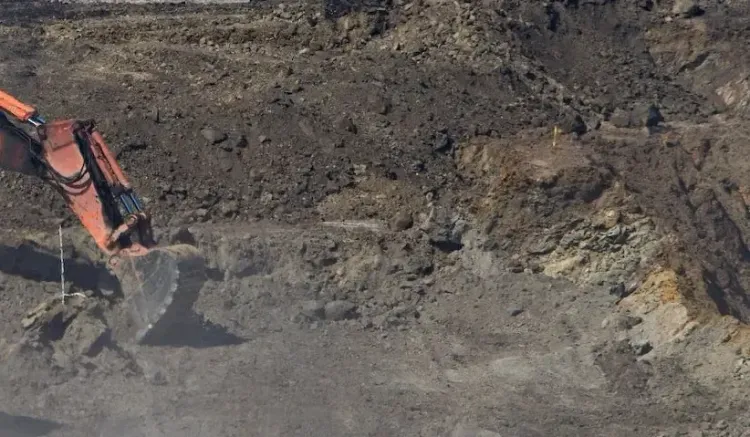
New Delhi, Feb 1 (NationPress) The Finance Minister, Nirmala Sitharaman, announced an ambitious initiative aimed at transforming India’s approach to essential minerals. During her budget announcement in the Lok Sabha, she declared that the government will provide assistance to mineral-rich states such as Odisha, Kerala, Andhra Pradesh, and Tamil Nadu in creating dedicated rare earth corridors. These corridors are set to function as comprehensive hubs covering the entire value chain of rare earth development, including extraction, processing, research, and advanced manufacturing.
This announcement expands on the rare earth permanent magnet initiative launched in November 2025, representing a conscious effort to bolster India’s domestic capabilities in a sector that has been heavily reliant on imports.
Currently, India’s dependence on China for rare earth supplies raises strategic concerns, given the critical role these minerals play in industries including electronics, renewable energy, electric vehicles, defence technologies, and cutting-edge manufacturing.
By promoting local production, the government seeks to secure supply chains essential for national growth and security.
The selection of these states is strategic; Odisha, Kerala, Andhra Pradesh, and Tamil Nadu are rich in monazite and other beach sand minerals, primarily along their coastal regions. These deposits are abundant in rare earth elements, making them prime candidates for integrated development.
The corridors will not only prioritize extraction but will also focus on high-value processing and the manufacture of rare earth magnets, ensuring that India can maximize economic and technological benefits from its own resources.
Industry experts have applauded this initiative, viewing it as a tactical response to global concerns regarding China’s near-monopoly in rare earth production and exports.
This initiative aligns seamlessly with the goals of the National Critical Minerals Mission and complements recent reforms in the mining sector aimed at improving transparency and efficiency.
It underscores India’s commitment to achieving self-sufficiency in critical minerals, a key aspect of its larger industrial and energy transition.
The Finance Minister’s declaration is anticipated to spur investment, create jobs, and drive innovation in mineral technologies. It also elevates India’s role in the global transition towards green energy and advanced technological ecosystems.
While further details regarding funding, timelines, and incentives are still pending, these corridors signify a significant leap in the government’s broader agenda to enhance manufacturing in strategic sectors.
Point of View
It is imperative to recognize that this initiative is a strategic pivot towards self-reliance in critical minerals. India’s heavy dependence on imports has raised alarms, and this move is not just about minerals; it’s about national security and economic independence. The focus on indigenous capabilities will ultimately strengthen India’s standing in the global economy.
NationPress
11 Oct 2026
Frequently Asked Questions
What are rare earth minerals?
Rare earth minerals are a group of 17 elements that are crucial for various high-tech applications, including electronics, renewable energy, and defense technologies.
Why is India focusing on rare earth minerals?
India aims to reduce its dependence on imports, particularly from China, and enhance its domestic production capabilities to secure its supply chains.
Which states are involved in the rare earth corridors initiative?
The initiative involves the states of Odisha, Kerala, Andhra Pradesh, and Tamil Nadu.
What is the expected impact of this initiative?
The initiative is expected to boost investment, create jobs, and strengthen India's position in the global market for green technology.
How will this initiative benefit India's economy?
By fostering local production of rare earth minerals, India can capture greater economic value and reduce its reliance on foreign suppliers.