India's AI curriculum overhaul: Govt and industry push practical skills in B.Tech CS
Synopsis
India's engineering education is getting a structural AI reset. The government and NASSCOM-backed Taskforce want to push practical AI exposure to as high as 75%, embed Responsible AI across all semesters, and build shared national GPU infrastructure — a direct acknowledgement that India's current B.Tech curriculum is producing graduates unprepared for the AI economy.
Key Takeaways
MeitY and industry are jointly overhauling the AI curriculum in B.Tech Computer Science programmes across India, as announced on 28 May 2025 .
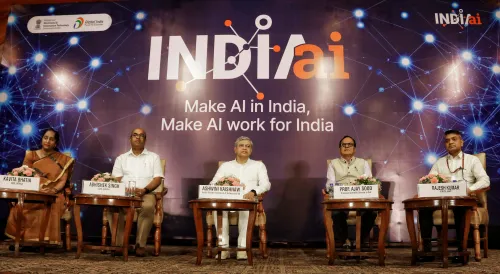
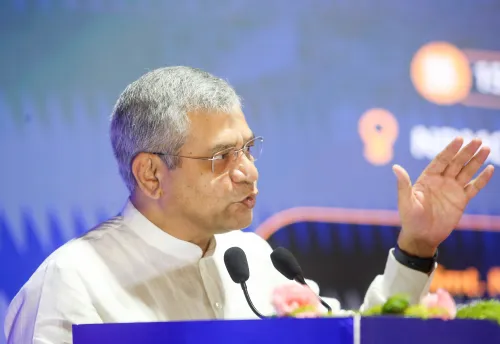
Minister Ashwini Vaishnaw chaired a high-level meeting with the AI Curriculum Taskforce in New Delhi .
A baseline study by the Taskforce and NASSCOM found significant gaps in Generative AI , MLOps , and foundational model development.
Practical exposure is proposed to rise to 40%–75% of coursework; Responsible AI and AI Governance to be embedded across all semesters.
A flexible credential pathway would offer a Certificate (Year 1) , Diploma (Year 2) , and Advanced Diploma (Year 3) .
A national shared AI infrastructure on a triple helix model — government, industry, academia — is proposed to ensure equitable GPU compute access.
The Central government is collaborating with industry to comprehensively overhaul the AI curriculum in B.Tech Computer Science and allied programmes across Indian educational institutions, the Ministry of Electronics and Information Technology (MeitY) said in an official statement on Thursday, 28 May. The revamp aims to sharpen practical exposure, strengthen faculty readiness, and create flexible academic pathways for students.
High-Level Meeting Signals Urgency
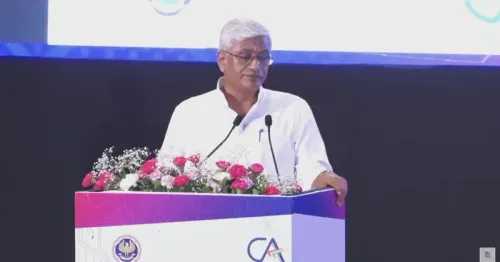
Union Minister for Electronics and IT Ashwini Vaishnaw chaired a high-level meeting with the AI Curriculum Taskforce in New Delhi to review the reform agenda. The Taskforce, working in partnership with industry experts and the National Association of Software and Service Companies (NASSCOM), conducted a baseline study of the existing B.Tech Computer Science curriculum to identify structural weaknesses.
The study found that while AI coverage in Indian institutions has expanded in recent years, significant gaps persist in pedagogy, infrastructure, and hands-on exposure — particularly in areas such as Generative AI, Machine Learning Operations (MLOps), and foundational model development.
Key Recommendations from the Taskforce
The Taskforce recommended a fundamental shift away from lecture-heavy teaching toward learning anchored in real industry use cases, beginning from the first semester itself. Among the headline proposals:
Practical exposure is to be raised to between 40% and 75% of coursework, depending on the degree and specialisation. AI courses would be embedded within the formal academic credit system with a structured semester-wise rollout, rather than treated as elective add-ons.
Notably, the recommendations call for Responsible AI and AI Governance to be integrated across all semesters rather than confined to standalone modules. A flexible credential pathway would allow students to exit with a Certificate after Year 1, a Diploma after Year 2, and an Advanced Diploma after Year 3 — widening access beyond those who complete the full degree.
Faculty Development at the Centre
Faculty readiness was flagged as a central challenge. The proposals include structured train-the-trainer programmes, curated course content, standardised assessments, modernised laboratory infrastructure, and the engagement of experienced industry professionals as adjunct faculty. Without parallel investment in educators, curriculum reform risks remaining on paper.
Shared National AI Infrastructure Proposed
Participants proposed the creation of a national-level shared AI infrastructure built on a triple helix model — jointly supported by industry, the government, and academic institutions. The infrastructure would provide equitable access to Graphics Processing Unit (GPU) compute, edge devices, software stacks, and subscription-based platforms across colleges and universities nationwide. This addresses a long-standing bottleneck: most Indian engineering colleges lack the compute resources needed to run meaningful AI experiments.
What Comes Next
The recommendations are expected to feed into formal curriculum guidelines for universities and affiliated colleges. This initiative comes amid India's broader push to build an AI-ready workforce as global competition for AI talent intensifies. How quickly institutions — particularly those affiliated to state universities with slower revision cycles — can adopt these changes will determine the real-world impact of the overhaul.
Point of View
But the prescription faces a familiar Indian implementation challenge: state-affiliated universities, which enrol the bulk of engineering students, move on curriculum revision timelines measured in years, not semesters. The push for shared GPU infrastructure is the most structurally significant proposal — compute poverty is the real barrier, not syllabus design. Without a binding adoption mechanism and ring-fenced infrastructure funding, this risks becoming another well-intentioned advisory that tier-1 institutions partially absorb while the rest wait. The 40–75% practical exposure target is ambitious; what it actually means in a college with four working computers and no industry partnerships is the question the policy does not yet answer.
NationPress
11 Oct 2026
Frequently Asked Questions
What is India's AI curriculum overhaul announced in May 2025?
It is a government-industry initiative to restructure the AI curriculum in B.Tech Computer Science and allied programmes across Indian institutions. The overhaul, led by MeitY and an AI Curriculum Taskforce in partnership with NASSCOM, aims to raise practical exposure to 40–75%, integrate Responsible AI across all semesters, and build shared national AI infrastructure.
Who is leading the AI curriculum reform in India?
The reform is being driven by the Ministry of Electronics and Information Technology (MeitY) under Union Minister Ashwini Vaishnaw, working with an AI Curriculum Taskforce and industry body NASSCOM. A high-level meeting was held in New Delhi on 28 May 2025 to review the Taskforce's recommendations.
What are the key gaps identified in India's current B.Tech AI curriculum?
The baseline study found significant shortfalls in pedagogy, infrastructure, and practical exposure — particularly in Generative AI, Machine Learning Operations (MLOps), and foundational model development. Most teaching remains lecture-based with limited real-world application.
What is the proposed flexible credential pathway for students?
Students would be able to exit with a Certificate after Year 1, a Diploma after Year 2, and an Advanced Diploma after Year 3, providing multiple off-ramps within the degree programme rather than an all-or-nothing four-year commitment.
What is the triple helix model for AI infrastructure proposed by the Taskforce?
It is a shared national AI infrastructure jointly supported by the government, industry, and academic institutions. The model is designed to give colleges equitable access to GPU compute, edge devices, software stacks, and subscription-based platforms — addressing the compute gap that limits practical AI training in most Indian engineering colleges.