Cell Broadcast Alert System suspended after misrouted midnight alert reached PM Modi

Synopsis
India's Cell Broadcast Alert System — launched just weeks ago as a landmark emergency warning tool — has been quietly suspended after a misrouted midnight alert from Haryana and UP disaster management units reportedly rang Prime Minister Modi's phone. The NDMA's pause on the system raises pointed questions about whether a network designed to override device silence settings was deployed without adequate routing safeguards.
Key Takeaways
The National Disaster Management Authority (NDMA) suspended the Cell Broadcast Alert System (CBAS) on 12 June 2026 .
A misrouted midnight alert from disaster management units in Haryana and Uttar Pradesh reportedly reached Prime Minister Narendra Modi's contact number.
The system forces phones to emit a loud alert even when switched off or in silent mode — making the misrouted midnight alert especially disruptive.
The CBAS was launched in May 2026 , developed by C-DOT under the Department of Telecommunications with NDMA and MHA .
Restoration depends on the outcome of an ongoing technical review; no timeline has been announced.
India's newly launched Cell Broadcast Alert System (CBAS) has been temporarily suspended by the National Disaster Management Authority (NDMA), reportedly after a misrouted late-night alert triggered by disaster management units in Haryana and Uttar Pradesh inadvertently reached Prime Minister Narendra Modi's contact number. The NDMA issued an advisory placing the system on hold on 12 June 2026, and a detailed technical review is now underway to determine when services can be safely restored.
What Triggered the Suspension
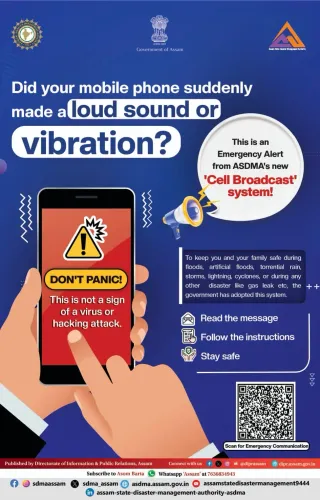
According to reports, an alert erroneously routed from disaster management units in Haryana and Uttar Pradesh caused mobile phones — including that of Prime Minister Modi — to ring at midnight, raising immediate concerns about system reliability. The Cell Broadcast Alert System is designed to emit a loud hooting sound on mobile devices even when they are switched off or kept in silent mode, making an inadvertent midnight alert particularly disruptive.
Authorities have not officially disclosed the specific reasons for the suspension. However, reports citing sources indicate that a technical malfunction in the alert routing mechanism is believed to be the primary cause. The government has not confirmed the incident involving the Prime Minister's number independently.
About the Cell Broadcast Alert System
The CBAS was developed indigenously by the Centre for Development of Telematics (C-DOT) under the Department of Telecommunications (DoT), in coordination with the NDMA and the Ministry of Home Affairs (MHA). Launched in May 2026, the system was positioned as a major upgrade to India's emergency response infrastructure, capable of delivering real-time alerts related to natural disasters, severe weather events, and other public safety emergencies directly to citizens' mobile phones.
As part of its rollout, a nationwide test was conducted successfully, with mobile users across the country receiving emergency alert messages accompanied by a beep sound. The initiative was widely regarded as a significant step toward faster and more effective public warning during crises.
What Happens Next
The suspension is described as temporary. Restoration of the system will depend on the outcome of the ongoing technical review and further directives from the NDMA. Officials have indicated that updates are expected once the assessment is complete and additional system safeguards are put in place. No specific timeline for resumption has been announced.
This comes amid growing scrutiny of India's emergency alert infrastructure, with the CBAS having been operational for less than a month before the suspension. The incident underscores the challenges of deploying large-scale, always-on public warning systems that bypass standard device settings — a feature that is both its core strength and, as this episode illustrates, a potential vulnerability if routing controls fail.
Point of View
A system that overrides device silence settings carries an unusually high duty of care: a false midnight alarm erodes the public trust that emergency alerts depend on. The NDMA's silence on the specifics of the malfunction is itself a transparency problem that could compound that erosion.
NationPress
16 Sept 2026
Frequently Asked Questions
Why has India's Cell Broadcast Alert System been suspended?
The Cell Broadcast Alert System was suspended by the NDMA on 12 June 2026 after a misrouted late-night alert from disaster management units in Haryana and Uttar Pradesh reportedly reached Prime Minister Narendra Modi's contact number, raising concerns about system reliability. Authorities have not officially confirmed the specific cause, but a technical malfunction in the alert routing mechanism is believed to be responsible.
What is the Cell Broadcast Alert System and when was it launched?
The Cell Broadcast Alert System is an indigenously developed nationwide emergency public warning network that delivers real-time alerts about disasters and public safety emergencies directly to citizens' mobile phones, including when devices are switched off or in silent mode. It was launched in May 2026 by C-DOT under the Department of Telecommunications, in coordination with the NDMA and the Ministry of Home Affairs.
When will the Cell Broadcast Alert System be restored?
No specific timeline has been announced for the restoration of the system. The NDMA has said resumption will depend on the outcome of an ongoing technical review and the strengthening of system safeguards, with updates expected once the assessment is complete.
Who is affected by the suspension of the Cell Broadcast Alert System?
The suspension affects all mobile phone users across India who would otherwise receive real-time emergency alerts through the system during natural disasters, severe weather events, or other public safety emergencies. Until the system is restored, this layer of emergency communication remains unavailable.
What makes the Cell Broadcast Alert System different from regular emergency alerts?
Unlike standard SMS alerts, the Cell Broadcast Alert System is designed to emit a loud hooting sound on mobile devices even when they are switched off or kept in silent mode, ensuring that critical warnings reach citizens regardless of their phone settings. This capability, while powerful for genuine emergencies, also means that a misrouted alert — as reportedly occurred — can be highly disruptive.