India's first port-based e-methanol plant launched at Kandla in ₹2,300 crore push
Synopsis
India has broken ground on its first port-based e-methanol plant at Kandla — a ₹2,300 crore bet that could make the country a globally cost-competitive green-fuel supplier. At a projected $750 per tonne against a global rate of $1,300, the numbers are striking; the real test comes when both phases go live by March 2027.
Key Takeaways
India's first port-based e-methanol plant was inaugurated at Deendayal Port Authority, Kandla, Gujarat on 26 September 2026 .
The ₹2,300 crore project is a joint venture between DPA (76%) and Assam Petro-Chemicals Ltd (24%).
Full production capacity will be 150 tonnes of e-methanol per day ; Phase 1 (50 tpd) targets January 2027 , Phase 2 (100 tpd) targets March 2027 .
Projected production cost is $750 per tonne , against a global benchmark of about $1,300 per tonne .
The plant is expected to create more than 3,500 direct and indirect jobs and position Kandla as a green-fuel hub on the Asia-Europe trade corridor .
The project supports India's net-zero 2070 target and the broader goal of becoming a top-five ship-owning nation by 2047 .
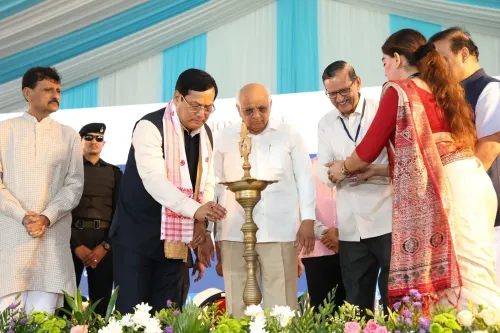
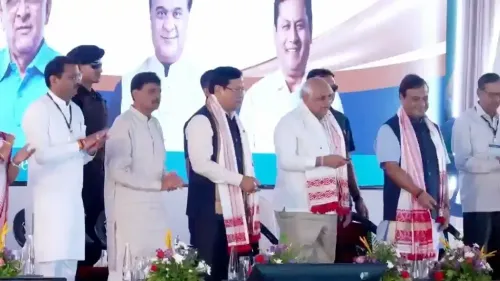
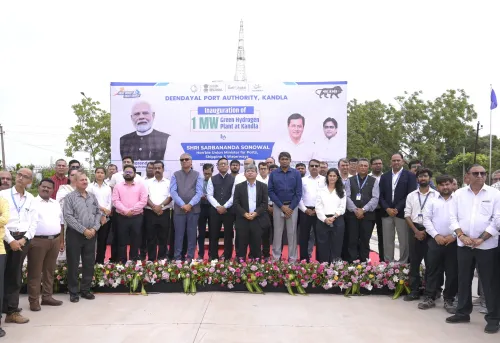
India on Saturday, 26 September 2026, laid the foundation stone for the country's first port-based e-methanol plant at Deendayal Port Authority (DPA) in Kandla, Gujarat, marking a significant step in the nation's ambition to become a global green-fuel supplier. The ₹2,300 crore facility will be jointly developed by DPA and Assam Petro-Chemicals Ltd (APCL), headquartered in Namrup, Assam.
Key Developments at the Launch
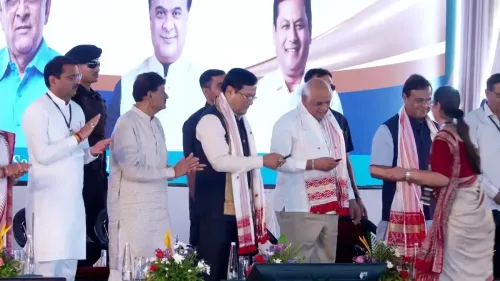
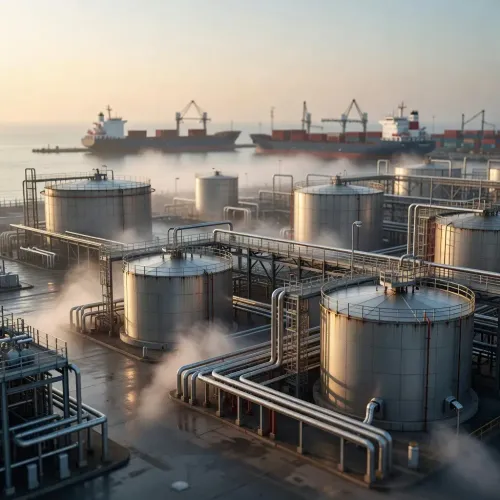
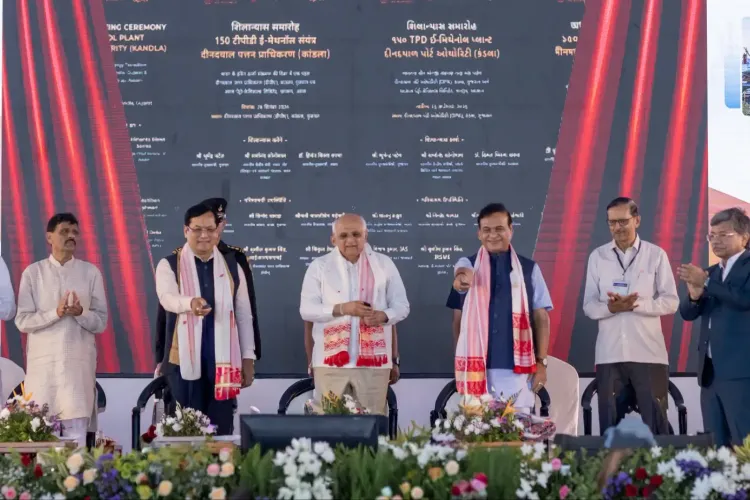
Gujarat Chief Minister Bhupendra Patel, Union Minister for Ports, Shipping and Waterways Sarbananda Sonowal, and Assam Chief Minister Himanta Biswa Sarma jointly laid the foundation stone at the ceremony. The plant is projected to produce 150 tonnes of e-methanol per day at full capacity, using renewable power, water, and biogenic carbon dioxide as feedstock.
Notably, India's cost advantage stands out: the plant is projected to produce e-methanol at approximately $750 per tonne, compared with a prevailing global rate of around $1,300 per tonne — a cost differential that could reshape India's competitiveness in the global green-shipping fuel market.
Two-Phase Implementation Plan
The project will be rolled out in two scalable phases. The first phase, involving an investment of ₹1,200 crore, will add 50 tonnes per day of production capacity and is targeted for completion by January 2027. The second phase will add a further 100 tonnes per day at an investment of ₹1,100 crore, with completion targeted for March 2027.
DPA and APCL will share capital in a 76:24 ratio. DPA's contribution includes equity capital of ₹567.32 crore, 75 acres of land, desalinated water, and renewable energy in the form of green hydrogen.
Strategic Position and Market Impact
The e-methanol produced at Kandla will be supplied to vessels operating along the Asia-Europe International Trade Corridor, positioning Kandla as a potential green-fuel bunkering hub for international shipping. The facility is expected to rank among India's largest e-methanol production plants and generate more than 3,500 direct and indirect jobs.
This comes amid a global maritime industry under growing regulatory pressure to decarbonise. The International Maritime Organization (IMO) has set increasingly stringent emissions targets, making green-fuel infrastructure at major ports a strategic priority for shipping nations. Kandla, already one of India's busiest ports by cargo volume, is well-placed to serve that corridor.
Broader Maritime and Energy Ambitions
The project aligns with India's target of achieving net-zero emissions by 2070 and dovetails with the government's energy self-reliance and Make in India objectives. The Centre also plans to add 100 new ships to India's merchant fleet over the next five years and aims to make India one of the world's top five ship-owning nations by 2047.
Global shipping major Maersk has reportedly begun placing orders for containers manufactured in India, signalling growing international confidence in Indian maritime supply chains. The Kandla plant is further expected to catalyse a broader green-energy ecosystem — spanning transportation, storage, and ancillary services — around the port.
As both phases come online through early 2027, India's position in the fast-growing global green-fuel market will be closely watched by maritime industry players and climate-finance investors alike.
Point of View
300 — is the headline number that deserves scrutiny. Green-fuel plants globally have a track record of cost overruns and timeline slippage; India's own renewable-energy infrastructure projects have not been immune. The January-to-March 2027 window for both phases is ambitious given that the foundation stone was only laid in late September 2026. What the project does signal clearly is a strategic pivot: India is not just building capacity for domestic energy needs but is explicitly targeting the international bunkering market. If the cost advantage holds, Kandla could emerge as a genuine rival to European green-fuel hubs. If it does not, the ₹2,300 crore becomes another cautionary data point in the green-transition ledger.
NationPress
26 Sept 2026
Frequently Asked Questions
What is India's first port-based e-methanol plant at Kandla?
It is a ₹2,300 crore green-fuel facility being built at Deendayal Port Authority in Kandla, Gujarat, jointly by DPA and Assam Petro-Chemicals Ltd. At full capacity, it will produce 150 tonnes of e-methanol per day using renewable power, water, and biogenic carbon dioxide.
When will the Kandla e-methanol plant be operational?
The project is being implemented in two phases. Phase 1, adding 50 tonnes per day of capacity, is targeted for completion by January 2027, while Phase 2, adding another 100 tonnes per day, is targeted for March 2027.
How does India's e-methanol production cost compare globally?
The Kandla plant is projected to produce e-methanol at around $750 per tonne, significantly below the prevailing global rate of approximately $1,300 per tonne. This cost advantage is central to India's pitch as a competitive green-fuel exporter.
Who will use the e-methanol produced at Kandla?
The fuel is intended for vessels operating along the Asia-Europe International Trade Corridor. The aim is to position Kandla as a green-fuel bunkering hub for international shipping, which faces growing decarbonisation mandates from the International Maritime Organization.
How does this project fit into India's larger maritime and climate goals?
The plant supports India's net-zero emissions target by 2070 and the government's energy self-reliance agenda. It also connects to India's plan to add 100 new ships to its merchant fleet over five years and become one of the world's top five ship-owning nations by 2047.