India's democratic rise debunks authoritarianism-growth myth: Report

Synopsis
A new India Narrative report argues that India — growing at 6.5% GDP, without colonies or invasions — is dismantling one of international affairs' most durable myths: that authoritarianism is the only fast lane to great-power status. If the argument holds, it could reframe how the world thinks about democracy and development for decades.
Key Takeaways
A new India Narrative report, released on 12 June , argues India's rise challenges the assumption that authoritarianism is required for rapid economic development.
India's GDP growth of 6.5% amid global volatility, a young population, and resilient institutions are cited as structural advantages.
India is on track to become the world's third-largest economy by the end of the decade — without colonies, invasions, or political repression.
The report contrasts India's path with China , the US , and Europe , all of which built power through coercion or authoritarian control.
Bureaucratic red tape, corruption, and widespread poverty are identified as key challenges India must still overcome.
The report calls India's rise a 'proof of concept' for democratic development in the global south.
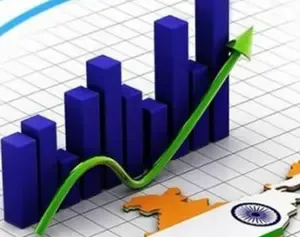
India's sustained economic ascent — driven by 6.5% GDP growth, a young demographic base, and resilient democratic institutions — is poised to dismantle the long-held assumption that political repression is a prerequisite for rapid development, according to a new report by India Narrative.
The report, released on 12 June, argues that India's consistent growth trajectory directly refutes the notion that modern industrial and technological capacity can only be built under authoritarian rule.
A New Model of Great-Power Rise
The report positions India's emergence as a great power as historically unprecedented. Unlike earlier powers, India acquired no colonies, launched no invasions of foreign territory, and built its influence without coercion. According to the report, India's arrival as a great power 'without dominion over others may be the most radical idea of the twenty-first century.'
This stands in sharp contrast to the trajectories of the United States, Europe, and China. The US and Europe built global influence through conquest and coercion. China's extraordinary economic rise, the report notes, 'was underwritten by a Communist Party that tolerated no dissent and no democracy.' The Soviet Union, it adds, 'exported revolution at gunpoint.'
Historical Context: The Cost of Authoritarian Growth
The India Narrative report draws on sobering historical parallels to make its case. It recalls the famines that killed millions in China during the 1960s and 1970s, the abject poverty of Shenzhen before Deng Xiaoping's reforms, and the Great Depression that devastated the United States. The implicit argument: authoritarian shortcuts have historically carried catastrophic human costs that are rarely factored into growth narratives.
India, by contrast, is on track to become the world's third-largest economy by the end of the decade — a milestone it is approaching with an independent judiciary, a pluralistic press, and a functioning opposition intact.
Structural Advantages and Remaining Challenges
The report identifies India's demographic dividend, durable institutions, and economic resilience amid global volatility as structural long-term advantages. An independent judiciary and a strong opposition, it acknowledges, will not offer a shortcut to the top of the global order — but such factors can underpin sustained expansion over time.
At the same time, the report does not shy away from India's persistent challenges. Bureaucratic red tape, corruption, and widespread poverty are flagged as obstacles that must be overcome to maintain strong economic momentum.
A 'Proof of Concept' for Democratic Development
Despite these hurdles, the report concludes that India's rise serves as a 'proof of concept' — a direct challenge to the school of thought in international affairs that treats democracy as a luxury developing nations cannot afford. If India sustains its trajectory, it would offer the most compelling empirical counter-argument to authoritarian development models seen in the post-war era.
Whether India can convert this structural promise into durable per-capita prosperity — and close its gaps on poverty and governance — will determine how persuasive that proof of concept ultimately becomes.
Point of View
But the argument deserves scrutiny. India's democratic institutions are real advantages — yet the country's per-capita income remains among the lower rungs of emerging economies, and poverty reduction has been uneven. The 'proof of concept' framing is premature until India closes the gap between aggregate GDP rankings and lived standards for its bottom quartile. The more honest framing: India is a promising counter-example to authoritarian development models, not yet a definitive refutation. The distinction matters — because premature triumphalism can obscure the governance reforms still urgently needed.
NationPress
13 Sept 2026
Frequently Asked Questions
What does the India Narrative report say about India's economic rise?
The India Narrative report argues that India's sustained GDP growth of 6.5%, combined with democratic institutions and a young population, challenges the widely-held assumption that authoritarianism is a necessary shortcut to rapid development. It describes India's rise as a 'proof of concept' for democratic growth models.
How does India's rise differ from China's or the US's historical ascent?
Unlike China, whose economic rise occurred under a Communist Party that 'tolerated no dissent and no democracy,' or the US and Europe, which built influence through conquest and coercion, India has acquired no colonies and launched no invasions. The report frames this as historically unprecedented for a rising great power.
What are India's key structural advantages according to the report?
The report cites India's 6.5% GDP growth despite global volatility, its demographic dividend, an independent judiciary, a pluralistic press, and a strong opposition as long-term structural advantages supporting sustained economic expansion.
What challenges does the report identify for India?
Despite its optimistic framing, the report acknowledges that bureaucratic red tape, corruption, and widespread poverty remain significant obstacles India must overcome to sustain strong economic growth and fulfil its great-power potential.
Is India on track to become the world's third-largest economy?
According to the report, India is on track to become the world's third-largest economy by the end of the decade. This projection is supported by its consistent growth trajectory and structural demographic advantages.