India's Russian crude imports hit record high, surge 34% in June 2026
Synopsis
India's Russian crude intake hit a record EUR 4.5 billion in June — up 34% in a single month — with Reliance's Jamnagar refinery alone posting a 150% surge. Even as Russia earned less per barrel due to falling global prices, Indian demand kept volumes flowing. A CREA report now flags India's refineries as a key channel through which Russian crude reaches sanctioned-country markets as refined products.
Key Takeaways
India imported Russian crude worth EUR 4.5 billion in June 2026 , a 34 per cent jump over May — a record high.
India was the second-largest buyer of Russian hydrocarbons globally in June, after China , with total fossil fuel imports of EUR 5.5 billion .
Reliance Industries' Jamnagar refinery led with a 150 per cent month-on-month surge in Russian crude intake; Indian Oil's Paradip rose 126 per cent .
Russia's crude export volumes rose 14 per cent in June, but revenues fell 8 per cent to EUR 348 million per day due to lower global prices.
Indian, Turkish, Bruneian, and Georgian refineries exported refined products worth EUR 814 million to sanctioned-country markets including the EU , Australia , and the US .
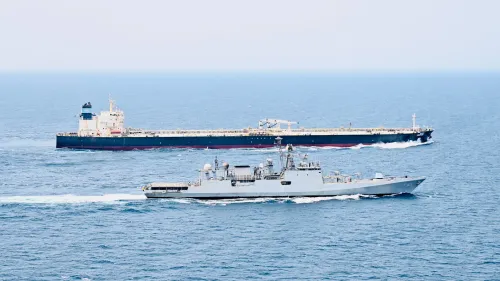
India's imports of Russian crude oil surged to a record high in June 2026, rising 34 per cent over the previous month to reach EUR 4.5 billion, even as Russia's overall fossil fuel export revenues edged lower amid softer global prices, according to a report by the Centre for Research on Energy and Clean Air (CREA). The data positions India as the second-largest buyer of Russian hydrocarbons globally, behind only China.
Scale of the Import Surge
Crude oil accounted for 83 per cent of India's total Russian fossil fuel imports, which stood at EUR 5.5 billion in June. Beyond crude, India also purchased oil products worth EUR 488 million and coal worth EUR 444 million from Russia during the month. The broader uptick in crude appetite also pushed India's overall crude oil imports up by 5.4 per cent month-on-month.
Refinery-Level Breakdown
The surge was broad-based across India's major refining hubs. Reliance Industries' Jamnagar refinery recorded the steepest jump, with Russian crude imports rising 150 per cent from May. Indian Oil Corporation's Paradip refinery followed with a 126 per cent increase, while Bharat Petroleum Corporation Ltd's Kochi refinery posted an 83 per cent rise. Nayara Energy's Vadinar refinery saw shipments grow 45 per cent, according to CREA data.
Russia's Revenue Paradox
India's stronger demand helped lift Russia's crude export volumes by 14 per cent in June. Yet lower global crude prices undercut the earnings benefit — Russia's crude oil export revenues fell 8 per cent month-on-month to EUR 348 million per day. Overall, Russia's fossil fuel export revenues slipped 1 per cent to EUR 734 million per day, even as total export volumes rose 7 per cent. This volume-without-value dynamic reflects the sustained price discount Russia has had to offer buyers like India to sustain demand.
India's Role in Sanctions Leakage
The CREA report also flagged a broader trade pattern that has drawn international scrutiny. Refineries in India, Turkiye, Brunei, and Georgia collectively exported refined petroleum products worth EUR 814 million in June to countries that have imposed sanctions on Russia — including the European Union, Australia, and the United States. Critics argue this flow effectively circumvents the intent of Western sanctions, though India has maintained that its energy procurement decisions are guided by national interest and energy security imperatives.
What This Signals
This comes amid sustained Western pressure on New Delhi to reduce its dependence on discounted Russian barrels. India has consistently defended its position, arguing that affordable energy is essential for economic stability. The June figures suggest that price advantage continues to outweigh geopolitical caution for Indian refiners. With global crude markets remaining volatile, analysts will watch whether this record pace of Russian crude intake holds through the second half of 2026.
Point of View
However, surfaces a harder question: by re-exporting refined products to sanctioned markets, Indian refineries are functioning as a processing corridor that blunts the economic pressure Western sanctions were designed to apply. New Delhi has every right to pursue energy security, but the EUR 814 million refined-product export figure will sharpen Western diplomatic pressure on India in the months ahead. The real test is whether India can sustain this posture as geopolitical costs — not just economic ones — begin to accumulate.
NationPress
10 Oct 2026
Frequently Asked Questions
How much Russian crude did India import in June 2026?
India imported Russian crude oil worth EUR 4.5 billion in June 2026, a record high and a 34 per cent increase over May 2026, according to a CREA report. Crude oil made up 83 per cent of India's total Russian fossil fuel imports of EUR 5.5 billion that month.
Which Indian refineries increased Russian crude imports the most?
Reliance Industries' Jamnagar refinery posted the largest jump at 150 per cent month-on-month, followed by Indian Oil Corporation's Paradip refinery at 126 per cent, BPCL's Kochi refinery at 83 per cent, and Nayara Energy's Vadinar refinery at 45 per cent, per CREA data.
Why did Russia's oil revenues fall even as India bought more?
Russia's crude export volumes rose 14 per cent in June, but softer global crude prices eroded earnings. Russia's crude export revenues fell 8 per cent month-on-month to EUR 348 million per day, illustrating how volume gains were offset by the price discount Russia must offer to attract buyers.
What is the concern about India re-exporting refined Russian crude?
CREA's report highlights that refineries in India, Turkiye, Brunei, and Georgia exported refined petroleum products worth EUR 814 million in June to countries that have sanctioned Russia, including the EU, Australia, and the US. Critics argue this flow dilutes the economic impact of Western sanctions on Russia.
Is India the largest buyer of Russian oil?
No. According to the CREA report, India was the second-largest buyer of Russian hydrocarbons in June 2026, after China. India's total Russian fossil fuel imports stood at EUR 5.5 billion for the month.