Smart Cities Mission, AMRUT: India's urban overhaul by the numbers
Synopsis
India's Smart Cities Mission has completed over 7,500 projects worth $183 billion across 100 cities, while AMRUT 2.0 has approved $13.3 billion in water-supply works and enabled reuse of 6,535 MLD of treated water. All 100 cities now run AI-powered command centres — a governance shift that sets this programme apart from every urban scheme that came before it.
Key Takeaways
7,555 of 8,067 planned Smart Cities Mission projects were complete by May 2025 , with a total investment of approximately $183 billion .
A further 512 projects worth around $1.45 billion were in advanced stages as of the same period.
All 100 Smart Cities have operational Integrated Command and Control Centres using AI, IoT, and data analytics.
AMRUT 2.0 approved 3,528 water-supply projects worth approximately $13.3 billion as of February 2026 .
States were reusing 6,535 MLD of treated water by February 2026 , with another 1,931 MLD of capacity approved.
India's Smart Cities Mission and the Atal Mission for Rejuvenation and Urban Transformation (AMRUT) have fundamentally reoriented the country's approach to urban development, shifting policy emphasis from standalone construction to integrated, technology-enabled infrastructure — according to a recent report assessing the decade-long programme.
Project Completion at Scale
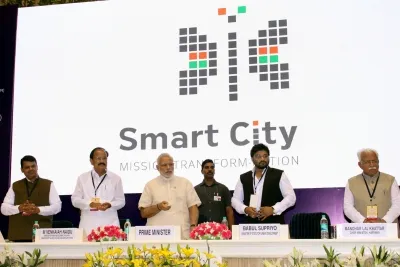
Launched in 2015, the Smart Cities Mission selected 100 cities for targeted development through a combination of area-based and pan-city projects. By May 2025, 7,555 of 8,067 planned projects under the mission had been completed, with a total investment of approximately $183 billion. A further 512 projects valued at around $1.45 billion were in advanced stages of execution. By 31 March 2025, nearly all central government budgeted funds had been released to the participating cities.
What the Mission Covers
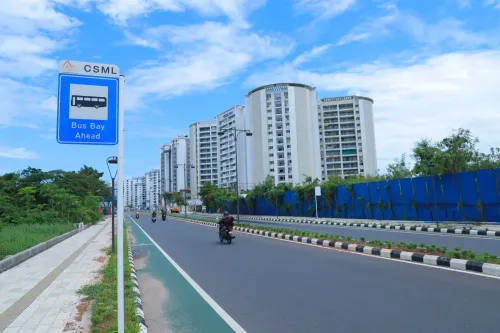
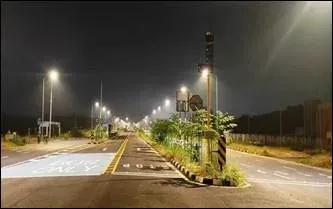
The programme spans a wide range of urban functions. According to the report, smart roads, public spaces, cycle tracks, health facilities, classrooms, water systems, and technology-enabled public services have all been incorporated into the mission's transformation framework. This breadth marks a departure from earlier urban schemes that focused narrowly on physical construction.
Notably, all 100 Smart Cities now have operational Integrated Command and Control Centres (ICCCs) — a significant institutional milestone. These centres deploy Artificial Intelligence, Internet of Things (IoT) systems, and data analytics to support traffic regulation, water supply monitoring, solid waste management, public safety, crowd management, and emergency response.
AMRUT 2.0 and Water Security
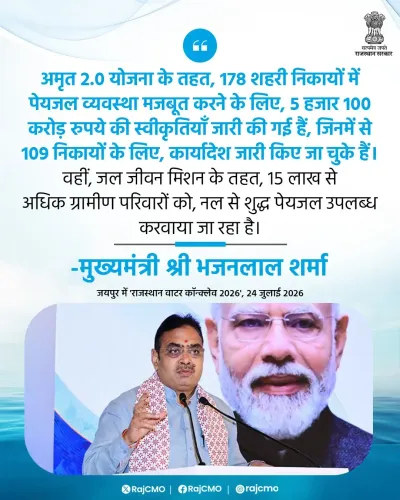
On the water front, 3,528 water-supply projects worth approximately $13.3 billion had been approved under AMRUT 2.0 as of February 2026, according to government data. The government's 'Jal Hi AMRIT' initiative under AMRUT 2.0 is aimed at improving the quality and sustained management of treated wastewater for safe reuse across industrial, agricultural, and horticultural applications — reducing pressure on freshwater resources.
By February 2026, states were already reusing 6,535 MLD of treated water for industries, horticulture, agriculture, and other purposes. An additional 1,931 MLD of recycle and reuse capacity had been approved under AMRUT 2.0, government data showed.
A New Phase of Urban Governance
The report characterises India's urban transformation as entering a new policy phase in which governance itself has become central to the development agenda. 'India's urban transformation is now entering a new policy phase in which governance itself has become a central part of the development agenda,' the report noted. The integration of technology into city management — through ICCCs and data-driven platforms — represents a structural shift that earlier urban missions did not attempt at this scale.
With AMRUT 2.0 projects still in execution and wastewater reuse targets expanding, the full impact of these programmes on India's urban quality of life is expected to become clearer over the next two to three years.
Point of View
But the more consequential shift is institutional — 100 cities now running AI-powered command centres is a governance infrastructure that India has never had before. The harder question is whether these centres are genuinely improving service delivery or functioning as expensive dashboards. AMRUT 2.0's wastewater reuse numbers are substantial, but India's per-capita urban water availability remains under stress; 6,535 MLD of reused water is progress, not sufficiency. The real test of both programmes will come when their central funding ends and cities must sustain operations on their own fiscal capacity — something most Indian municipalities are structurally ill-equipped to do.
NationPress
1 Sept 2026
Frequently Asked Questions
What is India's Smart Cities Mission and how many projects has it completed?
The Smart Cities Mission, launched in 2015, selected 100 cities for targeted urban development using area-based and pan-city projects. By May 2025, 7,555 of 8,067 planned projects had been completed, with a total investment of approximately $183 billion.
What is AMRUT 2.0 and what does it focus on?
AMRUT 2.0 is the second phase of the Atal Mission for Rejuvenation and Urban Transformation, focused primarily on water security and wastewater management. As of February 2026, it had approved 3,528 water-supply projects worth approximately $13.3 billion.
What are Integrated Command and Control Centres in Smart Cities?
Integrated Command and Control Centres (ICCCs) are technology hubs operational in all 100 Smart Cities, using Artificial Intelligence, IoT systems, and data analytics. They support traffic regulation, water supply monitoring, solid waste management, public safety, and emergency response.
How much treated wastewater is being reused under AMRUT 2.0?
By February 2026, states were reusing 6,535 MLD of treated water for industries, horticulture, agriculture, and other purposes. An additional 1,931 MLD of recycle and reuse capacity had been approved under AMRUT 2.0.
What is the 'Jal Hi AMRIT' initiative?
'Jal Hi AMRIT' is a government initiative under AMRUT 2.0 aimed at improving the quality and sustained management of treated wastewater to make it safe for reuse. It targets industrial, agricultural, and horticultural applications to reduce pressure on freshwater resources.