India's space growth: downstream apps and private players to lead next phase

Synopsis
India's space ambitions are evolving fast — and the next frontier isn't the launchpad, it's what happens after satellites reach orbit. On National Space Day, industry leaders say downstream data analytics and private-sector services will be the real engine of India's space economy, with global export potential on the horizon.
Key Takeaways
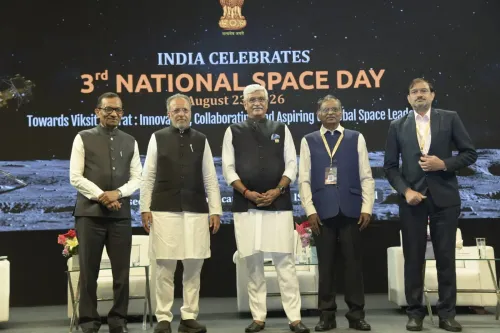
India marks National Space Day on 23 August , with industry leaders signalling a pivot toward downstream space applications and private-sector growth.
AK Bhatt of ISpA described India as an emerging full-stack space economy with strengths across launch, satellites, and applications.
Krishanu Acharya of Suhora Technologies said downstream data services could become the most sustainable revenue layer of India's space economy.
Gautam Sharma of Viasat India highlighted the role of public-private partnerships in building a world-class space ecosystem.
Key growth verticals include precision agriculture, disaster management, urban planning, and satellite-based broadband .
As India marks National Space Day on 23 August, leading voices from the country's space industry say the sector's next growth chapter will be defined not just by rockets and satellites, but by the rapid rise of downstream applications, private sector participation, and satellite-based services. The consensus, shared by senior executives and industry bodies, signals a maturing of India's space economy beyond infrastructure into monetisable, export-ready services.
From Launch Pads to Market Opportunities
Lt. Gen. AK Bhatt, Director General of the Indian Space Association (ISpA), said India's private space ecosystem has covered remarkable ground in a short time and is now witnessing capabilities translate into tangible market opportunities. 'India is emerging as a full-stack space economy, with growing strengths across launch, satellite infrastructure and a range of downstream space applications,' he said.
Bhatt credited the momentum to a combination of ISRO's deep technological expertise, progressive policy and regulatory reforms, and the execution capabilities of a new generation of private companies. 'Recent successes by private space companies have demonstrated India's ability to build capabilities at a globally competitive level, sending an important signal to investors and international partners that Indian space companies can move from innovation to execution and scale,' he added.
Downstream Applications: The Sustainable Growth Engine
Krishanu Acharya, CEO and Co-Founder of Suhora Technologies, argued that while India's private space story has largely been framed around launch vehicles, downstream applications could emerge as the more durable revenue driver. 'As more satellites reach orbit, that raw data only becomes valuable once it's converted into usable insight, and that's where downstream players will increasingly drive revenue for India's space economy,' Acharya said.
He added that India has an opportunity to build 'lasting, exportable expertise — not just supporting domestic capability, but competing globally in analytics and applications built on space data.' This positions India not merely as a low-cost launch provider, but as a potential hub for high-value space-data services.
Public-Private Partnerships Powering Progress
Gautam Sharma, Managing Director of Viasat India, highlighted India's significant progress towards becoming one of the world's leading spacefaring nations, underscoring the role of the government and ISRO in building a world-class ecosystem through sustained public-private collaboration.
This comes amid a broader global shift where space economies are increasingly judged not by the number of launches, but by the depth of their downstream value chains — an area where countries like the United States and members of the European Space Agency have long held an advantage. India's growing private sector is now positioned to close that gap.
What the Next Phase Looks Like
Industry observers note that satellite-based services — spanning precision agriculture, disaster management, urban planning, and broadband connectivity — represent the highest-growth segments for the near term. With regulatory reforms having opened the sector to private investment, the pipeline of startups and mid-size firms targeting these verticals is expanding rapidly. The trajectory suggests that National Space Day 2025 may well be remembered as the moment the narrative shifted from 'can India launch?' to 'what can India do with what it launches?'
Point of View
But the real economic prize lies downstream — in data analytics, satellite services, and applications that convert orbital assets into recurring revenue. The country has the engineering talent and a growing regulatory runway; what it has historically lacked is the commercial layer that turns raw satellite data into exportable products. The shift flagged by ISpA and sector founders on National Space Day is significant, but execution will require patient capital and a policy environment that rewards downstream innovation as generously as it does hardware. The risk is that India builds impressive launch infrastructure while ceding the higher-margin applications market to US and European incumbents — the same trap it narrowly avoided in software two decades ago.
NationPress
9 Oct 2026
Frequently Asked Questions
What is India's next phase of space growth about?
According to industry experts speaking on National Space Day 2025, India's next space growth phase will be driven by downstream applications — services that convert satellite data into usable insights — alongside expanded private sector participation and satellite-based services, rather than launch capabilities alone.
What are downstream space applications?
Downstream space applications refer to products and services built on data collected by satellites, including precision agriculture tools, disaster management systems, urban planning analytics, and broadband connectivity. These represent the high-value commercial layer above raw satellite infrastructure.
What is National Space Day in India?
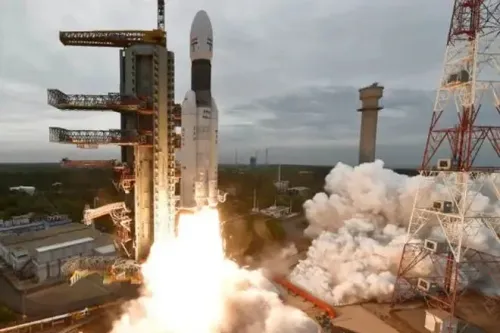
National Space Day is observed on 23 August each year to commemorate India's achievements in space exploration, notably the Chandrayaan-3 lunar landing. It serves as an occasion for the industry to assess progress and outline future priorities.
What role does the private sector play in India's space economy?
The private sector is increasingly central to India's space ambitions, with companies developing launch vehicles, satellites, and downstream services. Industry body ISpA notes that recent private successes have signalled to global investors that Indian space firms can move from innovation to execution at scale.
How does India compare globally in space applications?
India is still building its downstream capabilities relative to established players in the United States and Europe, which have long dominated high-margin space data services. However, experts argue India has the talent and regulatory momentum to compete globally in analytics and satellite-based applications in the coming years.