Vikram-1 reaches orbit on debut flight, India's private space era begins
Synopsis
India's first privately built orbital rocket, Vikram-1, nailed orbit on its very first attempt — a feat most launch vehicles in history have failed to achieve on debut. Built by a Hyderabad team with an average age of 28, the mission is the clearest proof yet that Indian Space Policy 2023 is producing real commercial results, not just policy documents.
Key Takeaways
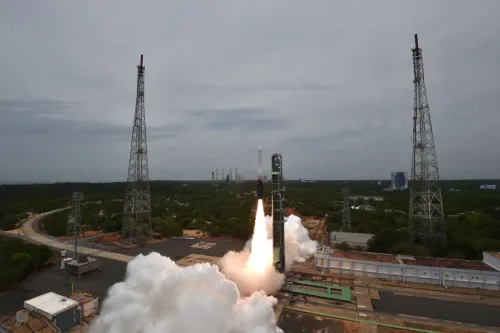
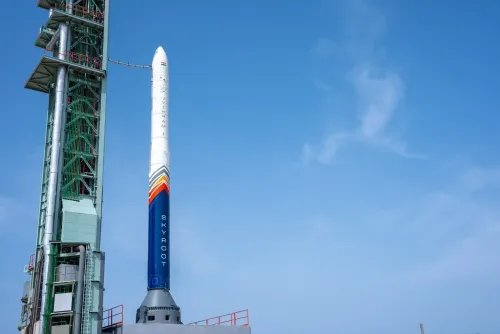
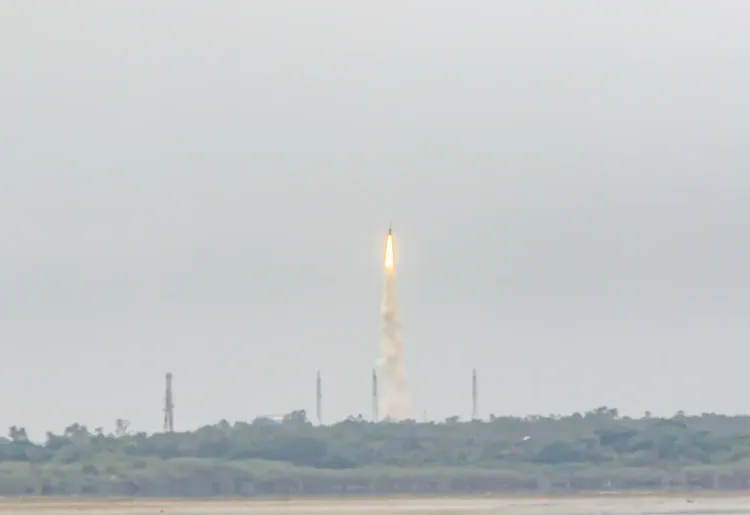
Vikram-1 by Skyroot Aerospace successfully reached orbit on its debut flight under Mission Aagaman on 20 July .
It is India's first privately developed orbital rocket to achieve orbit, described by Skyroot as an 'incredibly rare feat globally.' ISRO and IN-SPACe provided technical consultancy and 24x7 safety surveillance for the mission.
PM Narendra Modi called it 'a historic new frontier for India's space journey.' The core engineering team at Skyroot is Hyderabad-based with an average age of just 28 .
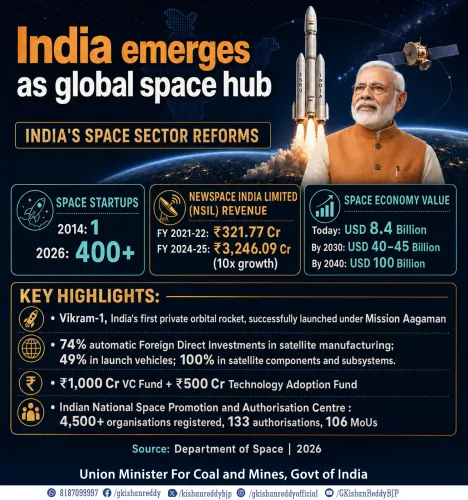
India's space economy, currently at $8.4 billion , is projected to reach $40–45 billion by 2030 .
Skyroot Aerospace's Vikram-1 rocket successfully entered orbit on its maiden flight under Mission Aagaman on 20 July, making it India's first privately developed orbital launch vehicle to achieve this milestone. The Hyderabad-based startup's achievement drew congratulations from the Indian Space Research Organisation (ISRO), Prime Minister Narendra Modi, and prominent public figures, signalling a structural shift in India's space economy.
A Rare First-Attempt Success
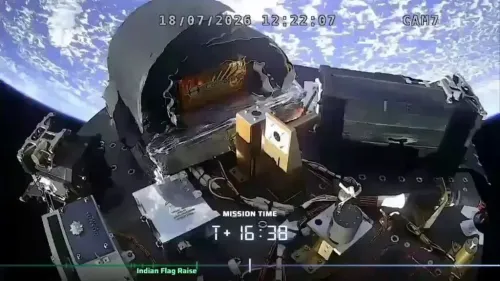
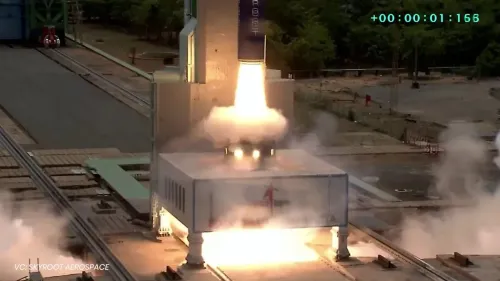
Skyroot Aerospace described reaching orbit on a debut flight as an 'incredibly rare feat globally,' sharing footage of the launch and satellite separation on X. 'Reliving the launch — from lift-off to satellite separation. Reaching orbit on the very first attempt of a new launch vehicle is an incredibly rare feat globally. The world now has a new launch vehicle. From India, for the world,' the company captioned the video.
First-attempt orbital success places Vikram-1 in a select global club. Most new launch vehicles require multiple attempts before achieving a stable orbit, making Skyroot's clean debut a significant technical validation.
ISRO and the Government Respond
ISRO offered formal congratulations to Skyroot, calling the launch a significant milestone for India's private space ecosystem. The agency specifically acknowledged the roles played by IN-SPACe and its own teams in enabling and facilitating the mission. 'Congratulations to IN-SPACe and ISRO teams, who enabled and facilitated the launch and ground testing operations along with technical consultancy and 24x7 safety surveillance,' ISRO said.
Prime Minister Narendra Modi called the mission 'a historic new frontier for India's space journey,' urging citizens to celebrate the achievement. The government's response underscores how closely the Centre has tied its industrial ambitions to the success of private space ventures.
The Team Behind the Rocket
Filmmaker S.S. Rajamouli was among the public figures who celebrated the launch, drawing attention to the youth of the team responsible. 'Skyroot has scripted history with VIKRAM-1, built by a Hyderabad-based team whose average age is just 28,' he said. The average age of the core engineering team highlights how India's new space economy is being built by a generation that grew up in the post-liberalisation era.
Indian Space Policy 2023 as the Catalyst
The successful launch is widely attributed, according to reports, to the Indian Space Policy 2023, which opened the entire space value chain — from satellite manufacturing to launch services and downstream applications — to private participation. The policy has accelerated investment, innovation, and entrepreneurship in a sector that was, until recently, the exclusive domain of government agencies.
This is the most visible commercial payoff of that policy shift to date, and it arrives at a moment when global launch demand is rising sharply.
India's Space Economy Outlook
India's space economy is currently valued at approximately $8.4 billion and is projected to grow nearly fivefold to $40–45 billion by 2030, according to reports. Vikram-1's success is expected to accelerate foreign and domestic investment into the sector, with Skyroot now positioned as a credible commercial launch provider on the global stage.
With Mission Aagaman logged as a success, attention turns to Skyroot's launch cadence and whether India can convert this technical milestone into a sustained commercial launch business.
Point of View
And Skyroot pulled it off without a government safety net. The real policy story here is Indian Space Policy 2023: it has done in a few years what decades of protected public-sector dominance could not — produced a commercially viable private launch vehicle. The $8.4 billion-to-$40 billion projection is credible only if launch cadence follows; a single success does not a launch industry make. The next test is whether Skyroot can sell slots to international customers and deliver on schedule, which is where most emerging launch providers stumble.
NationPress
21 Jul 2026
Frequently Asked Questions
What is Vikram-1 and what did it achieve?
Vikram-1 is India's first privately developed orbital rocket, built by Hyderabad-based startup Skyroot Aerospace. On 20 July, it successfully reached orbit on its maiden flight under Mission Aagaman — a first for India's private space sector and a rare global achievement for a debut launch vehicle.
Who built Vikram-1 and where is the team based?
Vikram-1 was built by Skyroot Aerospace, a startup headquartered in Hyderabad. The core engineering team has an average age of just 28, according to filmmaker S.S. Rajamouli, who highlighted the achievement publicly.
What role did ISRO play in the Vikram-1 launch?
ISRO provided technical consultancy, ground testing support, and 24x7 safety surveillance through its teams and IN-SPACe. The space agency congratulated Skyroot and called the launch a significant milestone for India's private space ecosystem.
How did Indian Space Policy 2023 enable this launch?
Indian Space Policy 2023 opened the entire space value chain — including launch services, satellite manufacturing, and downstream applications — to private participation. According to reports, this policy framework directly enabled Skyroot to develop, test, and launch Vikram-1 with institutional support from ISRO and IN-SPACe.
What is the projected size of India's space economy?
India's space economy is currently valued at approximately $8.4 billion and is projected to grow nearly fivefold to $40–45 billion by 2030, according to reports. The success of Vikram-1 is expected to attract further domestic and international investment into the sector.