India's crop residue could fuel aviation via SAF: Report
Synopsis
A new multi-institution report finds India could produce sustainable aviation fuel from rice and wheat straw at up to 40% below global benchmarks — and potentially cheaper than fossil jet fuel by the 2030s. With Delhi, Pune, and Mumbai airports sitting in prime feedstock zones, India may be closer to a homegrown jet-fuel industry than most policymakers realise.
Key Takeaways
A report by the India Energy and Climate Centre , UC Berkeley Goldman School of Public Policy , and Energy Innovation Policy and Technology outlines a viable PBtL SAF pathway for India.
India's PBtL route can produce SAF at up to 40% below global SAF benchmarks , driven by low green hydrogen and crop residue costs.
PBtL SAF production costs could fall below fossil jet fuel prices in the 2030s or earlier.
The process gasifies surplus rice and wheat straw combined with green hydrogen via the Fischer-Tropsch process.
Areas around Delhi , Pune , and Mumbai airports are identified as best suited for near-term industry growth.
Scaling PBtL could feasibly meet all of India's 2050 aviation demand and reduce crop-burning air pollution deaths.
India could transform its surplus agricultural waste and low-cost green hydrogen into sustainable aviation fuel (SAF) through a Power-and-Biomass-to-Liquids (PBtL) industry, according to a report co-authored by the India Energy and Climate Centre, the UC Berkeley Goldman School of Public Policy, and Energy Innovation Policy and Technology, released on 10 July. The findings present a commercially viable pathway that could simultaneously reduce India's dependence on imported crude oil, curb crop-burning pollution, and decarbonise its aviation sector.
How the PBtL Process Works
The PBtL pathway gasifies surplus crop residue — primarily rice and wheat straw — and combines the resulting synthesis gas with green hydrogen to produce liquid jet fuel via the Fischer-Tropsch process. The report describes PBtL as ready for commercial demonstration and argues it outcompetes other SAF technologies on cost, carbon intensity, and resource efficiency.
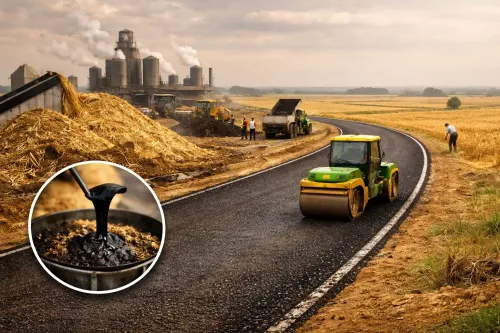
Crucially, the process creates value from agricultural residue that is currently burned in fields, a practice that contributes significantly to seasonal air pollution across northern India. The report notes that scaling PBtL could avoid premature deaths linked to local air pollution — a co-benefit that extends well beyond the aviation sector.
Cost Advantage and Market Potential
According to the report, India's PBtL route can produce SAF at costs up to roughly 40 per cent below global SAF benchmarks, driven by record-low green hydrogen prices and low agricultural residue costs. The report further projects that PBtL SAF production costs could fall below fossil jet fuel prices in the 2030s or earlier, depending on market conditions and policy developments.
The findings also suggest that PBtL SAF could feasibly satisfy all of India's 2050 aviation demand and carries less monetary risk exposure than fossil jet fuel. Until Indian PBtL SAF can compete directly with conventional jet fuel, the report argues it can economically serve rising international SAF demand while hedging against crude oil price spikes.
Where the Opportunity Is Sharpest
A spatially detailed, district-level assessment in the report identifies areas surrounding the Delhi, Pune, and Mumbai airports as best suited for near-term PBtL industry growth, given the alignment of surplus agricultural residue availability and low green hydrogen costs in those corridors. This geographic specificity adds credibility to the commercial case and gives policymakers a clear starting point for pilot investments.
The Policy Challenge Ahead
The report acknowledges that early investment and smart policy will be essential to overcome first-of-a-kind deployment barriers and guard against unintended consequences. It concludes that if India can navigate these challenges, it can unlock a virtuous cycle of scale and cost reduction that advances energy self-reliance, public health, and global climate leadership.
This comes amid India's broader push to reduce its aviation sector's greenhouse gas footprint, even as passenger air travel demand continues to grow rapidly. With the country already making strides in green hydrogen capacity, the report's authors argue the conditions for a domestic SAF industry are more favourable now than at any previous point.
Point of View
And first-of-a-kind deployment costs routinely exceed projections. The geographic case for Delhi, Pune, and Mumbai airports is compelling, but India's track record on converting energy transition reports into funded pilot projects is patchy. The real test will be whether aviation regulators and the Ministry of Petroleum move from acknowledging the pathway to mandating SAF blending targets that create the demand signal investors need. Without that policy anchor, this risks being another well-researched vision document that sits on a shelf.
NationPress
10 Jul 2026
Frequently Asked Questions
What is the PBtL sustainable aviation fuel pathway described in the report?
PBtL, or Power-and-Biomass-to-Liquids, is a process that gasifies surplus crop residue such as rice and wheat straw, combines it with green hydrogen, and converts the resulting synthesis gas into liquid jet fuel via the Fischer-Tropsch process. The report, co-authored by the India Energy and Climate Centre and UC Berkeley, argues this pathway is ready for commercial demonstration in India.
How much cheaper is India's PBtL SAF compared to global benchmarks?
According to the report, India's PBtL route can produce SAF at costs up to roughly 40% below global SAF benchmarks, driven by record-low green hydrogen prices and low agricultural residue costs. The report also projects that PBtL SAF could undercut fossil jet fuel prices in the 2030s or earlier.
Which airports are best positioned for early PBtL SAF development?
The report's district-level assessment identifies areas surrounding the Delhi, Pune, and Mumbai airports as best suited for near-term PBtL industry growth, given the local alignment of surplus agricultural residue and low green hydrogen costs.
How does PBtL SAF address India's crop-burning problem?
The PBtL process creates economic value from agricultural residue — primarily rice and wheat straw — that farmers currently burn in fields, a major source of seasonal air pollution. The report states that scaling PBtL could avoid premature deaths from local air pollution, making it a public health intervention as much as an energy one.
Can PBtL SAF meet all of India's future aviation fuel needs?
The report states that PBtL SAF has an enormous market size and could feasibly satisfy all of India's 2050 aviation demand. It also notes that until PBtL SAF can compete directly with fossil jet fuel domestically, it can serve rising international SAF demand and hedge against crude oil price volatility.