Indo-German Energy Forum at 20: Green hydrogen to drive next phase of bilateral partnership
Synopsis
Twenty years after Angela Merkel and Manmohan Singh launched it at Hannover, the Indo-German Energy Forum is pivoting from grid integration and efficiency to green hydrogen and industrial value chains. With Ambassador Wieck declaring the 'most exciting chapters' still ahead, the forum's next phase could shape India's hydrogen economy — if bilateral ambition converts into bankable projects.
Key Takeaways
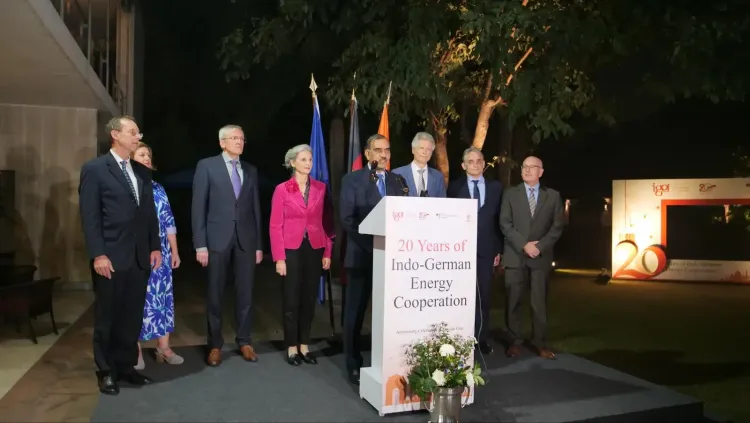
The Indo-German Energy Forum (IGEF) celebrated its 20th anniversary in New Delhi on 4 November 2026 .
Green hydrogen was highlighted as the central pillar of the forum's next phase, alongside renewable energy and future industrial value chains.
The IGEF was founded in 2006 at the Hannover Trade Fair by Angela Merkel and Manmohan Singh .
It is jointly anchored by Germany's BMWE and India's Ministry of Power , guided by five thematic subgroups .
German Ambassador Jasper Wieck said the partnership's most exciting chapters 'are still ahead,' focused on building future industries and value chains.
Gunther Grathwohl of BMWE said both nations are aligning regulations and connecting industrial clusters to enable large-scale sustainable energy trade.
The Indo-German Energy Forum (IGEF) marked its 20th anniversary in New Delhi on 4 November 2026, with German Ambassador to India Jasper Wieck declaring that the partnership's most consequential work is yet to come — centred on green hydrogen, renewable energy, and future-ready industrial value chains. The milestone event signalled a clear pivot from two decades of capacity-building toward large-scale clean energy trade between the two nations.
Two Decades of Bilateral Energy Cooperation
The IGEF was launched at the Hannover Trade Fair in 2006 by then German Chancellor Angela Merkel and former Indian Prime Minister Manmohan Singh, making it one of the longest-running bilateral energy platforms between India and a European nation. Over two decades, it has contributed to integrating renewable energy into India's power grid, advancing energy efficiency standards, and building early frameworks for battery storage and green hydrogen.
The anniversary event was held under the theme 'Navigating from Past to Present, with Optimism for the Future'. It opened with a visual presentation tracing key milestones in Indo-German energy cooperation, followed by a documentary film chronicling the forum's journey. Alexandre Callegaro, Minister Counsellor and Head of the Department for Economic and Global Affairs at the German Embassy, welcomed guests to the event.
Green Hydrogen Takes Centre Stage
Green hydrogen emerged as the defining focus of the forum's next chapter. Gunther Grathwohl, Head of Division for International Hydrogen Ramp-up and Bilateral Cooperation on Hydrogen Infrastructure at Germany's Federal Ministry for Economic Affairs and Energy (BMWE), delivered a special address in which he said both countries were actively laying the groundwork for large-scale sustainable energy trade. This includes aligning regulations, connecting industrial clusters, and reducing investment risks to accelerate hydrogen infrastructure development.
The IGEF is jointly anchored by Germany's BMWE and India's Ministry of Power. Its operations are guided by five thematic subgroups covering thermal power plant flexibilisation, renewable energy, energy efficiency, green energy financing and grid integration, and green hydrogen — a structure that reflects the breadth of the two countries' energy agenda.
What Ambassador Wieck Said
Ambassador Wieck described the IGEF as a 'true success story' and expressed strong confidence in the road ahead. 'I believe the most exciting chapters of our energy partnership are still ahead of us. Our ambition is to work with our Indian partners not only to expand renewable energy, but also to build the industries and value chains of the future,' he said.
His remarks underscored a broader strategic shift: the partnership is no longer limited to energy supply and grid management, but is moving toward co-developing the industrial ecosystems — manufacturing, logistics, and financing — that underpin a hydrogen-powered economy.
Significance for India's Clean Energy Goals
For India, the deepened IGEF focus on green hydrogen arrives at a critical juncture. The country has set an ambitious target of producing 5 million metric tonnes of green hydrogen annually by 2030 under its National Green Hydrogen Mission. Germany, itself navigating an accelerated energy transition post its nuclear phase-out, brings financing expertise, industrial technology, and regulatory experience that India is keen to absorb. This bilateral forum — spanning government agencies, industry players, financial institutions, research organisations, and think tanks from both sides — is positioned as a key channel for that transfer.
As both nations deepen this collaboration, the next phase of the IGEF will test whether bilateral goodwill can translate into bankable, scalable green hydrogen projects on the ground.
Point of View
The IGEF's reorientation toward green hydrogen is strategically logical — but the hard work begins now. India has an ambitious 5-million-tonne hydrogen target for 2030 and needs German capital and technology; Germany needs reliable green hydrogen supply chains to offset its domestic energy deficit. The alignment of interests is real, but past bilateral energy forums have often been stronger on declarations than on disbursements. The five-subgroup structure is comprehensive on paper; the test is whether regulatory alignment and investment de-risking — Grathwohl's stated priorities — move faster than the global race for hydrogen supply chains. If they do not, India risks ceding ground to other producer nations already ahead on project execution.
NationPress
4 Nov 2026
Frequently Asked Questions
What is the Indo-German Energy Forum (IGEF)?
The IGEF is a bilateral platform jointly anchored by Germany's Federal Ministry for Economic Affairs and Energy (BMWE) and India's Ministry of Power, established in 2006 at the Hannover Trade Fair by then German Chancellor Angela Merkel and former Indian Prime Minister Manmohan Singh. It brings together government agencies, industry, financial institutions, research organisations, and think tanks from both countries to advance energy cooperation across five thematic areas.
Why is green hydrogen the focus of the IGEF's next phase?
Green hydrogen has emerged as a strategic priority for both India and Germany as they pursue ambitious clean energy transitions. India aims to produce 5 million metric tonnes of green hydrogen annually by 2030 under its National Green Hydrogen Mission, while Germany seeks reliable supply chains following its nuclear phase-out. The IGEF is positioned to facilitate regulatory alignment, industrial cluster connectivity, and investment de-risking to enable large-scale hydrogen trade.
What did German Ambassador Jasper Wieck say at the 20th anniversary event?
Ambassador Wieck described the IGEF as a 'true success story' since its 2006 launch and said the partnership's 'most exciting chapters' lie ahead. He stated the ambition is to work with Indian partners not only to expand renewable energy but also to build the industries and value chains of the future.
Who are the key stakeholders involved in the IGEF?
The IGEF is anchored by Germany's BMWE and India's Ministry of Power, and its work is guided by five thematic subgroups covering thermal power plant flexibilisation, renewable energy, energy efficiency, green energy financing and grid integration, and green hydrogen. The platform spans government agencies, industry players, financial institutions, research organisations, and think tanks from both nations.
How does the IGEF's green hydrogen agenda connect to India's national energy goals?
India's National Green Hydrogen Mission targets 5 million metric tonnes of annual production by 2030, requiring large-scale investment, technology transfer, and regulatory frameworks that the IGEF partnership with Germany is designed to accelerate. Germany's experience in energy transition financing and industrial policy makes it a key partner for India as it attempts to build a hydrogen economy from the ground up.