India-Germany AI and green hydrogen collaboration gains momentum: Industry leaders
Synopsis
India and Germany's economic partnership has hit record trade levels and is now pivoting into AI, green hydrogen, and semiconductors. With 17 German delegations headed to India and Indian startups set to pitch before Siemens, Bayer, and BASF CEOs in Seoul, the bilateral relationship is evolving from traditional industry ties into a deep-tech and clean-energy alliance.
Key Takeaways
Industry leaders on 30 July highlighted India-Germany collaboration potential in AI , green hydrogen , semiconductors , and R&D .
IGCC Director General Jan Noether said last year recorded the highest-ever bilateral trade between India and Germany.
The IGCC is set to host 17 German delegations in India this year, with multiple Indian delegations also travelling to Germany.
Winning startups will present at the Asia-Pacific Conference in Seoul before CEOs of Siemens , Bayer , and BASF .
Sandeep Kumar of L&T Semiconductor Technologies called for a robust, self-reliant Indian semiconductor ecosystem under the Atmanirbharta framework.
Industry leaders on Thursday, 30 July underscored the growing potential for India and Germany to deepen cooperation in artificial intelligence (AI), green hydrogen, semiconductors, and research and development (R&D), saying the bilateral relationship has entered a new phase of dynamism that could unlock significant opportunities for innovation and industrial growth.
Bilateral Trade at Record Levels
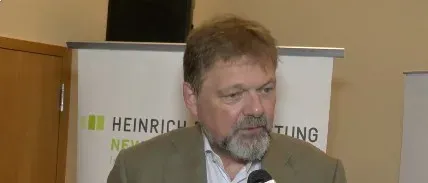
Jan Noether, Director General of the Indo-German Chamber of Commerce (IGCC), said the bilateral economic relationship has evolved steadily over decades and is now accelerating. 'At its peak, the economic relationship has evolved and grown at a very steady pace over the past decades. Now, it has entered a new phase of dynamism. Last year saw the highest level of bilateral trade, growing at a tremendous pace,' he said.
Noether noted that the IGCC is set to receive 17 delegations from Germany this year, while several Indian delegations are also scheduled to travel to Germany. 'This reflects the very strong commitment of both the German business community and the Indian ecosystem to partner, work together, and further strengthen this relationship,' he added. The forum, he said, has become a key platform facilitating dialogue between governments, businesses, and research institutions — with the success of its inaugural edition last year prompting the chamber to make it an annual initiative.
Startups to Pitch Before Global Industry Leaders in Seoul
Winning startups from the competition will be invited to present their products and projects at the upcoming Asia-Pacific Conference in Seoul, where they will address senior executives from major German corporations including Siemens, Bayer, and BASF. 'The competition showcased many wonderful and highly innovative products. The winners will be invited to Seoul for the next Asia-Pacific Conference, where they will present their products and projects to leaders of the German industry, including the CEOs of companies such as Siemens, Bayer, BASF, and other major corporations. This further strengthens the economic relationship,' Noether said.
India's Semiconductor Self-Reliance Push
Separately, Dr. Sandeep Kumar, Chief Executive Officer of L&T Semiconductor Technologies, emphasised that the semiconductor industry has become one of the most critical pillars of the global economy. Speaking at the 'Advancing Atmanirbharta Conference on Design and Manufacturing,' he said India must build a robust and self-reliant semiconductor ecosystem to strengthen its technological capabilities and secure a larger role in the global semiconductor supply chain.
His remarks align with the broader national push under the Atmanirbhar Bharat framework, which seeks to reduce India's dependence on imported chips — a vulnerability exposed sharply during the global semiconductor shortage of 2021–22.
Why This Partnership Matters
Germany is one of India's largest European trading partners, and the two nations have long-standing ties in engineering, chemicals, and automotive manufacturing. The current push into AI, green hydrogen, and semiconductors represents a strategic evolution — moving the partnership from traditional industrial sectors into deep-tech and clean-energy domains. This comes amid a broader global race to secure semiconductor supply chains and accelerate green energy transitions, areas where both nations have complementary strengths.
As both governments and private sectors align on these priorities, the next phase of Indo-German collaboration is poised to move well beyond trade statistics.
Point of View
While India needs technology partners to validate its semiconductor ambitions. The IGCC's record delegation count and the Seoul startup showcase signal that this is no longer just a trade relationship but an attempt to embed Indian innovators into German corporate ecosystems. The real question is whether these forums translate into binding R&D agreements and equity partnerships, or remain high-visibility networking events. Past Indo-European tech dialogues have produced more MoUs than manufacturing lines.
NationPress
14 Sept 2026
Frequently Asked Questions
What areas are India and Germany focusing on for collaboration?
India and Germany are deepening cooperation in artificial intelligence, green hydrogen, semiconductors, and R&D. Industry leaders at a recent forum said these sectors offer the greatest potential for innovation and industrial growth in the next phase of the bilateral relationship.
What did IGCC Director General Jan Noether say about bilateral trade?
Jan Noether said last year recorded the highest-ever level of bilateral trade between India and Germany, growing at a 'tremendous pace.' He added that the IGCC expects 17 German delegations to visit India this year, reflecting strong commitment from both business communities.
What opportunity will Indian startups get through the Indo-German forum?
Winning startups from the competition will be invited to present their products at the Asia-Pacific Conference in Seoul, where they will pitch before senior executives and CEOs of major German companies including Siemens, Bayer, and BASF.
What did L&T Semiconductor Technologies CEO say about India's chip industry?
Dr. Sandeep Kumar, CEO of L&T Semiconductor Technologies, said India must build a robust and self-reliant semiconductor ecosystem to strengthen its technological capabilities and secure a larger role in the global semiconductor supply chain. He spoke at the 'Advancing Atmanirbharta Conference on Design and Manufacturing.'
Why is the India-Germany partnership significant for green hydrogen?
Both India and Germany have complementary strengths in clean energy — India has abundant renewable resources and manufacturing capacity, while Germany brings advanced electrolyser technology and industrial expertise. Collaboration in green hydrogen could help both nations meet their respective decarbonisation targets.