What Agreements Did India and Germany Sign to Enhance Their Relations in Trade, Technology, and Renewable Energy?
Synopsis
India and Germany have taken significant steps to strengthen their bilateral ties by signing multiple agreements across various sectors. These agreements, which focus on trade, technology, health, and renewable energy, mark a new chapter in their cooperation and aim to enhance economic collaboration and technological advancement.
Key Takeaways
India and Germany signed 19 agreements to enhance bilateral cooperation.
Bilateral trade reached over $50 billion in 2024.
Joint efforts will focus on renewable energy investments.
Collaboration on semiconductors and critical minerals is emphasized.
The CEO Forum will promote business partnerships.
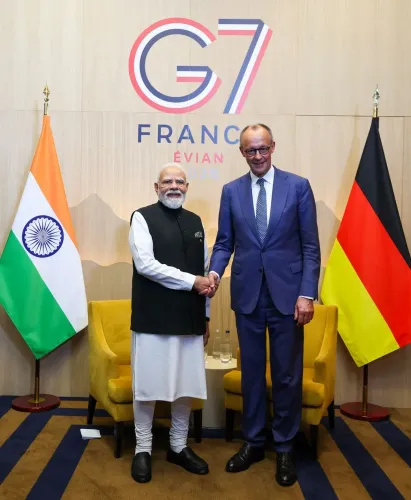
New Delhi, Jan 12 (NationPress) Reinforcing their commitment to the finalization of the India–EU Free Trade Agreement (FTA), India and Germany on Monday formalized a series of agreements spanning various sectors, including trade, technology, health, and renewable energy.
The Ministry of External Affairs reported that the two nations finalized 19 agreements and made a number of policy declarations aimed at strengthening collaboration across strategic, economic, and cultural domains.
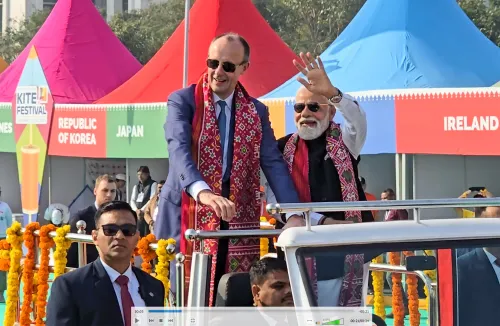
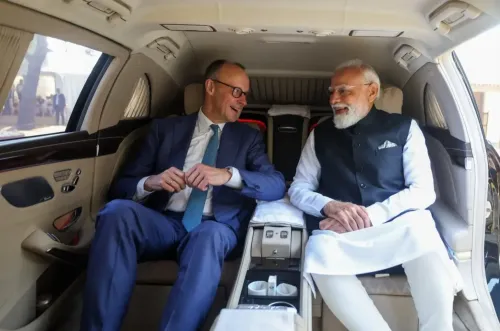
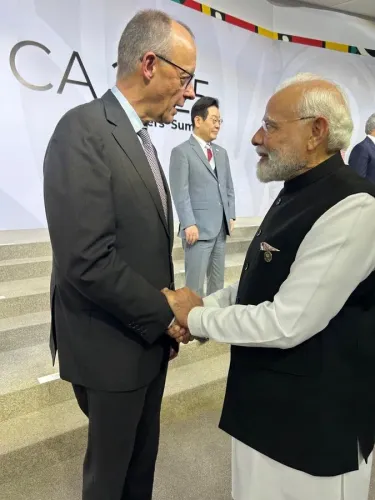
Prime Minister Narendra Modi and German Chancellor Friedrich Merz expressed satisfaction over the continuous growth in bilateral trade and investment, noting that bilateral trade achieved an all-time high in 2024, with this positive trend persisting into 2025.
In 2024, India-Germany bilateral trade in goods and services exceeded $50 billion, constituting more than 25% of India's trade with the EU.
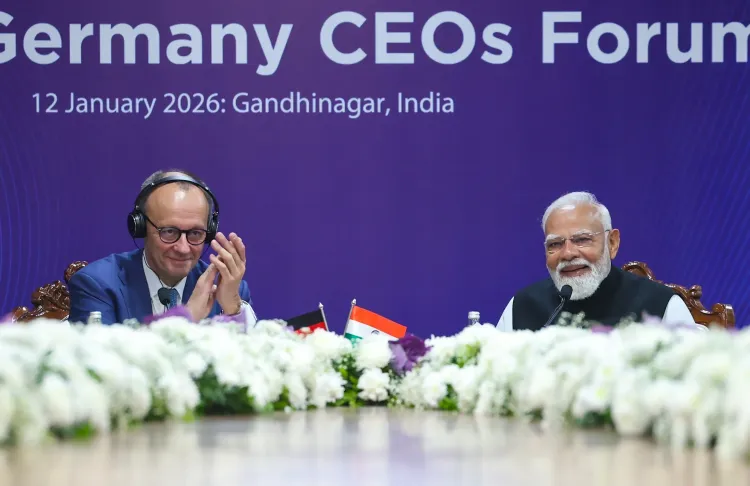
As per an official announcement, the leaders welcomed the signing of a Joint Declaration of Intent to bolster bilateral economic cooperation through the German-Indian CEO Forum, which will further advance business and industry collaboration, supported by the long-established presence of German enterprises in India and Indian firms in Germany.
PM Modi and Chancellor Merz appreciated the convening of the CEO forum and engaged with prominent CEOs and industry leaders from both nations to spur increased business collaboration and investment in sectors such as technology, automotive, defense, shipbuilding, smart infrastructure, pharmaceuticals, chemicals, biotechnology, industrial equipment engineering, and energy.
They also acknowledged progress in collaboration in critical and emerging technologies, including semiconductors, essential minerals, digitalization, telecommunications, health, and the bioeconomy, which solidifies the Innovation and Technology Partnership Roadmap.
The leaders noted the strong commitment from both nations to establish an institutional dialogue across the semiconductor value chain through a new Joint Declaration of Intent on Semiconductor Ecosystem Partnership.
They emphasized the importance of enhanced institutional research and industrial collaboration between the Indian and German semiconductor ecosystems. PM Modi welcomed the launch of the Global Capability Centre (GCC) by the German technology company Infineon in GIFT city in March of the previous year.
Recognizing the significance of resilient supply chains, the leaders noted advancements in fostering collaboration in critical minerals through a Joint Declaration of Intent (JDoI) on Critical Minerals cooperation.
The two nations aim to explore opportunities in critical minerals exploration, research and development, value addition through processing and recycling, as well as acquisition and development of critical mineral assets within both countries and in third nations.
Regarding the Indo-German Digital Dialogue, the leaders acknowledged the finalization of its Work Plan for 2026–27 and underscored the importance of collaboration on internet and data governance, AI, semiconductors, Industry 4.0, and emerging technologies.
The leaders recognized the signing of a JDoI on cooperation in the telecommunications field and noted the extension of the Indo-German Science and Technology Centre (IGSTC) tenure.
The leaders acknowledged the intensified dialogue in the space domain between the Indian Space Research Organization (ISRO) and the German Space Agency (DLR) and welcomed the potential for expanding cooperation between the two agencies. Both sides agreed to enhance engagement at the space industry level.
The leaders reaffirmed the need to mobilize finance and investment for renewable energy and welcomed the collaborative efforts under the India-Germany Platform for Investments in Renewable Energy Worldwide, including the launch of joint working groups focused on solar energy manufacturing and wind energy in October 2025, along with a newly formed Joint Working Group on Battery Energy Storage Solutions.
Point of View
I see these agreements as a pivotal move that not only strengthens India-Germany relations but also positions both nations at the forefront of technological and economic development. This collaboration is essential in navigating the complexities of a changing global landscape, ensuring mutual growth and innovation.
NationPress
29 Sept 2026
Frequently Asked Questions
What agreements were signed between India and Germany?
India and Germany signed 19 agreements covering trade, technology, health, and renewable energy to enhance bilateral cooperation.
How much did India-Germany bilateral trade reach in 2024?
India-Germany bilateral trade in goods and services surpassed $50 billion in 2024.
What is the significance of the CEO Forum?
The CEO Forum aims to bolster economic cooperation and promote business collaboration between India and Germany.
What technologies are included in the collaboration?
The collaboration includes advancements in semiconductors, critical minerals, digitalization, and renewable energy.
What role does renewable energy play in this agreement?
The agreements emphasize mobilizing finance and investment for renewable energy initiatives, including solar and wind energy.