Union Cabinet Approves Extension of Jal Jeevan Mission to December 2028 with Increased Funding
Synopsis
The Union Cabinet has approved a transformative restructuring of the Jal Jeevan Mission, significantly increasing its budget and emphasizing community involvement for sustainable rural water supply. With a goal to connect all rural households by December 2028, this initiative aims to enhance water service delivery and ensure health benefits for millions.
Key Takeaways
Jal Jeevan Mission restructuring approved by Union Cabinet.
Total outlay increased to Rs 8.69 lakh crore .
Aim to provide tap water to all rural households by December 2028 .
Focus on community involvement for sustainable water supply .
Expected benefits for women and rural livelihoods.
New Delhi, March 10 (NationPress) The Union Cabinet, led by Prime Minister Narendra Modi, has on Tuesday granted approval for a significant overhaul of the Jal Jeevan Mission, transitioning the focus from infrastructure development to effective service delivery, complemented by robust drinking water governance and a sustainable institutional framework for rural piped drinking water supply.
In this restructuring of the Jal Jeevan Mission (JJM), the Cabinet has sanctioned an increase in the overall budget to Rs 8.69 lakh crore, with the Central government increasing its contribution to Rs 3.59 lakh crore, a substantial rise from the Rs 2.08 lakh crore allocated in 2019-20. The additional Central funding amounts to Rs 1.51 lakh crore, as stated in a Cabinet communication.
A comprehensive national digital framework, named Sujalam Bharat, will be established, assigning a unique Sujal Gaon/Service Area ID to each village, which will digitally map the entire drinking water supply system from source to tap. To foster transparency and accountability, the involvement of Gram Panchayats (GPs) and Village Water and Sanitation Committees (VWSCs) will be emphasized in the commissioning and formal handover of projects through a process called Jal Arpan, the statement noted.
A Gram Panchayat must certify the completion of projects and declare itself as 'Har Ghar Jal' only after ensuring that adequate in-village operation and maintenance systems are established by the state government. Recognizing the importance of community ownership and participation for operational efficiency and sustainability of sources, the initiative will promote 'Jal Utsav', an annual community-led maintenance and review event, integrating local cultural elements while reinforcing collective accountability for securing drinking water access in the future, as outlined in the communication.
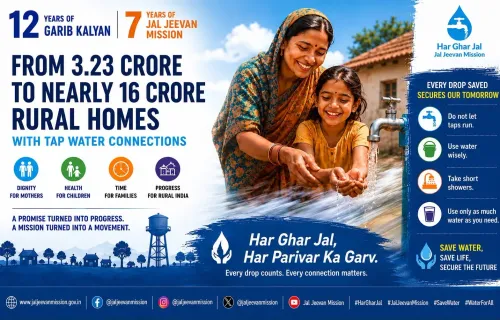
Starting from a baseline of 3.23 crore (17 percent) rural households with tap water connections in 2019, over 12.56 crore additional rural households have now been connected to tap water under JJM. Currently, out of 19.36 crore rural households identified by the states/UTs across the nation, approximately 15.80 crore (81.61 percent) households are reported to have tap water connections as of now.
Beyond just physical infrastructure, the impact of JJM has been evaluated by reputable national and international entities. According to SBI Research, JJM has liberated 9 crore women from the burden of fetching water, allowing them to engage more in economic activities. The World Health Organisation (WHO) has estimated a daily saving of 5.5 crore hours for women, a prevention of 400,000 diarrheal deaths, and a savings of 14 million Disability Adjusted Life Years (DALYs). Nobel laureate Prof. Michael Kremer has projected a potential 30 percent reduction in under-five mortality, which could save 136,000 lives annually; while IIM Bangalore and the International Labour Organisation (ILO) estimate the generation of 59.9 lakh direct and 2.2 crore indirect person-years of employment, thereby bolstering rural livelihoods through JJM. Women and girls have significantly benefited from this initiative, experiencing reduced hardship, better health and hygiene, enhanced dignity, and increased educational and livelihood opportunities.
With the launch of JJM 2.0, all Gram Panchayats will be certified as ‘Har Ghar Jal’, aiming to provide tap water connections to all 19.36 crore rural households in the country by December 2028. This will ensure adherence to timelines, scheme sustainability, and the delivery of citizen-centric water services through separate Memoranda of Understanding (MoUs) with State/UTs. JJM 2.0 also supports the vision of Viksit Bharat @2047, striving for assured 24x7 rural drinking water supply by transitioning from an infrastructure-focused approach to a citizen-centric utility-based service delivery model through structural reforms, as stated in the announcement.
Utilizing a whole-of-government approach, the Jal Jeevan Mission 2.0 envisions strategic collaboration among various Departments at the Centre to ensure sustainable and long-term operation and maintenance of rural water supply infrastructure and the sustainability of water sources, the statement concluded.
Point of View
I find the Cabinet's decision to extend and enhance the Jal Jeevan Mission as a significant step towards ensuring clean and accessible water for all rural households. This initiative not only prioritizes infrastructure but also promotes community participation, ensuring sustainability and accountability.
NationPress
2 Oct 2026
Frequently Asked Questions
What is the Jal Jeevan Mission?
The Jal Jeevan Mission is a government initiative aimed at providing safe and adequate drinking water through individual household tap connections in rural areas.
What changes have been approved by the Union Cabinet?
The Cabinet approved a restructuring of the Jal Jeevan Mission, focusing on service delivery and increasing the total outlay to Rs 8.69 lakh crore.
What is the target for rural household tap connections?
The aim is to provide tap water connections to all 19.36 crore rural households by December 2028.
How does this mission impact women?
The mission is expected to free millions of women from the labor of fetching water, enabling them to engage in economic activities.
What role do Gram Panchayats play in this mission?
Gram Panchayats will be involved in certifying the completion of works and ensuring sustainable operation and maintenance of water supply systems.