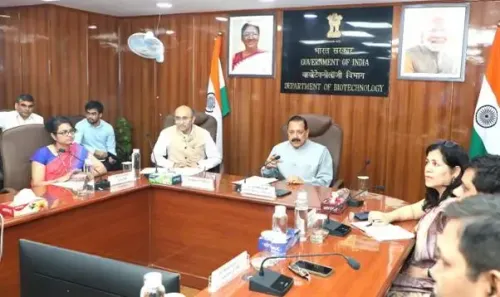
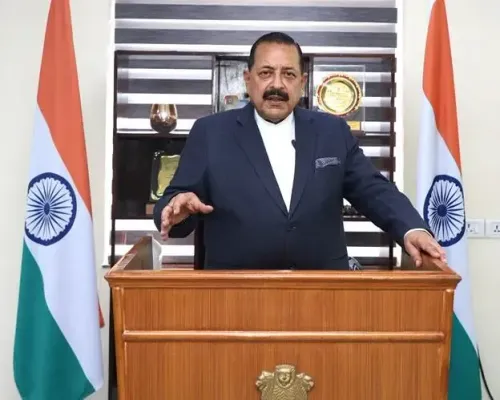
Dr Jitendra Singh visits ICGEB Trieste, showcases India's biotech research strengths
Synopsis
Union Minister Dr Jitendra Singh's visit to ICGEB Trieste put India's biotech ambitions on the global stage — from its first biofoundry to genome-edited crops and monoclonal antibodies. With 67 researchers from 22 countries trained at the New Delhi component since 2023, India is quietly emerging as a hub for biotechnology diplomacy and capacity-building across the developing world.
Key Takeaways
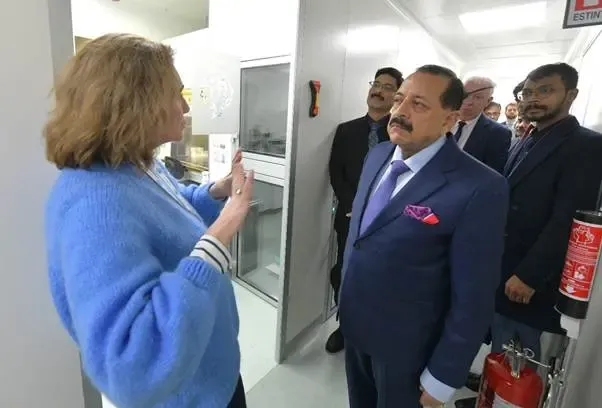
Dr Jitendra Singh visited the ICGEB Trieste component in Italy , reviewing facilities including a new Biosafety Level-3 laboratory and a high-throughput screening facility.
India's contributions highlighted include India's first biofoundry for microbial biomanufacturing , genome-edited crops, and monoclonal antibodies against infectious diseases.
The visit emphasised alignment of ICGEB India's work with the country's BioE3 policy across areas like carbon capture, precision biotherapeutics, and climate-resilient agriculture.
67 researchers from 22 countries trained at the ICGEB New Delhi component between 2023 and 2026 .
India, through the Department of Biotechnology (DBT) , supports R&D, innovation incubation, and human resource development at ICGEB New Delhi.
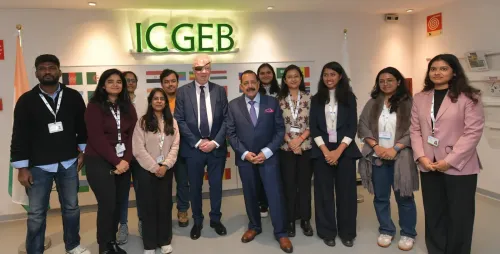
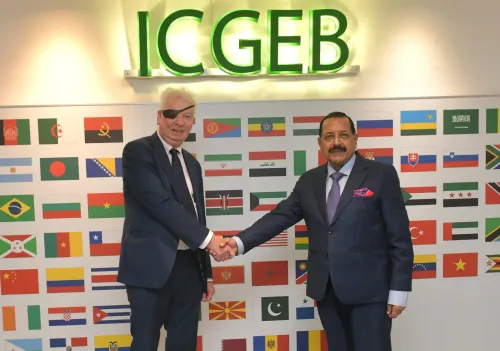
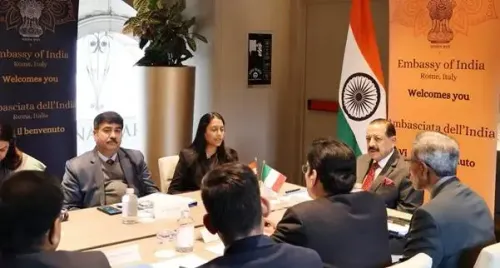
Union Minister of State for Science and Technology Dr Jitendra Singh visited the Trieste component of the International Centre for Genetic Engineering and Biotechnology (ICGEB) in Italy, reviewing advanced research facilities and highlighting India's expanding role in global biotechnology research, scientific training, and technology development. The visit underscored India's deepening institutional ties with one of the world's leading intergovernmental biotech organisations.
Facilities Reviewed at ICGEB Trieste
During the visit, Dr Singh toured the centre's Biotechnology Development Unit, which houses a biopharmaceutical production and training facility and a newly established Biosafety Level-3 laboratory. He also visited the Functional Cell Biology laboratory's high-throughput screening facility. The minister held discussions with ICGEB leadership and interacted with Indian fellows currently working at the centre.
India's BioE3 Policy and ICGEB Alignment
Dr Singh drew attention to the contributions of the ICGEB's India component to the country's biotechnology ecosystem, particularly in areas aligned with the BioE3 policy. The showcase covered biobased chemicals and enzymes, climate-resilient agriculture, carbon capture and utilisation, precision biotherapeutics, and marine and space biomanufacturing.
Among the specific research initiatives highlighted were India's first biofoundry for microbial biomanufacturing, enzyme and yeast systems for ethanol production, biological carbon capture, genome-edited crops, and monoclonal antibodies targeting infectious diseases. This breadth of focus reflects the Centre's alignment with both domestic policy priorities and global sustainability goals.
ICGEB New Delhi: Training and Global Collaboration
India maintains a significant presence within ICGEB's global activities. The Department of Biotechnology (DBT) supports research and development programmes, innovation incubation, and human resource development at the New Delhi component. According to a statement from the Ministry of Science and Technology, as many as 67 researchers from 22 countries undertook or began training at the New Delhi component between 2023 and 2026.
The statement noted that this engagement has been 'complemented by workshops and scientific exchanges in areas including artificial intelligence in biology, drug development, genome editing, carbon capture, microscopy and flow cytometry.' ICGEB New Delhi has also contributed to international scientific training and cooperation with countries across Asia and Africa through joint research, training, and technology transfer.
India's Strategic Role in ICGEB's Developing-Country Mandate
ICGEB's mandate specifically includes providing a platform for scientific collaboration with developing and emerging economies, and India has positioned itself as a key node within this network. The Delhi component's engagement with partner nations through joint research and training programmes reflects India's broader ambitions as a science and technology leader in the Global South.
As India advances its bioeconomy agenda, the visit signals continued high-level commitment to multilateral science diplomacy and reinforces the centrality of institutions like ICGEB in translating research into real-world applications.
Point of View
But India's bioeconomy still punches below its weight relative to the scale of investment being signalled. Multilateral platforms like ICGEB matter, but they are vehicles — not destinations.
NationPress
17 Nov 2026
Frequently Asked Questions
Why did Dr Jitendra Singh visit ICGEB Trieste?
Dr Jitendra Singh visited the ICGEB Trieste component in Italy to review advanced research facilities and highlight India's growing capabilities in biotechnology research, scientific training, and technology development. The visit also reinforced India's institutional engagement with ICGEB's global mandate.
What is the ICGEB and what role does India play in it?
The International Centre for Genetic Engineering and Biotechnology (ICGEB) is an intergovernmental organisation focused on biotech research and training, with components in Trieste, New Delhi, and Cape Town. India, through the Department of Biotechnology, plays a significant role at the New Delhi component by supporting R&D, innovation incubation, and human resource development.
What is India's BioE3 policy and how does ICGEB relate to it?
India's BioE3 policy is a national framework promoting biotechnology for economy, environment, and employment. ICGEB New Delhi's research aligns with its priorities, covering biobased chemicals, climate-resilient agriculture, carbon capture, precision biotherapeutics, and space biomanufacturing.
How many researchers has ICGEB New Delhi trained in recent years?
As many as 67 researchers from 22 countries undertook or began training at the ICGEB New Delhi component between 2023 and 2026, according to the Ministry of Science and Technology.
What specific research initiatives were showcased during the visit?
The showcased initiatives included India's first biofoundry for microbial biomanufacturing, enzyme and yeast systems for ethanol production, biological carbon capture, genome-edited crops, and monoclonal antibodies against infectious diseases.