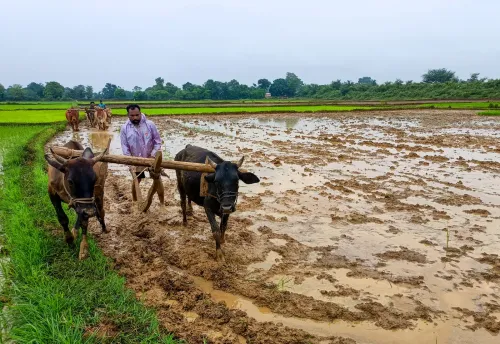
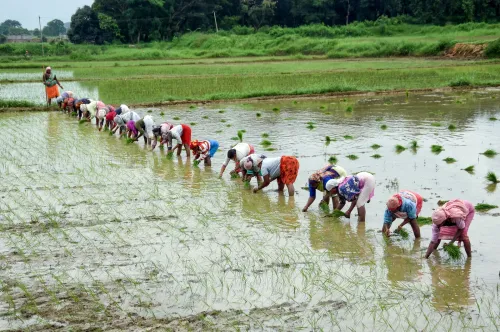
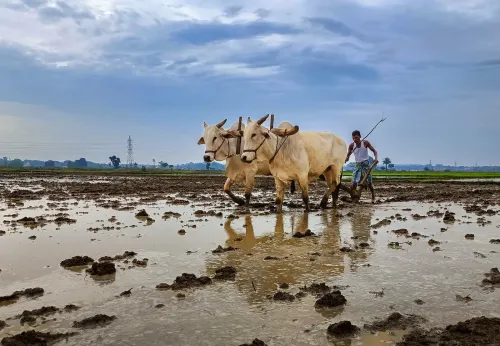
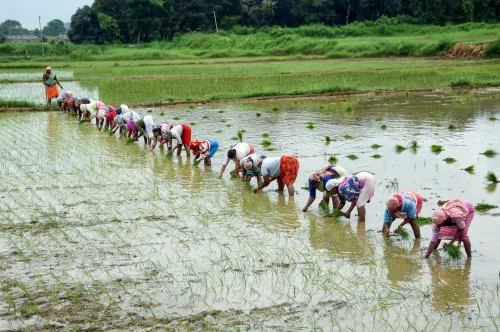
Kharif sowing area at 658 lakh hectares in 2026, down 6% on El Nino deficit
Synopsis
India's kharif sowing is running more than 42 lakh hectares behind last year's pace, with El Nino squeezing the monsoon and hitting pulses and millets hardest. The CCEA's MSP hike for 14 crops — with Moong growers promised a 61% margin over cost — is the government's main policy lever, but acreage data suggests the incentive has yet to move farmers back to the field.
Key Takeaways
Kharif sowing stood at 658.19 lakh hectares as of 17 July 2026 , down from 700.47 lakh hectares in the same period last year.
Pulses (Urd and Moong) acreage fell to 69.23 lakh hectares from 81.52 lakh hectares — one of the steepest year-on-year declines.
Coarse cereals and millets dropped to 98.69 lakh hectares from 127.30 lakh hectares a year ago.
The CCEA , chaired by PM Narendra Modi , approved MSP hikes for 14 kharif crops for Marketing Season 2026–27 .
Moong farmers are set for the highest margin at 61% over cost of production; all other crops guaranteed at least 50% .
A deficient 2026 southwest monsoon linked to the El Nino pattern is the principal driver of the sowing shortfall.
The total area sown under kharif crops in the current season stood at 658.19 lakh hectares as of 17 July 2026, according to data released by the Ministry of Agriculture and Farmers Welfare on Tuesday. This marks a notable shortfall against 700.47 lakh hectares recorded during the same period last year, with a deficient monsoon driven by the El Nino weather pattern cited as the primary cause.
Crop-wise Sowing Decline
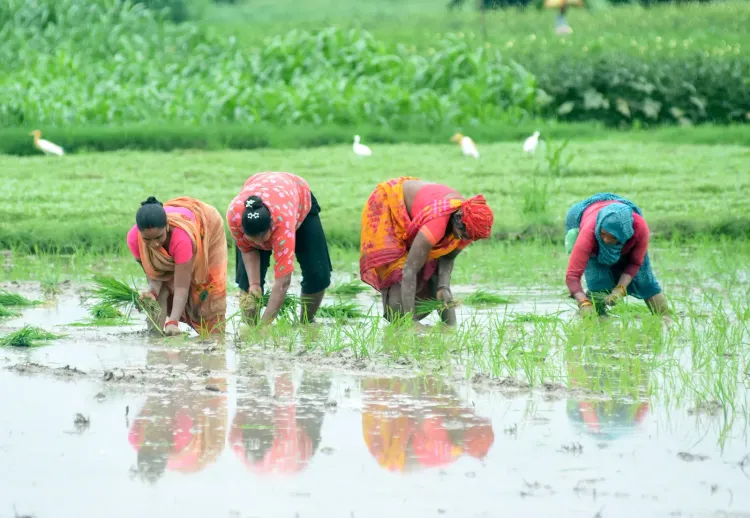
The area under rice has dipped marginally to 166.41 lakh hectares from 167.83 lakh hectares in the corresponding period of the previous year. The decline is steeper for pulses — crops such as Urd and Moong together cover 69.23 lakh hectares, down sharply from 81.52 lakh hectares a year ago.
Coarse cereals and millets — including jowar, bajra, and ragi — have been sown across 98.69 lakh hectares so far, compared with 127.30 lakh hectares in the same period last year. Sugarcane, an annual crop sown earlier in the season, has reached 119.03 lakh hectares, against 134.09 lakh hectares a year earlier.
El Nino's Shadow Over the Monsoon
The across-the-board sowing shortfall reflects the uneven distribution of the 2026 southwest monsoon, which has been adversely affected by the El Nino phenomenon. Deficient rainfall delays transplanting in paddy-growing states and pushes back sowing windows for dryland crops like pulses and millets. This is not the first such disruption — El Nino events in 2014 and 2023 similarly compressed kharif acreage, with downstream effects on food inflation and rural incomes.
Government Raises MSP for 14 Kharif Crops
Against this backdrop, the Cabinet Committee on Economic Affairs (CCEA), chaired by Prime Minister Narendra Modi, has approved an increase in the Minimum Support Prices (MSP) for 14 kharif crops for Marketing Season 2026–27. The revision is in line with the Union Budget 2018–19 commitment to peg the MSP at no less than 1.5 times the all-India weighted average cost of production.
The highest margin over cost of production is projected for Moong at 61%, followed by Bajra and Maize at 56% each, and Tur/Arhar at 54%. For the remaining crops, the margin is estimated at 50%, according to the official statement.
Policy Push for Pulses, Oilseeds, and Nutri-Cereals
The government has in recent years offered relatively higher MSPs for pulses, oilseeds, and nutri-cereals (also promoted as Shree Anna) to diversify cropping patterns away from water-intensive cereals. The move is intended to improve nutritional outcomes and reduce the pressure on groundwater in major paddy-growing belts. However, the current sowing data suggests that acreage in pulses has fallen sharply despite this incentive — a gap that policymakers will need to address.
What to Watch
The trajectory of the southwest monsoon over the next four weeks will be critical. A recovery in rainfall across Madhya Pradesh, Maharashtra, and the Vidarbha region could partially offset the current deficit. The Ministry of Agriculture is expected to release updated sowing figures weekly; any further decline could prompt intervention in commodity markets to contain food price pressures ahead of the festive season.
Point of View
Yet farmers are sowing less, not more, suggesting that price incentives alone cannot overcome a deficient monsoon. The MSP-at-1.5x-cost formula, anchored in the 2018–19 budget, was a political commitment; the real question is whether it translates into procurement at scale when the crop does arrive. With food inflation already a concern, a further monsoon shortfall in the coming weeks could force the Centre's hand on imports or buffer-stock releases — neither of which is politically comfortable.
NationPress
21 Jul 2026
Frequently Asked Questions
What is the total kharif sowing area in India in 2026?
As of 17 July 2026, the total kharif sowing area in India is estimated at 658.19 lakh hectares, according to data from the Ministry of Agriculture and Farmers Welfare. This is about 42 lakh hectares below the 700.47 lakh hectares recorded in the same period last year.
Why is kharif sowing lower in 2026 compared to last year?
The decline is attributed to a deficient southwest monsoon in 2026, caused by the El Nino weather pattern. Inadequate and unevenly distributed rainfall has delayed transplanting and sowing across key agricultural states, affecting rice, pulses, millets, and sugarcane.
Which kharif crops have seen the biggest drop in sowing area?
Coarse cereals and millets (jowar, bajra, ragi) have seen the sharpest fall — from 127.30 lakh hectares last year to 98.69 lakh hectares this year. Pulses (Urd and Moong) are also significantly lower at 69.23 lakh hectares against 81.52 lakh hectares a year ago.
What MSP hike has the government approved for kharif crops in 2026-27?
The Cabinet Committee on Economic Affairs (CCEA) has approved MSP increases for 14 kharif crops for Marketing Season 2026–27, in line with the policy of setting MSP at least 1.5 times the weighted average cost of production. Moong has the highest projected farmer margin at 61% over cost, while all other crops are guaranteed at least 50%.
How does El Nino affect kharif sowing in India?
El Nino typically suppresses or delays the Indian southwest monsoon, reducing rainfall in key kharif-growing regions. Lower and erratic rainfall means farmers cannot sow on time or across the full intended acreage, leading to reduced output of rain-fed crops like pulses, millets, and coarse cereals.