Has the Korean Won Reached Its Lowest Annual Average Against the US Dollar in 2025?
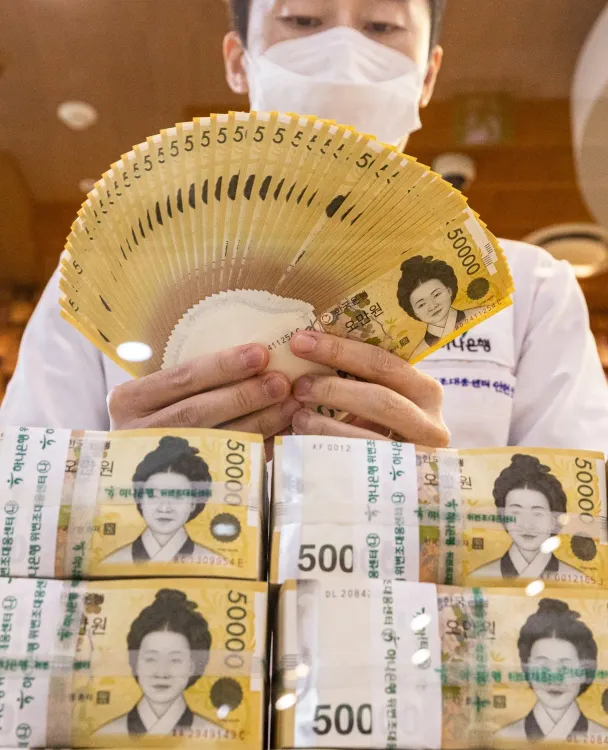
Synopsis
In 2025, the Korean won hit an all-time low average against the US dollar, influenced by political unrest and increased foreign investments. This article explores the implications of this financial downturn and the measures taken by authorities to stabilize the currency.
Key Takeaways
Korean won hit its lowest average against the US dollar in 2025.
Political turmoil significantly influenced currency fluctuations.
Government implemented measures to stabilize the won.
Previous low was recorded during the Asian financial crisis .
Increased overseas stock investments by local investors impacted demand for dollars.
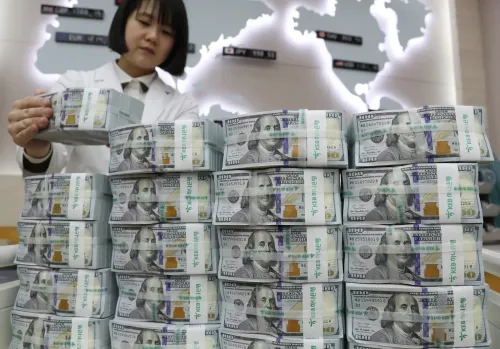
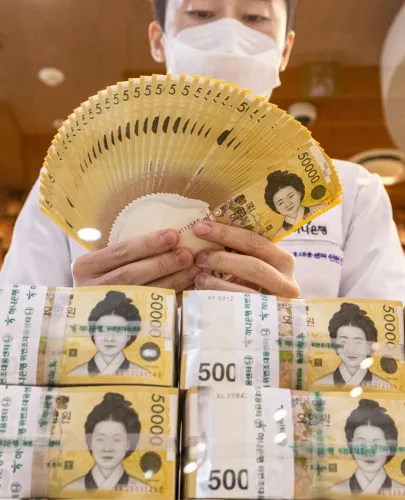
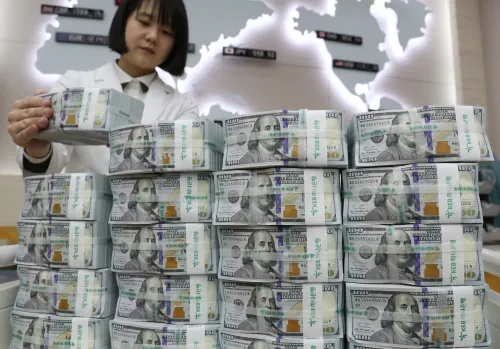
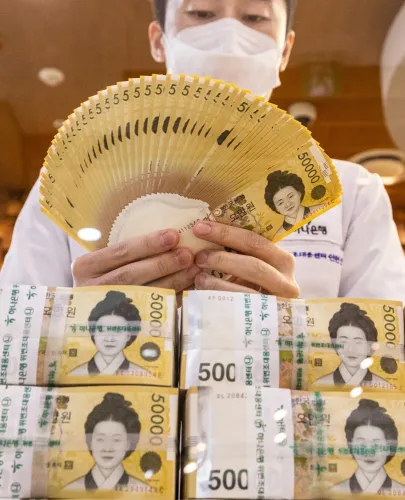
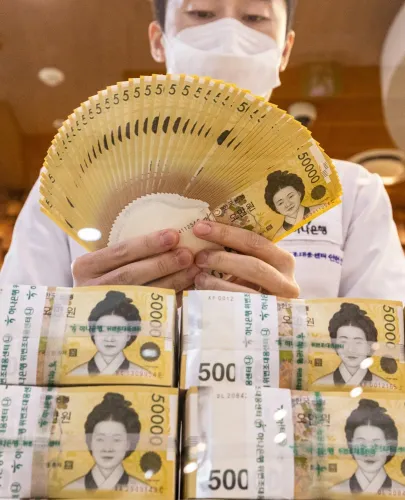
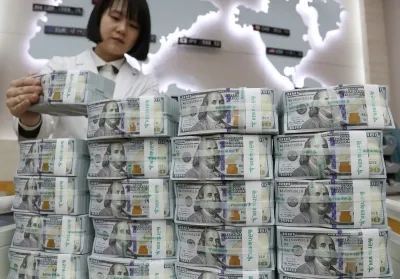
Seoul, Dec 31 (NationPress) This year, the local currency recorded its most significant annual average decline against the US dollar in history, according to data released on Wednesday, largely due to political instability and a rise in overseas stock investments by domestic investors.
The won averaged 1,422.16 won against the greenback in onshore trading throughout 2025, marking a historic low, as per market data reported by Yonhap news agency.
The previous record low of 1,398.39 won was established in 1998 during the Asian financial crisis.
In the last trading session of the year on Tuesday, the won was reported at 1,439 won per dollar, reflecting a decrease of 9.2 won from the prior session.
Compared to a year prior, when the nation faced turmoil following former President Yoon Suk Yeol's unexpected declaration of martial law, the won has appreciated by 33.5 won.
The currency reached a yearly low of 1,484.1 won per dollar on April 9, while its strongest position was 1,350 won on June 30.
The quarterly averages showed 1,452.66 won in the first quarter, 1,404.04 won in the second, 1,385.25 won in the third, and a decline to 1,450.98 won in the fourth quarter.
The won's notable weakness this year was attributed to ongoing political unrest following martial law, the impeachment of Yoon, the continuous interest rate gap between South Korea and the US, and increased demand for dollars fueled by retail investors' foreign stock investments. South Korea welcomed Lee Jae Myung as its new president in June.
In reaction to the currency fluctuations, foreign exchange authorities implemented various strategies to stabilize the won, including temporary capital gains tax exemptions for investors selling overseas stocks to purchase local shares.
The government also relaxed supervisory regulations on banks' foreign currency liquidity stress tests to deter excessive dollar accumulation.
The National Pension Service (NPS) undertook strategic currency hedging, while authorities engaged in strong verbal interventions in the market.
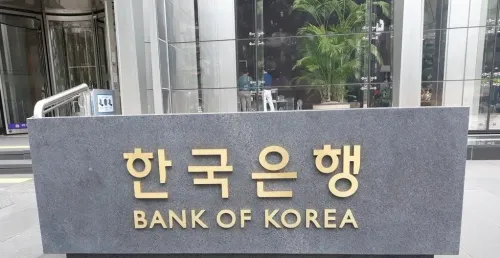
"We will enhance market monitoring and actively implement measures for market stabilization to counter excessive herd behavior," stated the Bank of Korea (BOK) in its monetary and credit policy guidelines for the upcoming year.
Moreover, the BOK indicated its commitment to address structural imbalances in foreign exchange supply and demand while pursuing institutional reforms to improve accessibility for foreign investors, such as the introduction of 24-hour trading in the FX market and regulatory modifications concerning the offshore use of the Korean won in non-resident transactions.
The central bank also vowed to strengthen currency swap arrangements and engage in discussions with partner countries to enhance South Korea's ability to handle external shocks and fortify regional financial safety nets.
Point of View
It is essential to approach the current fluctuation of the Korean won with a focus on comprehensive analysis. The economic implications of this unprecedented decline highlight the interconnectedness of political stability and currency valuation. Our responsibility lies in delivering factual, unbiased information to our readers, ensuring that they remain informed amidst these turbulent times.
NationPress
25 Sept 2026
Frequently Asked Questions
What is the current average value of the Korean won against the US dollar?
The Korean won averaged 1,422.16 won against the US dollar in 2025, marking its lowest annual average on record.
What factors contributed to the won's decline?
The decline was primarily driven by political turmoil, the impeachment of former President Yoon, and increased demand for dollars from local investors seeking overseas stock investments.
How did the government respond to the currency volatility?
In response to the volatility, the government implemented measures such as temporary capital gains tax exemptions for investors and relaxed regulations on banks' foreign currency liquidity.
What was the historical context of the won's decline?
The previous record low was 1,398.39 won set during the Asian financial crisis in 1998, making the current decline particularly notable.
What measures are being taken to stabilize the currency?
Authorities are enhancing market monitoring, pursuing currency swap arrangements, and reforming regulations to improve foreign investor accessibility.