KOSPI surges 2.24% to 4,816 as tech rally defies AI jitters
Synopsis
Seoul's KOSPI jumped 2.24% even though Wall Street was shut for Thanksgiving. Samsung and SK hynix recovered from early losses to lead the bounce. Meanwhile, South Korea's top economic officials publicly warned that the chip cycle and the stock market have become dangerously intertwined, and are moving to enlarge an 11-trillion-won stabilisation fund last used in 2008.
Key Takeaways
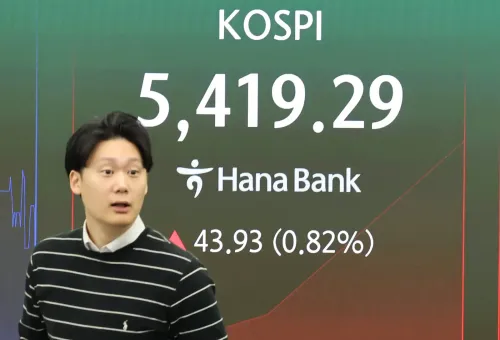
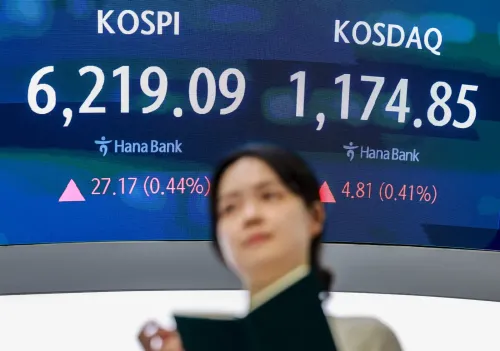
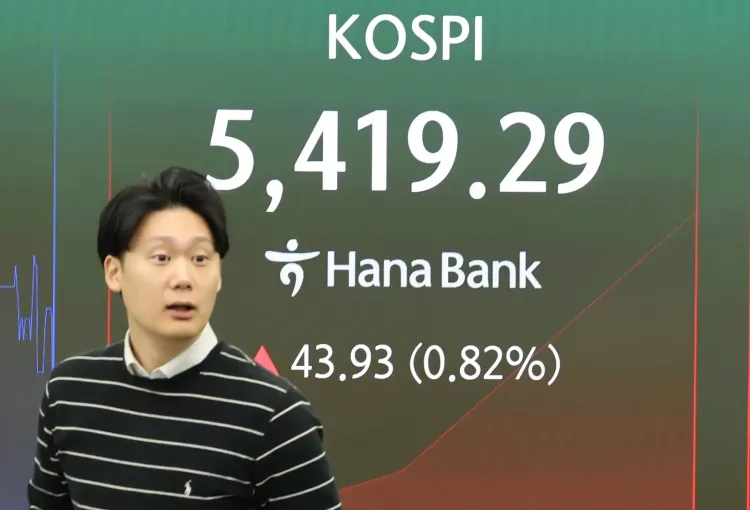
The KOSPI rose 105.42 points (2.24%) to 4,816.63 as of 11:20 am on 27 November 2026 .
Samsung Electronics gained 1.98% , SK hynix rose 1.71% and LG Energy Solution added 3.15% .
The won strengthened to 1,341.3 per US dollar, up 2.6 won from the previous close.
Finance Minister Lee Hyoung-il met the Bank of Korea and FSC chiefs over AI-linked market volatility.
Authorities plan to expand the 11 trillion won stabilisation fund, which was last activated after the 2008 financial crisis.
South Korea's benchmark Korea Composite Stock Price Index (KOSPI) climbed 105.42 points, or 2.24%, to 4,816.63 as of 11:20 am local time on Friday, 27 November 2026. Technology heavyweights led the gains in Seoul, extending a tentative recovery after a volatile week driven by doubts over the artificial intelligence (AI) trade. The index had opened just 0.37% higher before the rally broadened across large-cap shares.
Key Movers on the KOSPI
Market bellwether Samsung Electronics rose 1.98%. Its chipmaking rival SK hynix gained 1.71%. Both stocks had opened in the red before turning higher.
Among other index heavyweights, SK Square, the parent company of SK hynix, added 1.84%. Battery maker LG Energy Solution posted one of the sharpest gains among large caps, rising 3.15%.
The South Korean won also strengthened. It was quoted at 1,341.3 won per US dollar as of 11:20 am, up 2.6 won from the previous session's close.
Rally Comes Without a Wall Street Cue
Notably, the advance came without any lead from the US. Wall Street was closed overnight for the Thanksgiving holiday, which left Asian traders to set direction on their own.
Investors are now watching whether the tech rally can hold. The past several sessions were marked by sharp swings as doubts grew over whether the AI-driven trade can be sustained. That debate weighs heavily on Seoul, where chipmakers carry significant index weight.
What Seoul's Policymakers Said
South Korean authorities said on Friday that global stocks are becoming more volatile because of AI-linked uncertainties. They said the country needs to guard against the deepening ties between the chipmaking sector's cycle and the financial market.
Finance Minister Lee Hyoung-il met the heads of the Bank of Korea, the Financial Services Commission (FSC) and other related agencies to review market conditions. According to the officials, volatility in the local stock market is growing because of uncertainties around the AI sector and changes in the global trade environment.
The policymakers said they need to closely monitor risks arising from the correlation between the chip sector and the broader stock market. Because Samsung Electronics and SK hynix together carry substantial index weight, a turn in the semiconductor cycle can quickly spread across the whole market.
Stabilisation Measures in the Pipeline
This comes after financial authorities last week unveiled a set of steps to respond to market volatility. These included lifting the limit on share buybacks by listed firms.
Authorities are also working to enlarge a stock market stabilisation fund, currently set at about 11 trillion won. The move reflects a sharp rise in the country's stock market capitalisation. The fund was established by financial institutions to support the securities market during steep price declines. It was last activated after the 2008 global financial crisis.
What to Watch Next
Traders will look for confirmation of the rebound once Wall Street reopens. They will also track any further detail on the size of the expanded stabilisation fund. Whether Seoul's tech-led recovery lasts will likely depend on how global sentiment towards the AI trade develops in the coming sessions.
Point of View
They are preparing for the next downturn rather than celebrating the rebound. Indian investors betting on the global AI hardware trade should take note.
NationPress
27 Nov 2026
Frequently Asked Questions
How much did the KOSPI rise on 27 November 2026?
The KOSPI rose 105.42 points, or 2.24%, to 4,816.63 as of 11:20 am local time on Friday. It had opened 0.37% higher before extending gains.
Which stocks led the South Korean market rally?
Samsung Electronics gained 1.98% and SK hynix rose 1.71%. SK Square added 1.84% and LG Energy Solution climbed 3.15%.
Why are South Korean authorities worried about AI-linked volatility?
Officials said global stocks are becoming more volatile because of AI-related uncertainties. They warned of deepening ties between the chipmaking cycle and the financial market, a correlation they said needs close monitoring.
What is South Korea's stock market stabilisation fund?
It is a fund of about 11 trillion won, set up by financial institutions to support the securities market during sharp declines. Authorities are working to enlarge it, and it was last activated after the 2008 global financial crisis.
What steps has South Korea taken to tackle market volatility?
Last week, financial authorities lifted the limit on share buybacks by listed firms as part of a broader package. They are also working to increase the size of the stock market stabilisation fund.