HD Kumaraswamy launches MHI Accelerator Impact Report at Navigyaan 2026
Synopsis
At Navigyaan 2026, Heavy Industries Minister HD Kumaraswamy revealed that India's MHI Industry Accelerator Programme channelled ₹35.72 crore into 10 indigenous mobility technologies — pushing them from early prototypes to near-commercial products. It is a small but telling sign that India's 'Atmanirbhar' push is beginning to produce hardware, not just policy documents.
Key Takeaways
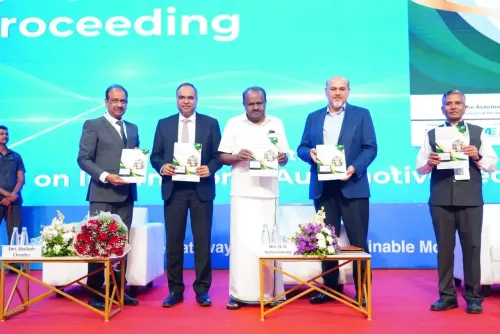
Kumaraswamy launched the MHI Industry Accelerator Impact Report at Navigyaan 2026 in New Delhi on 30 September 2026 .
The Scheme for Enhancement of Competitiveness in the Indian Capital Goods Sector — Phase II has a total outlay of ₹1,207 crore with 33 projects approved.
The MHI Industry Accelerator Programme provided ₹35.72 crore in Grant-in-Aid for 10 technologies across electric powertrains, high-voltage motor control, and energy storage.
Technologies were supported to progress from Technology Readiness Level 3 to Level 9 , moving from prototype to commercial viability.
The minister stressed multi-stakeholder collaboration involving government, industry, academia, startups, and institutions like ARAI .
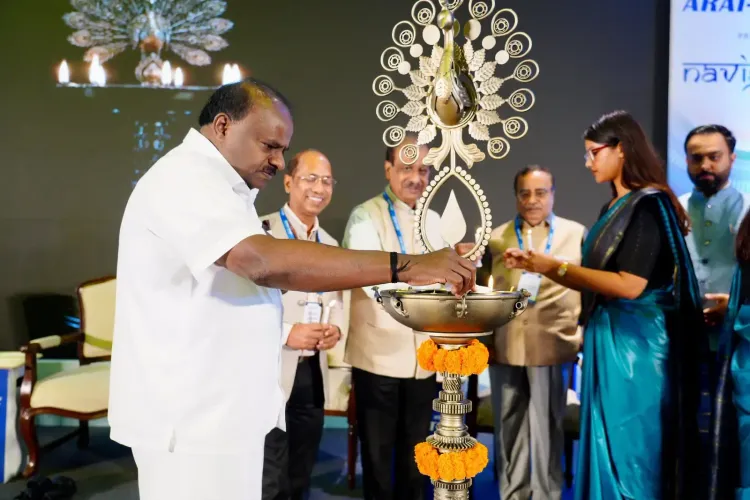
Union Minister for Heavy Industries and Steel H. D. Kumaraswamy on Wednesday, 30 September 2026 unveiled and digitally launched the Impact Report of the Ministry of Heavy Industries (MHI) Industry Accelerator Project at Navigyaan 2026 in New Delhi, marking a significant milestone in India's push to develop and commercialise indigenous technologies for the mobility and manufacturing sectors.
Key Developments at Navigyaan 2026
The event marked the formal conclusion of the MHI Industry Accelerator Project, a targeted initiative designed to bridge the gap between early-stage research and market-ready innovation. Kumaraswamy described the occasion as a reflection of the government's commitment to building domestic technological depth. 'The government under the visionary leadership of Prime Minister Narendra Modi has placed strong emphasis on building domestic technological and manufacturing capabilities,' he said.
The minister underscored that the Atmanirbhar Bharat vision demands India move beyond being a passive consumer of advanced technologies. 'The vision of Atmanirbhar Bharat calls for an India that is not only a large market for advanced technologies, but also a country that develops, manufactures and exports those,' Kumaraswamy said.
Scale of Support Under the Capital Goods Scheme
Kumaraswamy highlighted the scope of the Scheme for Enhancement of Competitiveness in the Indian Capital Goods Sector — Phase II, which carries a total financial outlay of ₹1,207 crore and is aimed at building common technology development and services infrastructure. Under the scheme, 33 projects have been approved so far.
Within this umbrella, the MHI Industry Accelerator Programme disbursed ₹35.72 crore in Grant-in-Aid support for 10 technologies, with the explicit objective of advancing them from Technology Readiness Level (TRL) 3 to TRL 9 — the stage at which a technology is considered fully operational and commercially deployable.
Technologies Backed and Progress Made
The technologies supported under the programme span critical areas of future mobility, including electric powertrains, high-voltage motor control, and energy storage. According to the minister, a key outcome has been the transition of several technologies from early-stage prototypes to commercially viable products — a progression that is central to India's industrial self-reliance agenda.
Notably, this progression from concept to commercial viability addresses one of the most persistent bottlenecks in Indian technology development: the so-called 'valley of death' between research prototypes and scalable manufacturing.
The Collaboration Imperative
Kumaraswamy called for a coordinated ecosystem approach, arguing that no single actor can build deep technology capacity alone. He identified distinct roles for each stakeholder: 'The government can provide the policy framework and targeted support. Industry brings market understanding and manufacturing capability. Research and academic institutions contribute knowledge and technology. Startups bring new ideas and agility,' he said.
The minister specifically noted the role of institutions such as the Automotive Research Association of India (ARAI) in strengthening the innovation ecosystem, alongside government bodies, industry, academia, and startups.
What This Signals Going Forward
The launch of the Impact Report at Navigyaan 2026 is expected to set the stage for the next phase of MHI's technology support agenda. With 33 projects approved under the broader scheme and 10 technologies now approaching commercial readiness, the ministry is likely to use these outcomes as a blueprint for scaling up support in allied sectors. The emphasis on export readiness — not just domestic deployment — marks a maturation in policy ambition.
Point of View
If modest, proof point in India's Atmanirbhar Bharat narrative — but the real question is scale. A ₹35.72 crore grant across 10 technologies is incremental against the depth of investment China or the EU deploys in comparable industrial technology programmes. The TRL 3-to-9 framework is the right structure; the next policy test is whether disbursement volumes can match the ambition. India's capital goods sector has chronically underinvested in domestic IP, and without sustained multi-cycle funding, individual successes risk remaining showcase projects rather than sector-transforming platforms.
NationPress
30 Sept 2026
Frequently Asked Questions
What is the MHI Industry Accelerator Project?
The MHI Industry Accelerator Project is an initiative by the Ministry of Heavy Industries that provided ₹35.72 crore in Grant-in-Aid to support 10 indigenous technologies, advancing them from Technology Readiness Level 3 to Level 9. It focuses on future mobility areas including electric powertrains, high-voltage motor control, and energy storage.
What is the Scheme for Enhancement of Competitiveness in the Indian Capital Goods Sector — Phase II?
It is a government scheme with a total financial outlay of ₹1,207 crore aimed at building common technology development and services infrastructure for India's capital goods sector. As of 30 September 2026, 33 projects have been approved under the scheme.
What was Navigyaan 2026?
Navigyaan 2026 was an event held in New Delhi on 30 September 2026 at which Union Minister H. D. Kumaraswamy unveiled and digitally launched the Impact Report of the MHI Industry Accelerator Project, marking the conclusion of that programme.
Why does the TRL 3-to-9 progression matter?
Technology Readiness Level (TRL) 3 represents a proof of concept, while TRL 9 means a technology is fully operational and commercially deployable. Moving technologies across this spectrum is critical because many Indian innovations have historically stalled between prototype and production — a gap this programme directly targeted.
Who are the key stakeholders in India's indigenous technology ecosystem according to Kumaraswamy?
Kumaraswamy identified five key actors: the government (policy framework and targeted support), industry (market understanding and manufacturing capability), research and academic institutions (knowledge and technology), startups (new ideas and agility), and specialised bodies such as ARAI.