LPG Production Surges by 28% in Just 5 Days, Delivery Timelines Remain Steady: Hardeep Puri
Synopsis
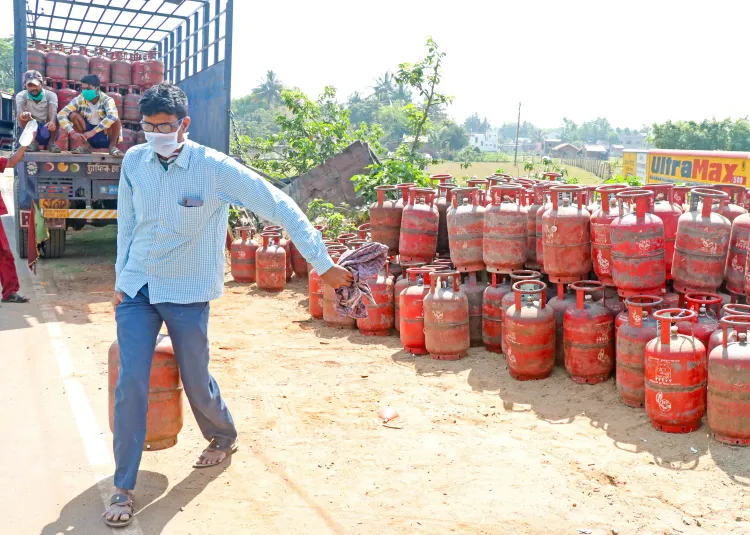
In a recent parliamentary address, Union Minister Hardeep Singh Puri revealed a 28% surge in LPG production facilitated by refinery directives. He reassured that domestic supply is secure, with delivery times remaining unchanged at 2.5 days, amidst growing consumer concern.
Key Takeaways
28% increase in LPG production achieved in five days.
Delivery time for domestic LPG cylinders remains at 2.5 days .
Measures introduced to manage demand and prevent panic buying.
Commercial LPG regulated to avoid black marketing.
The current price for non-subsidised LPG is Rs 913 .
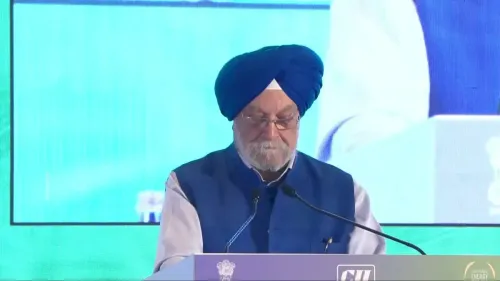
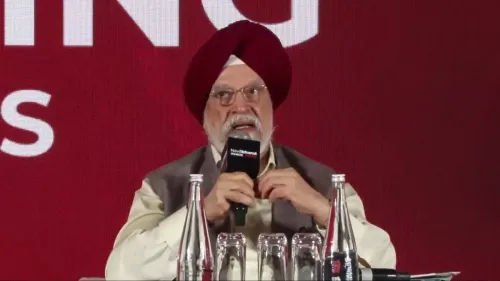
New Delhi, March 12 (NationPress) In the past five days, there has been a remarkable 28% increase in LPG production due to directives issued by refineries, and additional procurement efforts are actively in motion, stated Union Minister for Petroleum and Natural Gas, Hardeep Singh Puri, during a parliamentary session on Thursday.
Emphasizing the government’s top priority, Puri assured that the kitchens of over 33 crore families in India, particularly those of the underprivileged, will not encounter any shortages. He confirmed that the domestic supply remains fully secured, and the delivery cycle continues without alteration.
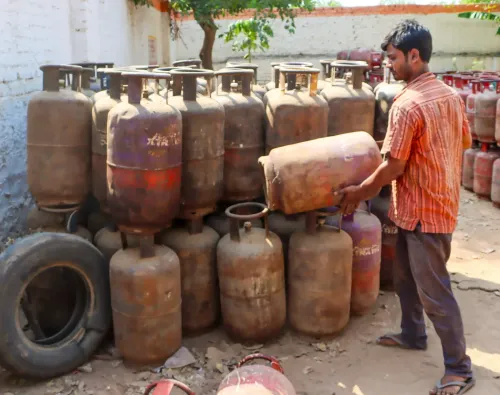
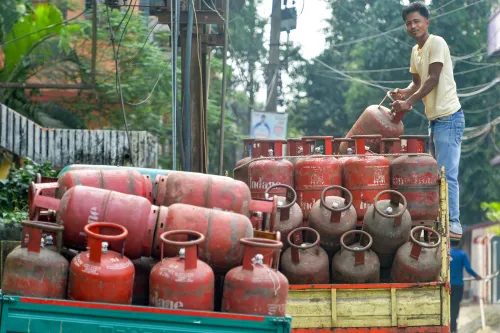
"The standard interval from booking to delivery for domestic LPG cylinders is fixed at 2.5 days, consistent with pre-crisis norms. Priority supply is uninterrupted for hospitals and educational institutions, ensuring their access to LPG is guaranteed irrespective of wider demand fluctuations," the minister informed the assembly.
Puri added that field reports suggest hoarding and panic bookings at distribution and retail levels are fueled by consumer apprehension rather than actual supply deficiencies.
"It's important for the House to understand that the surge in rush bookings in certain areas signifies a distortion in demand, not a failure in production or supply. We are expanding the Delivery Authentication Code coverage from 50% to 90% of consumers. Under this system, a cylinder is only marked as delivered when the consumer confirms receipt via a one-time code on their registered mobile, preventing any undocumented diversion," he explained.
A 25-day minimum booking gap has been established as a demand management strategy in urban regions, while a 45-day gap applies to rural and difficult areas.
"Our field officers alongside the Anti-Adulteration Cell are working together to enforce regulations at the distributor level. The Home Secretary recently convened a meeting with Chief Secretaries from all states to synchronize state-level administration with central supply and enforcement protocols," he continued.
The regulation of commercial LPG aims to deter black marketing without penalizing the hospitality sector. Commercial LPG is available in a completely deregulated market at current market prices without any government subsidies. There’s no registration system, booking requirement, digital authentication, or delivery confirmation process.
"If commercial supply had been entirely unrestricted, cylinders bought over the counter could have been misappropriated for the grey market, adversely affecting both commercial consumers and domestic households. Thus, the government has opted for a responsible approach to regulate this channel with clear priorities and a transparent allocation process," Puri stated.
A three-member committee made up of Executive Directors from IOCL, HPCL, and BPCL was formed on March 9.
Extensive consultations have been held with state Civil Supply departments and restaurant associations nationwide, and these discussions are ongoing.
"The committee is evaluating genuine needs by geography and sector to ensure that available commercial volumes are directed to authentic users first. Starting today, 20% of the average monthly Commercial LPG requirement will be allocated by OMCs in collaboration with state governments to prevent hoarding or black marketing,” the minister announced.
To alleviate pressure on LPG and gas channels, alternative fuel options are being activated.
The price for non-subsidised consumers currently stands at Rs 913 following a recent Rs 60 adjustment, compared to a market-determined price of around Rs 987. Of the Rs 134 per cylinder adjustment required due to current global market conditions, the government has absorbed Rs 74. Consequently, the effective additional cost for a PMUY household is less than 80 paise per day.
"In neighboring countries, LPG prices are Rs 1,046 in Pakistan, Rs 1,242 in Sri Lanka, and Rs 1,208 in Nepal. The government has approved OMC compensation of Rs 30,000 crore against projected losses of approximately Rs 40,000 crore for 2024-25," Puri concluded.
Point of View
The recent announcements regarding LPG production and supply management reflect the government's commitment to ensuring steady fuel availability for households, especially for vulnerable populations, while addressing concerns of panic buying and hoarding.
NationPress
29 Sept 2026
Frequently Asked Questions
What is the current LPG production increase?
LPG production has increased by 28% in the last five days due to refinery directives.
What is the delivery time for LPG cylinders?
The delivery time remains unchanged at 2.5 days from booking to delivery.
How is the government managing LPG supply?
The government is implementing measures such as a minimum booking gap and expanding delivery authentication to manage LPG supply.
What steps are being taken to prevent black marketing of commercial LPG?
Commercial LPG is regulated to prevent black marketing, ensuring that the genuine needs of the hospitality sector are met without penalties.
What is the current price of non-subsidised LPG?
The non-subsidised consumer price currently stands at Rs 913 after a recent adjustment.