Maharashtra targets $100 billion infra investment in 5 years
Synopsis
Maharashtra is chasing $100 billion in infrastructure over five years, with $50 billion flowing into MMR metros, roads and tunnels. Fadnavis also pitched Third Mumbai around the Navi Mumbai airport and Fourth Mumbai on the Virar-Vadhavan port belt, plus a decade-long Dharavi makeover into a commercial hub beside BKC.
Key Takeaways
CM Devendra Fadnavis on Wednesday said Maharashtra is targeting $100 billion in infrastructure investment over five years.
About $50 billion is being invested in MMR for a 300-km-plus metro network, roads, tunnels, water and sewage works. ‘Third Mumbai’ around the Navi Mumbai International Airport will include Edu-City, Sports City, Medi-City, Innovation City and a GCC City, with campuses of 12 universities for about one lakh students. ‘Fourth Mumbai’ is planned on the Virar-Vadhavan belt, anchored by a major port Fadnavis said he expects to rank among the world’s top 10 .
The 22-km Atal Setu has cut airport travel time to about 40 minutes , with a 30-minute target next year.
Dharavi is projected to become a commercial hub complementary to BKC within a decade, with well-equipped housing for residents.
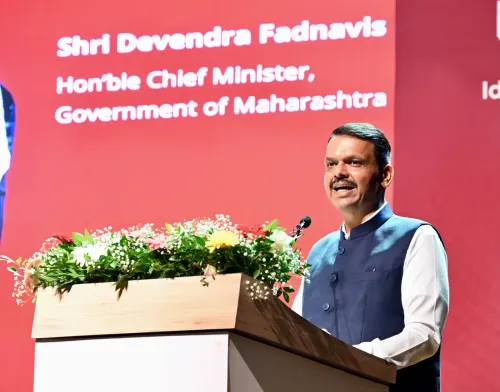
Maharashtra Chief Minister Devendra Fadnavis on Wednesday announced that the state is targeting $100 billion in infrastructure investment over the next five years, with about $50 billion being channelled into the Mumbai Metropolitan Region (MMR) for metro networks, roads, flyovers, tunnels and civic works. Speaking at the Third World Mayors' Conference in Mumbai, he outlined plans for a ‘Third Mumbai’ around the Navi Mumbai airport and a ‘Fourth Mumbai’ along the Virar-Vadhavan belt.
The $100 billion target and MMR outlay
Fadnavis framed the five-year push as a bid to treat cities as engines of growth rather than as problems. He noted that urban centres contribute roughly 65% of India’s GDP, while more than half of Maharashtra’s population lives across nearly 400 cities. Planned urban development, he said, can lift both economic output and living standards at the same time.
Over $50 billion is being invested in MMR for a 300-km-plus metro network, roads, tunnels, water supply and sewage treatment. The 22-km Atal Setu has already cut travel time to the Navi Mumbai airport to about 40 minutes, with the government aiming to bring that down to 30 minutes next year.
Third Mumbai and Fourth Mumbai
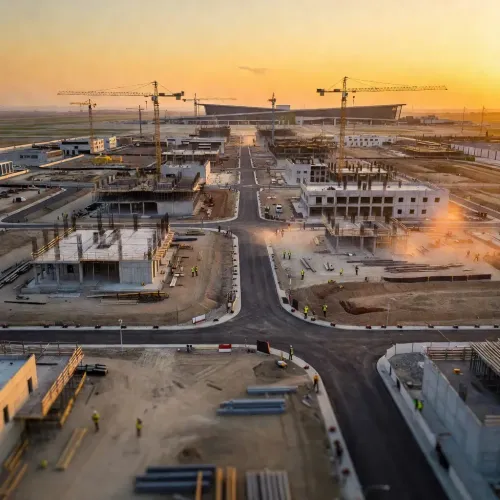
Third Mumbai, planned around the Navi Mumbai International Airport, is designed as a cluster of specialised hubs: an Edu-City, Sports City, Medi-City, Innovation City and a Global Capability Centre (GCC) City. The educational hub is meant to accommodate around one lakh students and host campuses of 12 world-class universities, of which seven have already begun operations, according to the Chief Minister.
The Virar-Vadhavan corridor is slated to become Fourth Mumbai. One of the country’s largest ports is under construction at Vadhavan, which Fadnavis said he was confident would rank among the world’s top 10 ports. The belt is to be linked to Mumbai through the bullet train and a super expressway.
Dharavi, older cities and the urbanisation shift
On the Dharavi redevelopment, Fadnavis said residents would be provided well-equipped housing. Within the next decade, Dharavi is projected to emerge as a major commercial hub complementary to the Bandra-Kurla Complex (BKC). Alongside new city-building, the state has adopted a policy of redeveloping older urban centres in Mumbai, Pune, Nagpur, Nashik and Chhatrapati Sambhajinagar.
He credited Prime Minister Narendra Modi with changing the national conversation after 2014, framing urbanisation as an opportunity. Earlier attempts to restrain city growth, Fadnavis said, had produced unplanned sprawl, slums, weak civic amenities, water shortages and waste-management failures.
Message to mayors and what comes next
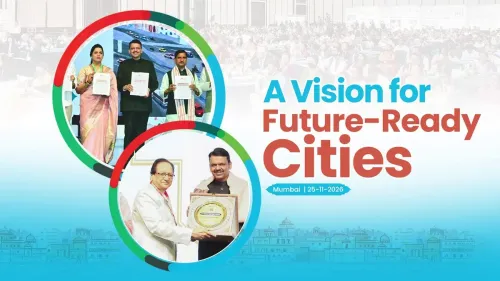
The conference, organised to mark the centenary of the All India Institute of Local Self-Government, was attended by Union Minister of State for Housing and Urban Affairs Tokhan Sahu, Mumbai Mayor Ritu Tawde, and mayors and municipal administrators from India and abroad. Drawing on his own tenure as Mayor of Nagpur, Fadnavis reminded civic heads that they are the first point of accountability for roads, water, sanitation and basic amenities.
He urged municipalities to study successful models in Indore, Ahmedabad and Mumbai. Global capital is readily available, he said, but attracting it requires political will, determination and viable, high-quality projects rather than funding alone. He assured delegates that the state government would positively review and implement actionable recommendations from the conference. Delivery on metro kilometres, university campuses, Vadhavan port capacity and Dharavi housing will be the yardsticks against which the $100 billion pledge is judged.
Point of View
But the state’s recent history is littered with mega-projects that slipped on land, clearances and last-mile delivery. Third Mumbai and Fourth Mumbai sit on a coastline already strained by congestion, coastal regulation and displacement risk — issues the speech largely left unaddressed. Dharavi’s promised conversion into a BKC-style commercial hub will be judged as much on rehabilitation as on floor space. Until metro kilometres, university seats and Vadhavan throughput are independently tracked, this remains a vision statement, not a balance sheet.
NationPress
25 Nov 2026
Frequently Asked Questions
What is Maharashtra’s $100 billion infrastructure target?
Chief Minister Devendra Fadnavis said the Maharashtra government is targeting $100 billion in infrastructure investment over the next five years. About $50 billion of that is being directed to the Mumbai Metropolitan Region for metro lines, roads, tunnels and civic works.
What is Third Mumbai announced by Fadnavis?
Third Mumbai is a planned urban cluster around the Navi Mumbai International Airport, with dedicated hubs for education, sports, healthcare, innovation and Global Capability Centres. The educational hub is meant to host about one lakh students and 12 world-class university campuses, of which seven have already begun operations.
What is Fourth Mumbai and where will it be built?
Fourth Mumbai is planned along the Virar-Vadhavan belt and will be anchored by a large port under construction at Vadhavan. Fadnavis said the region would be linked to Mumbai by the bullet train and a super expressway, and expressed confidence the port would rank among the world’s top 10.
How much is being invested in the Mumbai Metropolitan Region?
Over $50 billion is being invested in MMR for a 300-km-plus metro network, roads, tunnels, water supply and sewage treatment. The 22-km Atal Setu has already reduced travel time to the Navi Mumbai airport to about 40 minutes, with a 30-minute target next year.
What did Fadnavis say about Dharavi redevelopment?
Fadnavis said Dharavi residents would be provided well-equipped housing and that, within a decade, the area is projected to become a major commercial hub complementary to the Bandra-Kurla Complex. The state is also pursuing redevelopment of older urban centres in Mumbai, Pune, Nagpur, Nashik and Chhatrapati Sambhajinagar.