MeitY Secretary pitches 'Mutually Assured Disruption' strategy to guard India's tech supply chains
Synopsis
MeitY Secretary S Krishnan has put a name to India's emerging tech-security doctrine: 'Mutually Assured Disruption.' Rather than chasing self-sufficiency, India should embed itself so deeply in global supply chains — especially semiconductors — that cutting it out becomes too costly for any adversary to consider. It is a geopolitical argument disguised as industrial policy.
Key Takeaways
MeitY Secretary S Krishnan proposed a 'Mutually Assured Disruption' strategy at a PAFI event in New Delhi on 24 September 2026 .
The doctrine calls for India to build strategic depth in critical supply chain segments rather than pursue full domestic self-sufficiency.
Krishnan identified the semiconductor space as a top priority, citing rising domestic consumption and geopolitical leverage.
He cited the COVID-19 pandemic as a turning point that exposed the dangers of over-concentration in single-source supply chains.
The strategy aims to make India an indispensable node in global technology ecosystems, raising the cost of any attempt to exclude it.
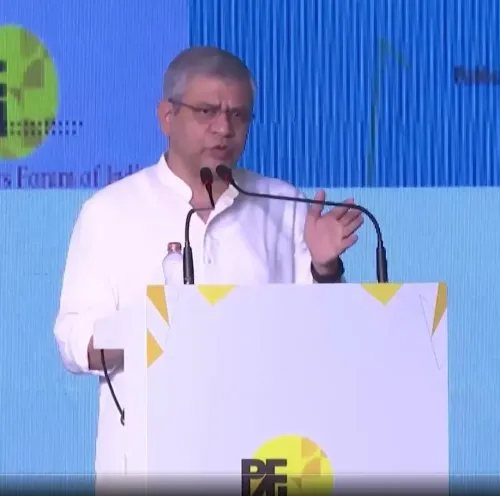
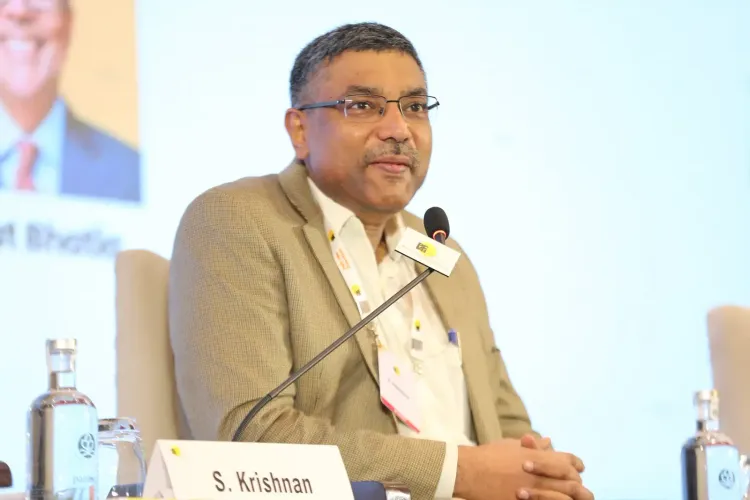
Ministry of Electronics and Information Technology (MeitY) Secretary S Krishnan on Thursday, 24 September 2026, proposed a doctrine he termed 'Mutually Assured Disruption' — a strategy designed to reduce India's vulnerability to technology denial and global supply chain shocks while keeping the country plugged into cutting-edge international innovation. The remarks were made at an event organised by the Public Affairs Forum of India (PAFI) in New Delhi.
The Core Argument
Krishnan argued that India must develop sufficient domestic capabilities in critical technologies to sustain operations even if access to foreign components or platforms is curtailed. Crucially, he stressed that this does not mean pursuing full self-sufficiency — a goal he described as unrealistic.
Instead, the strategy calls for India to establish a commanding presence in strategically vital segments of global value chains, making itself an indispensable node in key technology ecosystems. The logic: if India is deeply embedded in supply chains that others depend on, any attempt to exclude India becomes mutually costly — hence 'Mutually Assured Disruption.'
Semiconductors as the Strategic Anchor
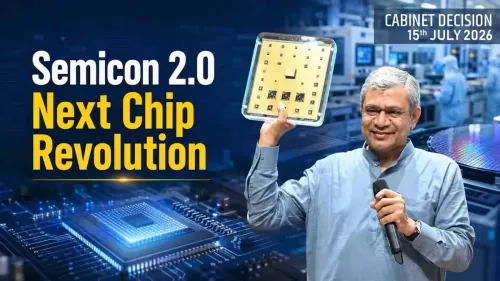
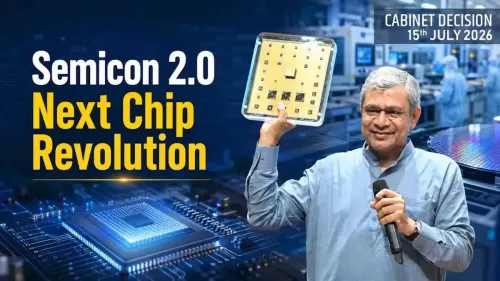
Krishnan singled out semiconductors as a priority. 'From a strategic perspective, I think having a presence in the semiconductor space is very important. We are already, and we will keep growing as a consumer of these devices. Our per capita incomes are reaching that point of inflection where consumption will rise faster. So, electronics may be an important item of consumption, and this essentially means we need to make enough of these inputs,' he stated.
India's semiconductor ambitions have gathered momentum in recent years, with the government committing significant incentives to attract chip fabrication and design investments. Krishnan's remarks signal that these efforts are now being framed explicitly within a geopolitical resilience calculus, not merely an industrial one.
The Post-COVID Supply Chain Lesson
Krishnan pointed to the COVID-19 pandemic as a structural inflection point in how governments and businesses think about supply chain concentration. 'A significant shift has taken place since the COVID-19 pandemic, alongside other global developments, with businesses and governments increasingly recognising the risks of excessive dependence on a single market, country, or source of supply. Rather than concentrating manufacturing solely in the most cost-competitive location, there is now greater emphasis on diversification as a means of building resilience,' he said.
This mirrors a broader global trend: the United States, the European Union, and Japan have all introduced legislation or incentive programmes in recent years aimed at onshoring or 'friend-shoring' critical technology manufacturing. India's framing, however, takes a distinct angle — not withdrawal from globalisation, but strategic embeddedness within it.
What This Means for India's Tech Policy
The 'Mutually Assured Disruption' framing is notable for its candour. It acknowledges that India cannot replicate the full technology value chain domestically, and pivots the conversation toward leverage and influence rather than autarky. Critics may argue, however, that identifying which segments to prioritise — and then actually building competitive depth in them — is a formidable execution challenge that policy rhetoric alone cannot resolve.
Sectors in focus are likely to include semiconductors, critical minerals processing, telecom hardware, defence electronics, and advanced software platforms. The strategy's success will depend on whether India can attract and retain the engineering talent, capital, and industrial ecosystems required to become genuinely indispensable in these verticals. How that translates into concrete programme design and budget allocations remains to be seen.
Point of View
But the harder question is execution: which segments, at what scale, and by when? India has announced semiconductor ambitions before without always delivering the industrial ecosystem behind them. Krishnan's framing is geopolitically astute — leverage through embeddedness rather than isolation — but it shifts the burden of proof to programme design and budget commitments that were not detailed at this event. The doctrine also implicitly concedes that India remains dependent on foreign technology in the near term; the strategy buys time and leverage, but does not eliminate the underlying vulnerability. Whether this speech becomes a policy blueprint or a conference talking point will depend on what MeitY publishes in the months ahead.
NationPress
24 Sept 2026
Frequently Asked Questions
What is the 'Mutually Assured Disruption' strategy proposed by MeitY?
It is a doctrine proposed by MeitY Secretary S Krishnan on 24 September 2026, under which India would build deep capabilities in strategically vital segments of global technology supply chains — making itself indispensable — so that any attempt to deny India access to critical technologies would be mutually costly. The approach deliberately avoids full self-sufficiency in favour of strategic embeddedness.
Why did MeitY's Secretary emphasise semiconductors specifically?
Krishnan highlighted semiconductors because India's per capita income is approaching levels where electronics consumption will accelerate sharply, making domestic chip-related capabilities both strategically and economically essential. He argued that India must produce enough semiconductor inputs to sustain this growth trajectory without external dependence.
How does this strategy differ from self-sufficiency or 'Atmanirbhar Bharat'?
Unlike a pure self-sufficiency model, the 'Mutually Assured Disruption' doctrine explicitly accepts that India cannot manufacture every component across the entire technology value chain. Instead, it focuses on selective but deep participation in global supply chains, ensuring India retains influence and resilience without withdrawing from international technology ecosystems.
What global context prompted this policy thinking?
Krishnan pointed to the COVID-19 pandemic as a structural turning point that exposed the risks of over-reliance on single-source supply chains. Broader geopolitical shifts — including US-China tech decoupling and allied 'friend-shoring' efforts — have reinforced the push by governments worldwide, including India, to diversify critical technology sourcing.
Who was present at the event where these remarks were made?
The speech was delivered at an event organised by the Public Affairs Forum of India (PAFI) in New Delhi on 24 September 2026. MeitY Secretary S Krishnan was the featured speaker addressing India's technology and supply chain strategy.