Is PM Modi’s Roundtable with AI Startups a Sign of Ecosystem Maturity?
Synopsis
Prime Minister Modi's recent meeting with AI startups signals a significant evolution in India's tech landscape, aiming for a transformative impact across various sectors and positioning the nation as a leader in artificial intelligence. With substantial economic benefits projected, the upcoming AI Summit promises to showcase indigenous innovations.
Key Takeaways
PM Modi's roundtable marks a pivotal moment in India's AI ecosystem.
AI could add $500 billion to India's GDP by 2030.
Multilingual AI technologies enhance accessibility.
Upcoming summit to bring global stakeholders together.
India aims for a $1 trillion digital economy.
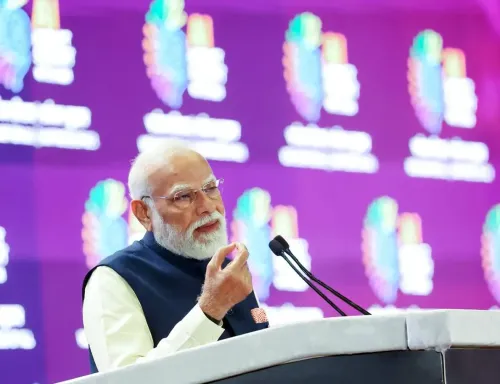
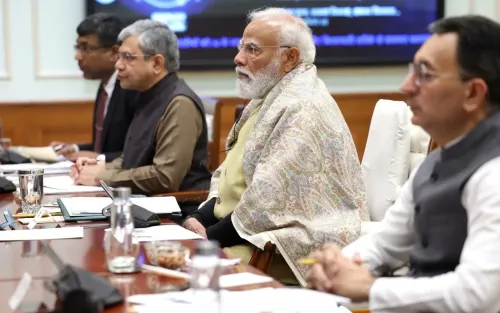
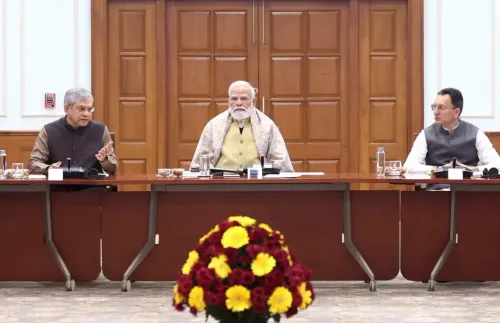
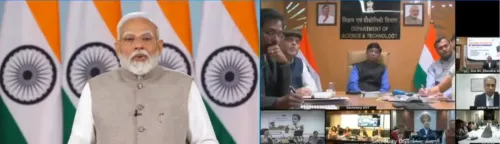
New Delhi, Jan 10 (NationPress) The recent roundtable led by Prime Minister Narendra Modi with a selection of Indian AI startups marks a significant step towards the evolution of an ecosystem that has been developing for years. This ecosystem is set to revolutionize various sectors, including agriculture and healthcare, and aims to position India as an 'AI superpower, according to a report released on Saturday.
By the year 2030, it is estimated that AI could contribute $500 billion to India's GDP, potentially generating millions of jobs in areas such as data annotation, model training, and deployment, the report from India Narrative indicated.
The roundtable occurred just weeks prior to the India AI Impact Summit in February, showcasing innovative homegrown models and applications in sectors like healthcare, agriculture, education, and regional-language services.
With a vast population of over 900 million internet users producing petabytes of data daily, India provides an ideal environment for the development of robust AI models, as highlighted in the report.
Indian startups are at the forefront of AI technology, incorporating multilingual capabilities to comprehend languages such as Hindi, Tamil, and Bengali, thus making technology accessible to those who do not speak English.
This linguistic diversity serves as a competitive advantage, paving the way for exports to other nations in the Global South facing similar linguistic challenges, the report elaborated. Startups at the roundtable exhibited tools capable of diagnosing diseases like tuberculosis and diabetes with unparalleled precision, it stated.
Additionally, some startups showcased innovations in crop yield prediction, pest detection, and adaptive learning technologies, which are crucial for addressing farmers' challenges and mitigating the effects of climate change.
The upcoming summit, scheduled for February 15–20, will feature keynote sessions, policy discussions, and expert roundtables aimed at uniting international stakeholders to deliberate on governance, standards, and collaborative efforts. It will highlight 12 promising Indian startups in fields such as healthcare and multilingual technology. This exposure is expected to draw foreign investment and talent, furthering India's ambition of achieving a $1 trillion digital economy by 2030, the report noted.
The India AI Mission, initiated in 2024 with a funding of $1.2 billion, has democratized access to computing resources, datasets, and talent development. Moreover, the National AI Portal has provided open-source datasets, while collaborations with tech giants have ensured access to high-performance computing infrastructure.
Point of View
I observe that Prime Minister Modi's engagement with AI startups reflects a strategic acknowledgment of India's potential in the tech sector. This initiative highlights the government's commitment to fostering innovation and creating a competitive edge on a global scale, aligning with the nation's aspiration for economic growth through digital transformation.
NationPress
27 Sept 2026
Frequently Asked Questions
What was the main focus of PM Modi's roundtable with AI startups?
The roundtable aimed to discuss the maturation of India's AI ecosystem and its potential impact on various sectors like agriculture and healthcare.
What economic benefits are expected from AI in India?
By 2030, AI is projected to contribute $500 billion to India's GDP and create millions of jobs.
How will the India AI Impact Summit contribute to this ecosystem?
The summit will bring together international stakeholders to discuss governance and standards, showcasing Indian startups and attracting foreign investment.
What multilingual capabilities do Indian AI startups have?
Startups are developing AI technologies that can understand and process languages like Hindi, Tamil, and Bengali, making them accessible to non-English speakers.
When is the India AI Impact Summit scheduled?
The summit is set for February 15-20, featuring keynotes, policy panels, and expert discussions.