What Do AI Startup CEOs Think About India’s Supportive Environment After Meeting PM Modi?

Synopsis
At the recent AI Impact Summit, Prime Minister Modi engaged with leading AI and deep tech startup CEOs, who praised India's vibrant ecosystem for AI innovation. This roundtable highlighted the nation's commitment to fostering AI advancements across multiple sectors. Discover the insights shared and the future of AI in India.
Key Takeaways
Supportive Environment: India is fostering a vibrant ecosystem for AI innovation.
Focus on Local Languages: Emphasis on integrating Indian languages in AI tools for education.
Global Influence: India’s AI sector is gaining recognition on a global scale.
Data Governance: Strong data governance is crucial for AI's growth.
Investment Opportunities: Increased interest from investors in Indian startups.
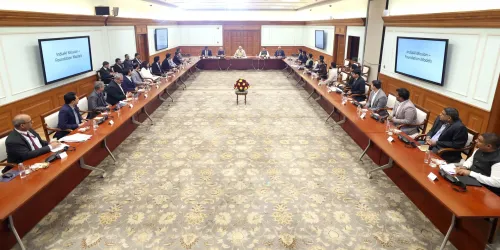
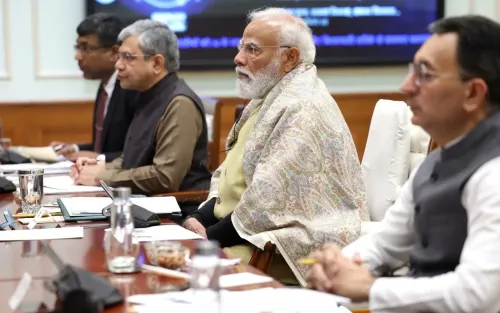
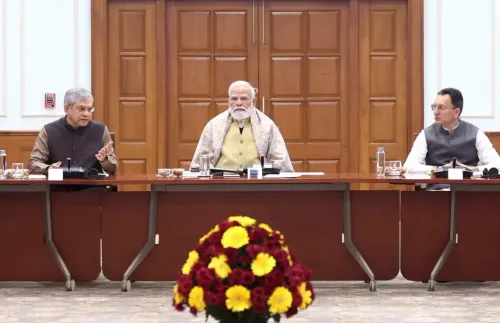
New Delhi, Feb 20 (NationPress) During the AI Impact Summit, Prime Minister Narendra Modi convened a roundtable with CEOs of AI and deep tech startups who are leading the charge in innovative projects across sectors like agriculture, healthcare, and cybersecurity. These leaders commended the nation’s supportive and vibrant environment for the advancement of Artificial Intelligence.
Highlighting the significance of promoting Indian languages and culture, PM Modi urged for an expansion of AI tools in higher education that cater to local languages, as stated in an official release.
The startups engaged in the discussion are addressing significant challenges across vital sectors, including healthcare, agriculture, and ethical AI, according to the Prime Minister's Office.
The ventures involved also focus on ethical AI, social empowerment via vernacular access to justice and education, and modernizing legacy systems to enhance productivity.
The AI startups expressed, 'India now provides a supportive and dynamic ecosystem for AI development, firmly positioning itself on the global AI map.'
They acknowledged India’s ongoing efforts to bolster its AI ecosystem, the rapid growth of the sector, and observed that global trends in AI innovation are increasingly favoring India.
The firms recognized the AI Impact Summit as a demonstration of India’s rising influence in global AI discussions, as indicated in the statement.
From companies specializing in advanced diagnostics, gene therapy, and patient record management to those utilizing geospatial and underwater intelligence for productivity enhancement and climate risk management, the participation was extensive.
The Prime Minister commended the innovators for taking significant risks and developing impactful AI solutions. He emphasized the potential of AI technology in various fields including agriculture and environmental protection, such as monitoring crop productivity and fertilizer usage to preserve soil health.
He stressed the necessity for robust data governance, cautioned against misinformation, and called for tailored solutions that meet India’s unique requirements.
Referring to UPI as a model of efficient digital innovation, he expressed confidence in domestic companies and advocated for trust in local products. He also mentioned the need to expand private sector participation in space initiatives and noted the strong interest from investors in Indian startups, as per the statement.
Point of View
It is essential to recognize the importance of India's position in the global AI landscape. The recent discussions between Prime Minister Modi and AI startup leaders highlight the nation's commitment to fostering innovation while addressing societal challenges. This collaborative effort could significantly enhance India's technological landscape and drive economic growth.
NationPress
2 Oct 2026
Frequently Asked Questions
What was the main focus of the roundtable discussion?
The roundtable focused on the advancements in AI and its applications in sectors like agriculture, healthcare, and cybersecurity.
What did PM Modi emphasize during the meeting?
PM Modi emphasized the promotion of Indian languages in AI tools and the need for strong data governance.
How did the AI startups respond to India's AI ecosystem?
The AI startups praised India’s supportive environment for AI advancement and highlighted the country's growing influence in global AI conversations.